TLDR;
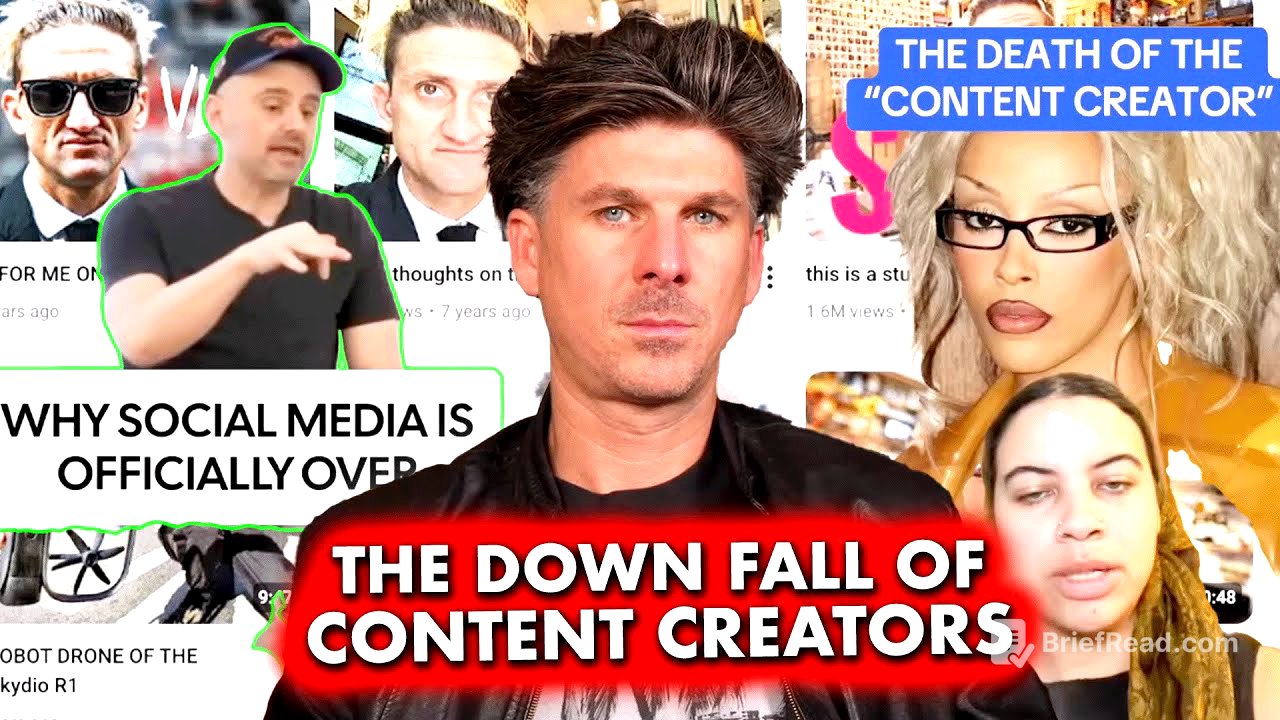
This video discusses the evolving landscape of content creation, the decline of the traditional "influencer," and the potential resurgence of long-form content. It covers topics such as the unsustainability of constantly chasing platform algorithms, the shift from personality-based content to information-based content, and the challenges of monetizing short-form videos. The video also touches on the impact of AI-generated content, the oversaturation of the content market, and the possibility of a return to slower-paced, more authentic content reminiscent of old-school radio.
- The influencer era is dying, and content creators need to adapt by focusing on owning their brand and providing valuable information.
- Short-form content is losing its appeal as people seek more meaningful and engaging experiences.
- Long-form content, like podcasts and in-depth discussions, is making a comeback as people crave authenticity and connection.
Intro [0:00]
The host introduces the topic of the "death of the influencer" and the changing dynamics of content creation. He sets the stage for a discussion about the unsustainability of the current content creation model, where creators are constantly jumping from platform to platform, chasing algorithms, and struggling to monetize their work.
The Unsustainable Content Creation Cycle [0:14]
The speaker argues that the term "content creator" is detrimental to creatives, confining them to platforms and forcing them into a cycle of constant content production. He points out that platforms like TikTok have replaced Instagram, and creators risk perpetually chasing the next algorithm. The key is to define oneself and make platforms work for you, rather than the other way around. The speaker reminisces about a time when a single piece of content, like a movie or album, could sustain an artist for years, a stark contrast to today's demand for daily content.
The Shift to Informative Content [2:36]
The discussion shifts to the type of content that resonates today. It's no longer enough to be entertaining; content must also be informative. The speaker contrasts this with the earlier days of YouTube, exemplified by Casey Neistat, where personality-driven vlogs about everyday life garnered millions of views. Now, viewers prioritize information and value, making it harder for creators to succeed based solely on personality or entertainment value.
The Monetization Problem on TikTok [4:59]
The speaker shares his experience with declining revenue on TikTok, noting a significant drop in earnings per thousand views. He attributes this to the rise of AI-generated content and the difficulty of monetizing short-form videos. The challenge lies in selling products or services effectively within a one-minute video format.
The Rapid Rise and Fall of Internet Fame [7:12]
The conversation touches on how quickly someone can gain fame in the current digital landscape, a phenomenon that was unheard of in the past. It used to take years to hone one's skills and build a lasting career in entertainment. The focus has shifted to immediate gratification, with many chasing quick fame rather than building a sustainable career.
The Importance of Topic Over Personality [9:18]
The speaker emphasizes that the topic of a video is now more important than the creator's personality. Even if viewers like a creator, they won't watch a video if they're not interested in the topic. This highlights the shift from personality-based content to information-based content.
Where Did All the Money Go? [9:45]
The discussion addresses the question of why many early YouTube influencers, who once made substantial incomes, are now struggling financially. The speaker explains that in the early days of YouTube, there was less competition, making it easier to gain a following and earn money. However, the rise of numerous content platforms has fragmented the audience, making it harder to monetize content. Additionally, many influencers spent their money lavishly, renting expensive houses and indulging in extravagant lifestyles.
The Death of Social Media and the Rise of Interest Media [11:58]
The speaker introduces the idea that social media is dead and has been replaced by "interest media." Algorithms now prioritize content based on users' interests rather than who they follow. This means that the words and topics discussed in a video are crucial for attracting the right audience.
The Return of Slow Content [16:02]
The video explores the potential resurgence of "slow content," characterized by longer videos, less editing, and more thoughtful discussions. This trend is driven by a growing awareness of the negative effects of excessive social media consumption and a desire for more authentic and engaging content. The speaker draws a parallel to old-school radio, suggesting that talk-based formats with in-depth conversations may become popular again.
Long Form Content on Short Form Platforms [17:33]
The speaker shares an experiment of posting longer 8-10 minute videos on platforms like Facebook and TikTok. Despite the algorithms not favoring longer content, these videos have performed well. The theory is that people are tired of endless scrolling and appreciate longer videos that allow them to engage with a topic without having to search for new content constantly.
The Creator Founder Era [18:50]
The video asserts that the "influencer era" is over and that the future belongs to "creator founders" who build and own their brands. The speaker points out the difficulty influencers have selling products, even with large followings. To succeed, creators need to offer products that people want regardless of their personal connection to the creator, or provide valuable information.
The Future of Content Creation: Old People and Radio [22:44]
The speaker predicts that older people will become the new influencers, bringing back a style reminiscent of talk radio mixed with video. He believes that people are craving longer, more in-depth content and are willing to spend time listening to engaging personalities discuss interesting topics.
The Problem with TikTok's Creator Rewards Program [24:34]
The speaker shares his theory on what ruins the creator rewards program on TikTok. It's not that everyone wants to be a content creator, but that everyone is trying to cheat their way into becoming one, or just trying to cheat their way into getting the money. The speaker also touches on the fact that it's the first time ever that someone can just pop on and make a video without any prior experience and gain a large following.
Final Thoughts and Predictions [26:46]
The speaker concludes by reiterating his prediction that slower-paced, less edited, and less scripted content will make a comeback. He emphasizes the value of long-form content in providing context and allowing viewers to connect with the creator on a deeper level. The speaker also highlights the importance of spending time with an audience to build a lasting connection, contrasting this with the fleeting interactions of short-form content.