TLDR;
This video explains Philippians 4:6-7, offering a practical approach to managing anxiety through prayer and thanksgiving. It emphasizes redirecting anxiety by acknowledging God's faithfulness, naming specific fears, and trusting in His presence during difficult times. The video also addresses clinical anxiety, advocating for professional help alongside spiritual practices.
- Anxiety is the brain's attempt to solve an unsolvable problem.
- Redirect anxiety through prayer with thanksgiving, acknowledging God's faithfulness.
- The peace of God guards your heart and mind, offering stability during storms.
- Clinical anxiety requires professional care, which complements spiritual practices.
- Specific, honest prayer brings fears into the light, interrupting the anxiety loop.
Introduction: Understanding Anxiety and Philippians 4:6-7 [0:00]
The video addresses the common use of Philippians 4:6-7 to comfort anxious individuals, pointing out that the verse's true meaning and practical application are often misunderstood. The speaker aims to provide a comprehensive understanding of the passage, explaining not just what it says, but how it works and why it is effective in managing anxiety. The core message is that anxiety, even long-term anxiety, does not have to be the final word in one's life.
The Nature of Anxiety [1:16]
Anxiety is defined as the brain's attempt to solve an unsolvable problem, typically involving uncertainty about the future. This uncertainty, whether related to relationships, health, or finances, causes the mind to engage in endless calculations of "what if" scenarios. This constant mental processing leads to sleeplessness, physical tension, and the resurfacing of troubling thoughts at inopportune moments. The speaker illustrates this with the example of Elena, a devout Christian who experienced severe anxiety despite her strong faith and religious practices, highlighting the inadequacy of simply telling someone to "trust God more."
Reading Philippians 4:6-7 in Context [3:10]
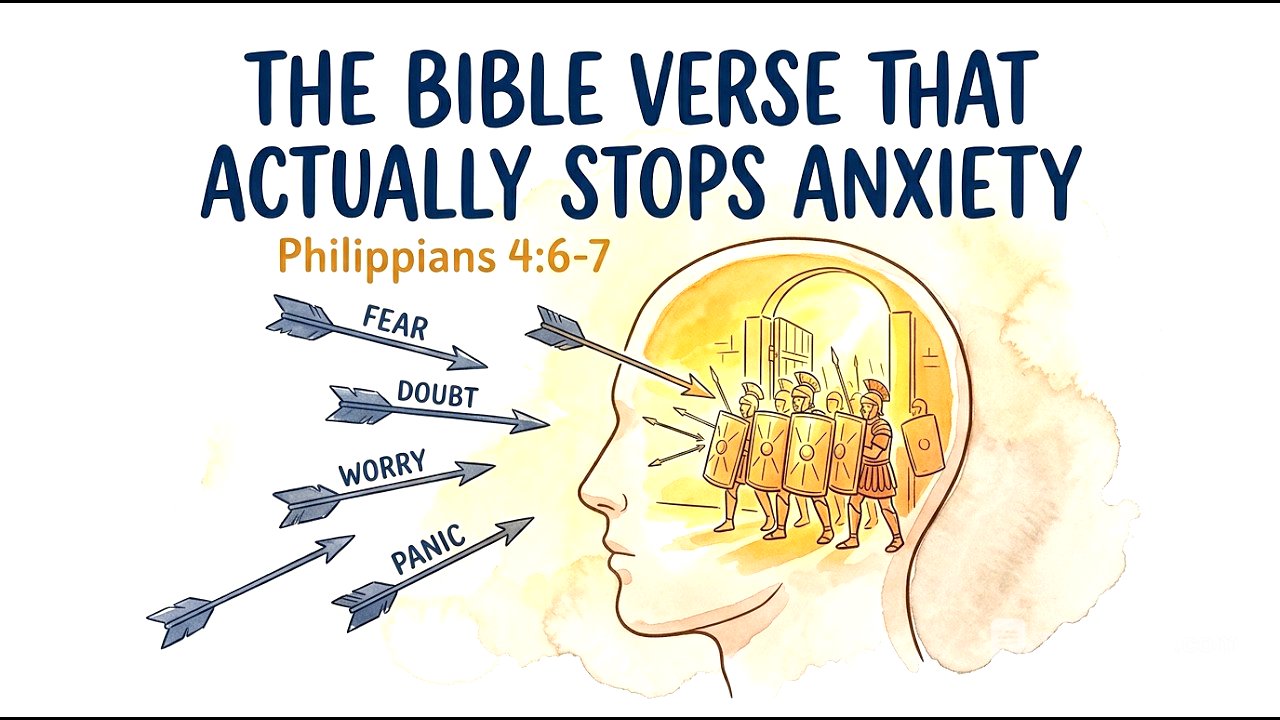
The passage from Philippians 4:6-7 is examined closely: "Do not be anxious about anything, but in everything by prayer and petition with thanksgiving, present your requests to God. And the peace of God, which transcends all understanding, will guard your hearts and your minds in Christ Jesus." The speaker emphasizes that the initial command, "Do not be anxious," is not a prohibition but an invitation to redirect anxiety. Paul, writing from prison amidst immense suffering, offers a map to peace, not by denying anxiety, but by redirecting its energy through prayer, petition, and thanksgiving.
The Power of Thanksgiving [4:55]
The video highlights the importance of "thanksgiving" in prayer, clarifying that it is not about manufacturing a feeling but declaring what is already known to be true about God, regardless of current circumstances. Praying with thanksgiving means approaching God with a history of His faithfulness, remembering past instances where He provided solutions and support. This remembrance transforms fear by placing it within a larger narrative of God's unchanging character and past deeds. The speaker references Psalm 77, where Asaf initially expresses distress but then shifts to remembering God's past miracles, illustrating how deliberate remembrance interrupts the anxiety spiral.
The Promise of Peace [8:04]
Verse 7 of Philippians 4 is examined, focusing on the promise that "the peace of God...will guard your hearts and your minds." The speaker explains that the Greek word for "guard" is a military term, indicating that the peace of God acts as a standing army, protecting one's inner life from panic. This peace transcends understanding, offering inexplicable comfort and stability even when circumstances remain unchanged. The story of James, a surgeon whose son was diagnosed with a serious illness, illustrates how recognizing God's past faithfulness can shift one's posture from trying to control everything to trusting in God's guidance.
Addressing Clinical Anxiety [11:07]
The video addresses the reality of clinical anxiety, acknowledging that some anxiety is rooted in brain chemistry, trauma, or physiological issues requiring professional care. It emphasizes that Bible verses are not a substitute for medical or therapeutic intervention. Instead, Philippians 4 offers a foundation of security to support the hard work of healing. The peace of God and professional counseling are presented as companions, not competitors, in the journey toward mental and emotional well-being.
The Specificity of Prayer [12:06]
The speaker underscores the importance of bringing "everything" to God in prayer, not just major fears but also smaller worries. Anxiety's tendency to scale from significant issues to trivial matters is addressed, and the instruction covers all categories of worry. Specific, concrete prayers that name the exact fear are more effective than vague requests. Spoken prayer externalizes the internal storm, interrupting the anxiety loop through a mechanism psychologists call cognitive reappraisal.
What Philippians 4 Doesn't Promise [13:43]
The video clarifies that Philippians 4 does not promise the removal of all problems or a life without storms. Instead, it promises God's presence during the storms and a peace that exists independently of perfect circumstances. The speaker references the story of Jesus calming the storm on the Sea of Galilee, emphasizing that Jesus was present in the boat before calming the storm, symbolizing God's presence in the midst of anxiety.
A Practical Prayer Method [15:44]
A practical prayer method based on Philippians 4:6 is presented:
- Begin with thanksgiving by naming three things known to be true about God.
- Specifically name the fear out loud, articulating the worst-case scenario.
- Release the outcome, trusting that God is working even when the resolution is unclear.
- Stop and allow the peace of God to arrive, recognizing that it may come gradually.
Conclusion: Elena's Story and the Truth About Anxiety [17:28]
The video revisits Elena's story, highlighting how she combined therapy with a rebuilt prayer life to manage her anxiety. The change was gradual, like learning to breathe deeply again, with the peace of God acting as a buffer against panic. The speaker concludes by asserting that anxiety tells lies, claiming that feared outcomes are likely, that one cannot survive them, and that God is either unaware or unwilling to help. The Bible's answer to anxiety is not suppression but a reorientation toward a God bigger than the fear, achieved through specific, honest, and grateful conversation. This leads to a peace that transcends understanding, given by God to those who have exhausted their own resources.