TLDR;
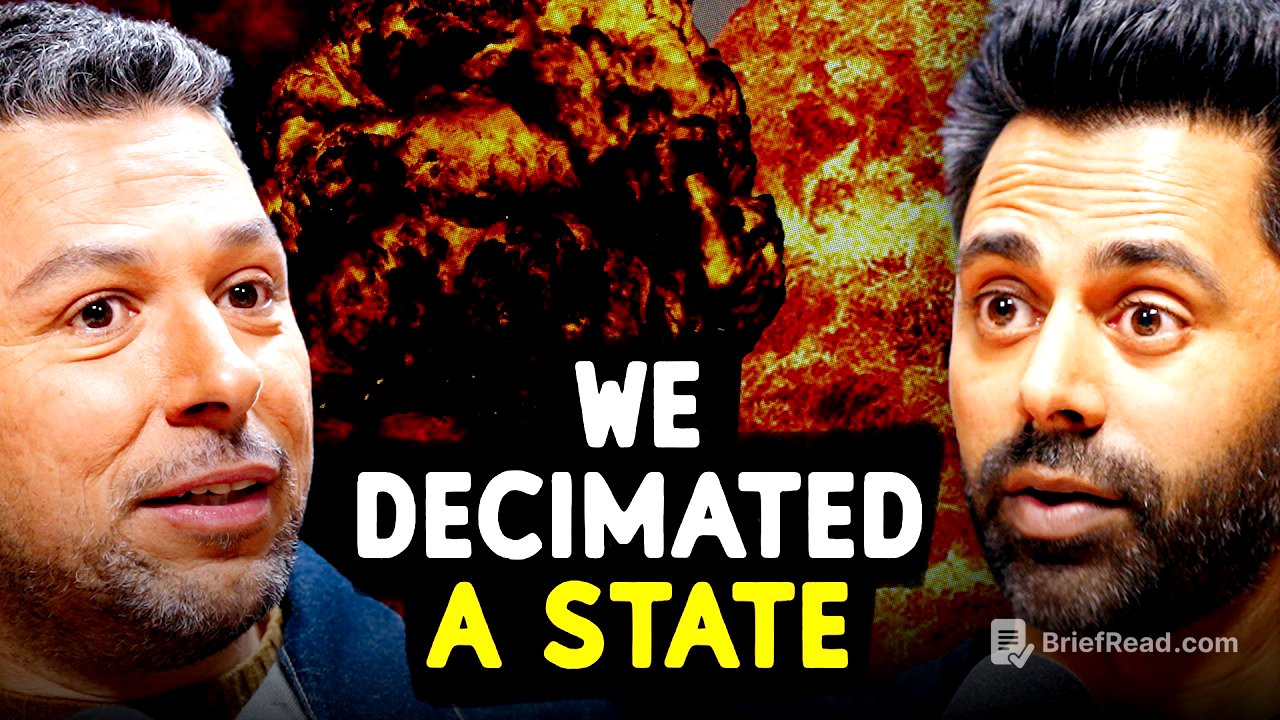
The video explores the insights of Ayman Mohedin, a seasoned war reporter with significant experience covering conflicts in the Middle East, including Iraq and Gaza. He discusses the evolution of media narratives post-9/11, the impact of American military actions, and the ethical responsibilities journalists face today. Key takeaways include:
- The failure of military solutions to complex societal issues.
- The challenges of covering the Israeli-Palestinian conflict empathetically.
- The continuing ramifications of the 2001 Authorization for Use of Military Force (AUMF).
We got em! [0:00]
The video opens with a discussion on the American military's efforts to locate Saddam Hussein after the invasion of Iraq, using "wanted, dead or alive" posters with substantial rewards for information. The absurdity is highlighted as people in Iraq, struggling with basic needs, are encouraged to email tips to the military.
Opening monologue [0:41]
Ayman Mohedin is introduced as a dedicated journalist with extensive experience in conflict zones. Hasan Minhaj praises him for portraying the humanity of people in the Middle East rather than presenting them solely as foreign policy issues.
Ad [2:17]
An advertisement interrupts the discussion.
Ayman’s GQ thirst trap [3:20]
The conversation shifts to Ayman Mohedin's recent GQ spread, with some light-hearted banter about his modelling and the attention his wife receives, highlighting Ayman's entertaining personality.
The post-9/11 newsroom [4:05]
Ayman discusses his early career that began on the day of Bush's inauguration in 2001. He explains how the 9/11 attacks drastically shifted journalistic priorities and narratives in America, leading to rapid changes in news coverage.
The post-Trump newsroom [16:10]
Hasan and Ayman critique the media landscape during Donald Trump's presidency, noting how conspiracy theories and misinformation influenced public perception and coverage of events.
Having a moral North Star as a journalist [18:17]
Ayman emphasises the importance of maintaining ethical standards and a moral direction in journalism. He reflects on the need to avoid being influenced by power dynamics while remaining committed to truth and accountability.
War reporting [20:38]
The dialogue transitions to war reporting, focusing on the stark differences between journalists who seek to illuminate the human cost of conflict and those who are drawn to the adrenaline of danger. Ayman addresses the complexities and responsibilities that come with reporting from conflict zones.
Ads [24:44]
Another advertisement plays.
Why “kill the bad guys” doesn’t work [25:52]
Ayman critiques the simplistic narrative that violence can resolve deep-rooted societal issues, urging a strategic rethink of military interventions. He highlights historical evidence that shows killing leaders does not necessarily lead to lasting peace or stability.
How America has impacted Iraq [29:34]
Ayman outlines the devastating impact of the American invasion on Iraq, describing the destruction of institutions and the rise of sectarian violence. He connects these issues to rising terrorism and subsequent regional instability.
The 2001 AUMF is still being used [31:41]
The discussion reveals how the 2001 Authorization for Use of Military Force (AUMF) continues to be misused by administrations for various military operations, arguing the need for stricter adherence to the constitution.
2 years in Gaza [33:55]
Ayman shares his experience living in Gaza for over two years, detailing the profound changes it brought to his understanding of conflict and the resilience of the local population amidst adversity.
The 2014 Gaza beach killings [36:01]
He recounts a specific incident during the 2014 war where children were killed on the beach, emphasising the human suffering involved and the ethical dilemmas faced by journalists in reporting such tragic events.
The use of white phosphorus in Gaza [40:51]
Ayman addresses the controversial use of white phosphorus in Gaza, explaining its effects on civilians and the ethical concerns surrounding its deployment in densely populated areas.
Journalists killed in Gaza [42:42]
The discussion highlights the dangers faced by journalists working in Gaza, noting the unacceptable number of reporters who have lost their lives while trying to cover the conflict.
Ads [46:27]
Another advertisement is shown.
Reporting in Egypt [49:13]
Ayman shares insights on the complexities of reporting in Egypt, detailing the challenges and restrictions journalists face under authoritarian rule.
Iran war update [54:48]
The speakers discuss the current state of relations with Iran, illustrating the cyclical nature of conflicts and how past military actions have not eliminated threats.
America’s military-first attitude [56:24]
Ayman critiques the American tendency to prioritise military solutions over diplomatic ones, stressing the need for more constructive forms of engagement in foreign policy.
Ayman has a special gift for Hasan… [1:00:00]
The conversation concludes with Ayman presenting Hasan with a historical item related to the Iraq war, signifying the personal connections and the importance of storytelling in journalism.