TLDR;
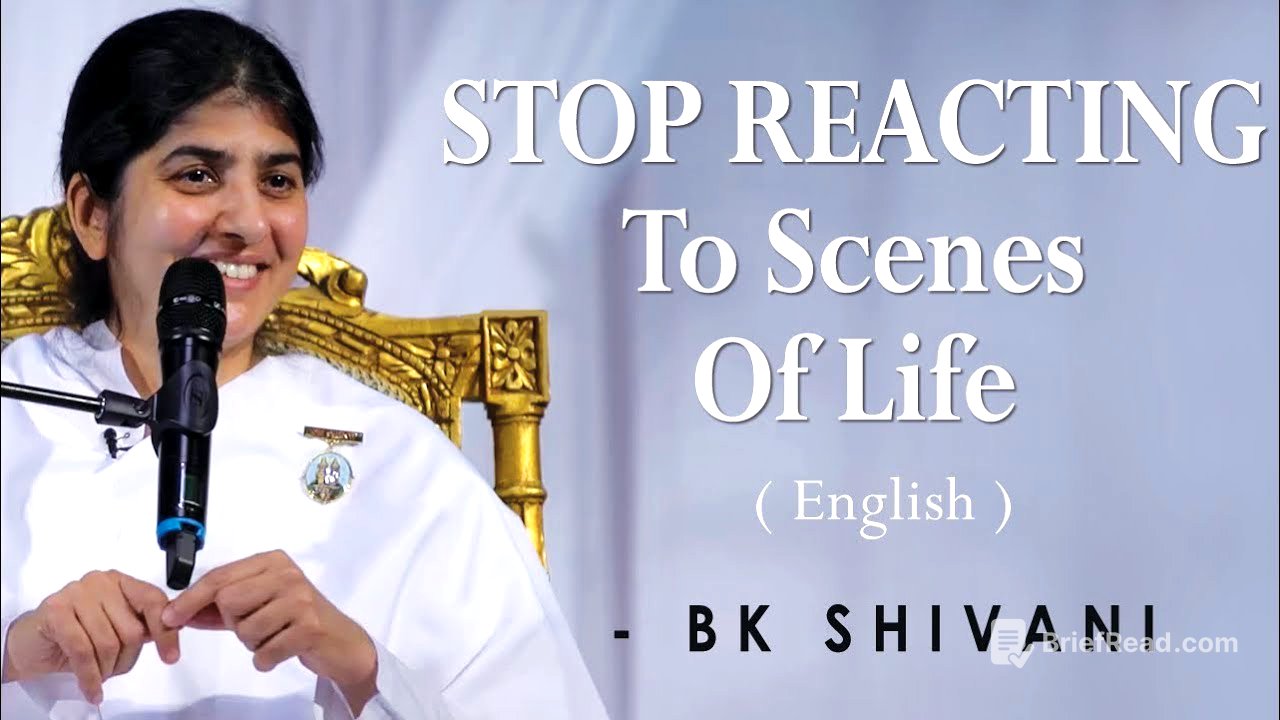
This video emphasizes the importance of detaching oneself from life's dramas to gain perspective and make wiser decisions. It highlights how our emotional state and the "Sanskars" (predispositions) of those around us can influence our perceptions and choices. The video advises against giving unsolicited advice, as it can alter someone's destiny, and encourages individuals to take responsibility for their own decisions.
- Detach from life's dramas to gain perspective.
- Be aware of how emotional states and "Sanskars" influence perceptions.
- Avoid giving unsolicited advice, as it can alter someone's destiny.
- Take responsibility for your own decisions.
Introduction: Recognizing Familiar Dramas [0:06]
The speaker begins by reflecting on how easily we recognize and laugh at dramas portrayed on stage because they mirror situations in our own lives. However, when we are directly involved in similar situations, we often find it difficult to maintain the same detached amusement. The speaker questions why we can laugh at these scenarios when they are acted out but struggle to do so when experiencing them personally.
The Power of Detachment [1:17]
The key difference lies in our perspective. As audience members, we are detached observers, not emotionally invested in the outcome. This detachment allows us to see the situation more clearly, recognizing flaws in reasoning and the potential for misinterpretations. Spirituality teaches us to adopt this detached perspective in our own lives, stepping back to observe the situation and understand the thought processes of everyone involved.
Meditation as Detachment [3:48]
The speaker introduces meditation as a tool to detach from life's dramas. By taking a few moments to step back and understand what each person is going through and why they are behaving in a certain way, we can gain a more comprehensive understanding of the situation. Approaching the situation with a detached perspective allows for a completely different feeling and enables better decision-making.
Exercise: Detached Observation [6:47]
The speaker guides the audience through an exercise to practice detached observation. Participants are asked to bring to mind a scene from their life that is causing discomfort and to view the people involved as actors in a play. By trying to understand what each actor is going through, participants can gain insight into their motivations and behaviors.
Benefits of Detachment [11:01]
The speaker discusses the benefits of practicing detachment, including improved understanding, a clearer mind, and the ability to make wiser decisions. Detachment helps us avoid impulsive reactions by allowing us to understand the causes and effects of our actions. A ten-year-old child shares that detaching helps him see what others want and balance it so everyone is happy.
The Role of Parents and Children [12:40]
The speaker emphasizes that children learn by example, and parents who practice detachment and radiate positive energy will naturally influence their children to do the same. It is more effective for parents to embody these principles than to simply instruct their children to meditate.
Emotions in Drama [15:06]
The speaker identifies several emotions that commonly arise in dramatic situations, including doubt, hurt, hatred, anger, misunderstanding, possessiveness, insecurity, expectation, and fear of losing control. The speaker also points out the role of gossip in escalating conflicts and the importance of clear communication and attention.
The Influence of "Sanskars" [17:27]
The speaker introduces the concept of "Sanskars," or predispositions, and how they can influence our perceptions and advice. Even well-intentioned friends and family members may offer advice colored by their own emotional states and past experiences. The speaker shares a story of a couple nearly driven to divorce by the conflicting advice of their families, highlighting how important it is to be aware of the emotional filters through which information is being conveyed.
The Danger of Giving Advice [21:58]
The speaker cautions against giving advice, as it can alter someone's destiny and entangle the advisor in their karmic account. Advice is often based on our own limited perspectives and capacities, and what works for one person may not work for another. The speaker shares an example of a woman advised by her friends not to forgive her husband, potentially disrupting her family's chance at reconciliation.
Taking Responsibility for Decisions [26:08]
The speaker stresses that individuals must take personal responsibility for their own decisions. People often seek advice to avoid making difficult choices, but ultimately, they must live with the consequences of their actions. The speaker advises against offering opinions on major life decisions, as it can lead to long-term resentment and negative energy.
Giving Advice Based on Capacity [26:08]
The speaker uses the analogy of advising someone to jog for 45 minutes to illustrate how advice must be tailored to the individual's capacity. Giving advice without considering the other person's abilities and circumstances can be harmful, even if the intention is good. It is better to offer support and encouragement while allowing the person to make their own choices.