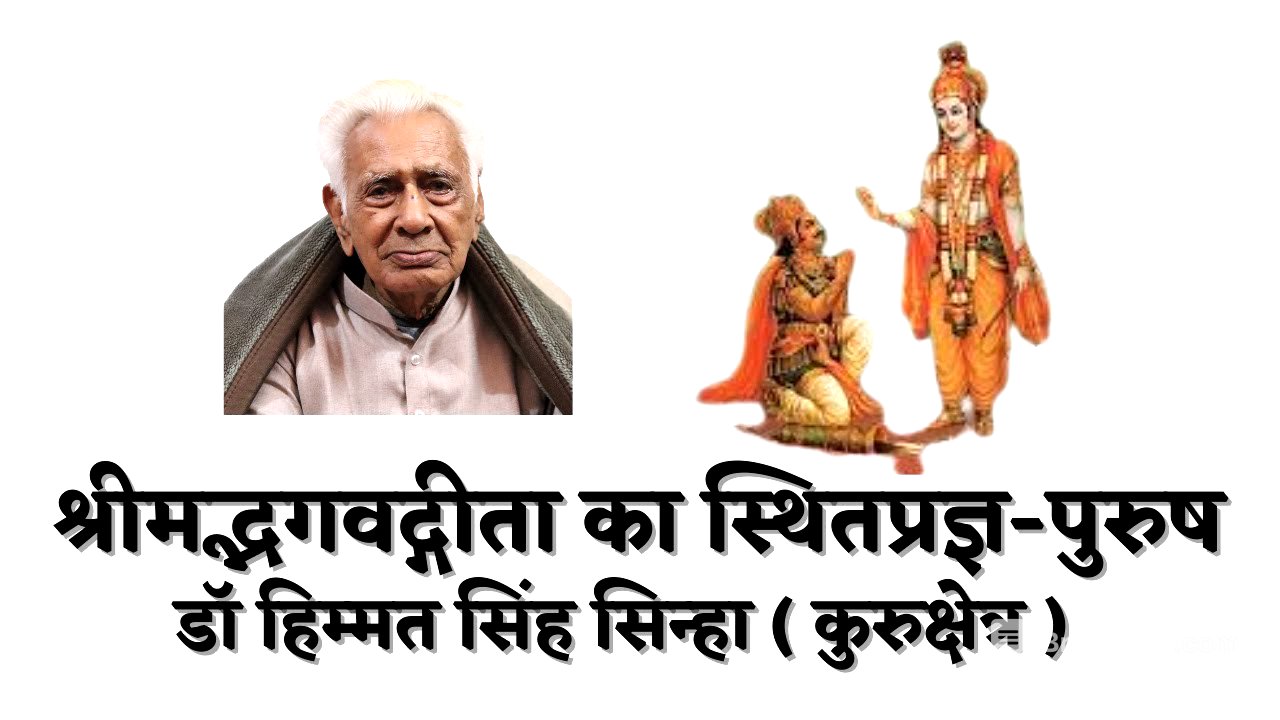
TLDR;
This video discusses the concept of "Sthitaprajna" (a person with steady wisdom) from the Bhagavad Gita, emphasizing the importance of performing one's duty without attachment to results. It explores the characteristics of a Sthitaprajna, including control over senses, equanimity in the face of pleasure and pain, and detachment from worldly desires. The video also addresses common misinterpretations of the Gita's teachings, particularly regarding non-violence, advocating for righteous action and resistance against injustice.
- Focus on performing duty without attachment to results.
- Control over senses and equanimity are key characteristics of a Sthitaprajna.
- Righteous action and resistance against injustice are essential.
Introduction to Sthitaprajna [0:00]
The video begins by introducing the concept of "Sthitaprajna" from the Bhagavad Gita, which refers to a person with steady wisdom. It emphasizes the importance of performing one's duty without being attached to the results. The speaker explains that those who act without concern for the fruits of their actions remain undisturbed in their intellect. Such individuals are considered ideal by the Gita and are called "Sthitaprajna," meaning one whose wisdom is stable.
Arjuna's Question: Defining a Sthitaprajna [1:48]
Arjuna asks Krishna to describe the characteristics of a Sthitaprajna, questioning how such a person speaks and behaves. The speaker criticizes the modern trend of self-proclaimed avatars and emphasizes the importance of questioning their actions and behaviors. He asserts the right to question and not blindly follow beliefs, encouraging critical thinking and freedom of expression.
Controlling the Senses: The First Trait [3:54]
Krishna explains that a Sthitaprajna controls their senses, preventing them from being swayed by desires. The mind often drives the senses to seek pleasure in external objects, but a Sthitaprajna can control these impulses. There are two paths: one driven by sensory pleasures and another that leads to ultimate well-being. The Sthitaprajna chooses the latter, enduring initial discomfort for long-term benefit.
The Analogy of the Tortoise [5:38]
The speaker uses the analogy of a tortoise withdrawing its limbs into its shell to illustrate how a Sthitaprajna withdraws their senses from worldly attractions. Just as a tortoise protects itself from danger by retracting its limbs, a Sthitaprajna shields themselves from distractions and temptations. This ability to control the senses is a key characteristic of an ideal person.
Examples of Sense Control: Arjuna and Urvashi [6:52]
The speaker provides examples of individuals who demonstrated control over their senses, such as Arjuna's encounter with Urvashi. Arjuna, despite being tempted by the celestial nymph, remained steadfast in his devotion and duty. He sought refuge in divine contemplation, illustrating the importance of moral strength and reliance on a higher power to overcome temptations.
Equanimity in Success and Failure [12:41]
The video explains that a Sthitaprajna remains balanced in the face of success and failure, treating both with equanimity. They fulfill their duties without being swayed by the outcomes, understanding that सुख (happiness) and दुःख (sorrow) are transient. This equanimity is considered a form of yoga, enabling one to work without being disturbed by external circumstances.
Indifference to Honor and Dishonor [13:55]
Another quality of a Sthitaprajna is their indifference to honor and dishonor. They are not affected by praise or criticism, maintaining their composure regardless of external validation. The speaker uses the example of Vivekananda, who remained undisturbed even when a snake crawled over him, illustrating the state of deep focus and detachment.
Conquering Desire and Anger [16:35]
The video emphasizes the importance of conquering desire (काम) and anger (क्रोध) to achieve the state of Sthitaprajna. The speaker shares a story of Buddha, who advised dealing with anger by simply drinking water, highlighting the need for self-control. An ideal person controls their desires and anger, remaining detached and unaffected by external stimuli.
Qualities of an Ideal Person [18:18]
The speaker describes the qualities of an ideal person, stating that they neither desire nor reject anything. They are not saddened by adversity nor elated by pleasure, maintaining a balanced state of mind. Such a person remains detached and free from worldly attachments, viewing everything with equanimity.
Critiques of the Ideal Person Concept [19:00]
The video addresses criticisms of the Sthitaprajna concept, particularly from modern thinkers who find it unrealistic. Critics argue that the described state is unattainable and impractical. The speaker counters these arguments by emphasizing the importance of striving for the ideal while acknowledging that perfection is not always achievable.
The Importance of Context and Action [19:53]
The speaker stresses the importance of interpreting the Gita's teachings in context, particularly the initial message to Arjuna not to act like a coward. He criticizes interpretations that promote inaction in the face of injustice, citing the example of Kashmiri Pandits who failed to protect their daughters from atrocities. The speaker argues that the Gita advocates for righteous action and resistance against wrongdoing.
The Message of the Gita: Struggle and Resistance [22:11]
The video asserts that the Gita's primary message is to struggle and resist injustice, not to passively accept it. Even if one dies in the struggle, their sacrifice will be remembered. The speaker contrasts this with the fate of those who run away, who are not honored. He emphasizes that the Gita is a guide to action and courage, not to cowardice.
Anger and Righteousness [22:52]
The speaker distinguishes between unwarranted anger and righteous anger, emphasizing that anger is necessary to protect धर्म (righteousness). He references the Mahabharata, where Bhishma Pitamah stated that अधर्म (unrighteousness) becomes धर्म when necessary. Protecting one's honor and the honor of others justifies the use of force, and such actions are not considered sinful.
The Ideal as a Goal [23:49]
The speaker clarifies that while the ideal of a Sthitaprajna is difficult to achieve, it serves as a goal to strive towards. Just as aiming for 100% in mathematics is an ideal, even achieving 35% is acceptable. The key is to maintain high standards and continuously work towards them.
Critiques of Detachment [24:37]
The video addresses criticisms of the concept of detachment, with some arguing that a person who is indifferent to सुख (happiness) and दुःख (sorrow) is like a lifeless object. The speaker notes that modern interpretations emphasize निष्काम (selfless) action and अनासक्त (unattached) involvement, where one participates in the joys and sorrows of others without being personally affected.
The Modern Interpretation of Ideal Person [27:28]
The speaker explains that modern interpreters view the ideal person as one who is involved in the world but remains detached. They participate in the joys and sorrows of others without being personally affected. The speaker shares an anecdote of a person who received both a condolence letter and a wedding invitation on the same day and responded appropriately to both, illustrating अनासक्त भाव (detachment).
Non-Violence and its Misinterpretations [31:19]
The video discusses the concept of अहिंसा परमो धर्म (non-violence is the highest धर्म) and its misinterpretations. The speaker criticizes the passive acceptance of violence, referencing the earlier example of Kashmiri Pandits. He quotes Gandhi, stating that non-violence should not be used to cover cowardice.
The Necessity of Violence for Protection [32:56]
The speaker argues that non-violence is upheld by the threat of violence. He quotes Bhishma Pitamah, stating that अहिंसा वादी (non-violent individuals) survive because of the protection provided by those who are willing to use force. The speaker emphasizes that the state, with its police and military, is the ultimate enforcer of non-violence.
The Role of the State and True Non-Violence [36:07]
The speaker explains that true non-violence can only be achieved when the state, with its inherent violence, is eliminated. He references Gandhi's view that the state is the greatest source of violence. Only when individuals are morally developed can a society exist without the need for police and military.
The Gita's True Message: Struggle and Action [39:30]
The video concludes by reiterating that the Gita is a call to struggle and action, not to cowardice. The speaker emphasizes that the Gita's teachings should be interpreted holistically, starting with the initial message to Arjuna to fight. By doing so, the true message of the Gita—to engage in righteous struggle—will be understood.