TLDR;
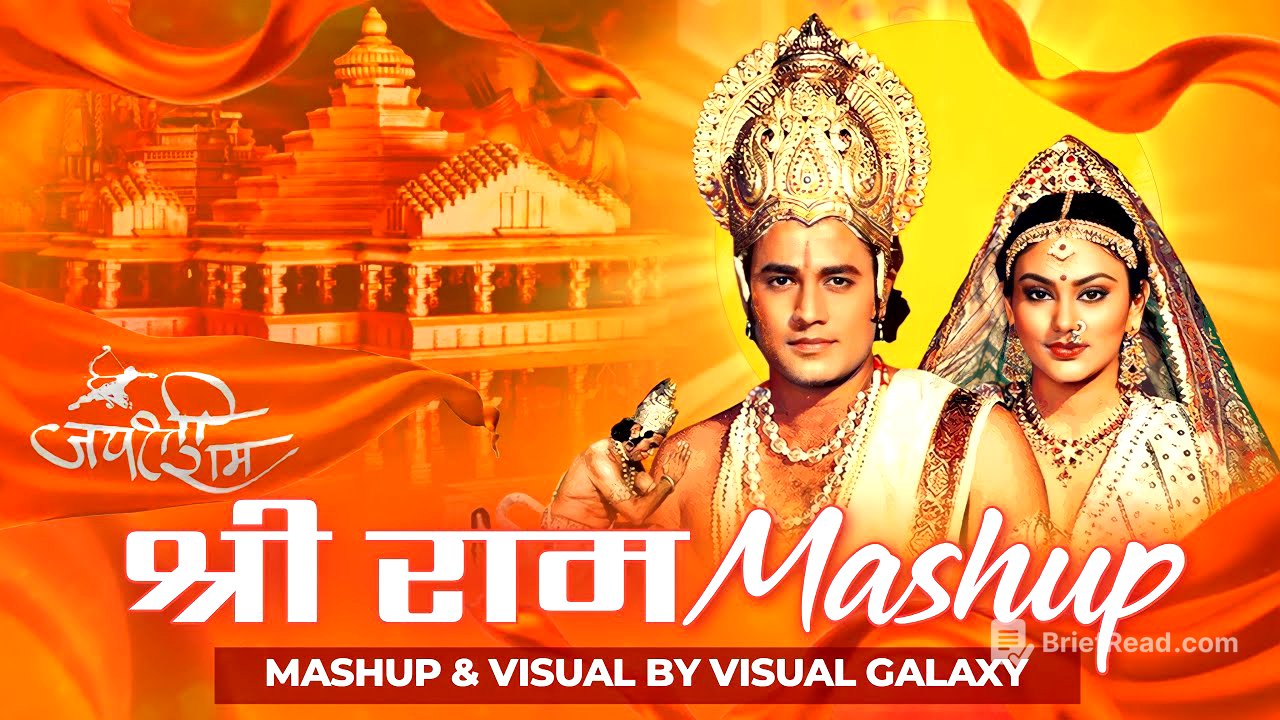
This is a devotional musical compilation centered around Hindu deities, primarily Rama and Krishna. It includes traditional bhajans and songs expressing devotion, praise, and the welcoming of deities into one's life and home. The songs emphasize the omnipresence and benevolence of the divine, seeking blessings and fulfillment through faith.
- Praising Rama and Krishna
- Expressing devotion and seeking blessings
- Welcoming deities into one's life through music
Kausalya Dashrath Ke Nandan [0:01]
The song begins with "Kausalya Dashrath Ke Nandan," a devotional line praising Rama, the son of Kausalya and Dasharatha. It continues by glorifying Rama with a tilak on his forehead and celebrating the victory of Lord Rama. The lyrics also mention Lakshmana and express adoration for Rama and Sita. The repetition of "Hey Ram" emphasizes devotion and reverence.
Mera Aapki Kripa Se [0:39]
This segment features the bhajan "Mera Aapki Kripa Se," which translates to "By your grace, all my work is being done." It expresses gratitude and acknowledges that all accomplishments are due to divine grace. The song also includes the names of Krishna and Vishnu, such as Achyutam, Keshavam, and Narayanam, along with an invocation of Janaki Vallabham, another name for Rama, highlighting the interconnectedness of various deities in Hindu devotion.
Ram Siya Ram Siya Ram Jai Jai Ram [1:36]
The focus shifts to the continuous chanting of "Ram Siya Ram Siya Ram Jai Jai Ram," creating a meditative and devotional atmosphere. The repetition of these names is a common practice in Hinduism to invoke the divine and foster a sense of spiritual connection. The chant also includes "Raghuvar Rahari," another name for Rama, deepening the devotional mood.
Tu Hi Mata Tu Hi Pita [2:05]
The song "Tu Hi Mata Tu Hi Pita" declares the divine as the ultimate mother and father, emphasizing the all-encompassing nature of the deity. It continues by stating "Tu Hi Tu Hai Radha Ka Shyam," identifying the divine as Krishna, the beloved of Radha. This reinforces the idea of the divine being the source of all relationships and the ultimate reality.
Meri Chaukhat Pe Chal Ke Aaj Charo Dham Aaye Hain [2:47]
This section transitions into a celebratory song, "Meri Chaukhat Pe Chal Ke Aaj Charo Dham Aaye Hain," which describes the arrival of the four sacred pilgrimage sites (Char Dham) at one's doorstep. It calls for drums to be played in welcome, signifying a joyous reception. The lyrics express the idea that the divine has personally arrived, bringing blessings and auspiciousness.
Aayo Ji Meri Ram Ratan Dhan Payo [3:06]
The song "Aayo Ji Meri Ram Ratan Dhan Payo" expresses the joy of obtaining the invaluable treasure of Rama's name. It emphasizes the priceless nature of devotion and the spiritual wealth gained through faith. The lyrics also describe the captivating beauty of Shyam (Krishna) and the desire to enshrine the divine image in one's eyes and make life successful through devotion.
Shri Ramchandra Kripalu Bhajman [3:45]
This part features the bhajan "Shri Ramchandra Kripalu Bhajman," a prayer to the compassionate Shri Ramchandra, the remover of worldly sorrows. It describes Rama's lotus-like eyes and moon-like face, highlighting his divine beauty. The lyrics continue to praise Rama, describing his form and qualities, and emphasizing his role as a protector and benefactor.
Man Mandir Mein Rehte Hain Shri Ram [4:15]
The song "Man Mandir Mein Rehte Hain Shri Ram" states that Shri Ram resides in the temple of the heart. It encourages everyone to chant "Jai Jai Ram" and emphasizes that Rama is worshipped even by Shiva. The lyrics describe Rama as the epitome of righteousness and celebrate his victory. The segment concludes with the arrival of Rama, marked by tears of joy and the playing of drums in welcome.