TLDR;
This video provides an overview of DNA, explaining its structure, function, and role in heredity. It covers the organization of DNA within cells, its composition of nucleotides, the concept of complementary base pairing, and how DNA contributes to our unique traits and resemblance to our parents.
- DNA is organized into chromosomes within the nucleus of cells.
- DNA is a polymer made of repeating nucleotide units, each with a sugar, phosphate, and a base (adenine, thymine, cytosine, or guanine).
- Complementary base pairing (adenine with thymine, cytosine with guanine) is essential for the double helix structure.
- Half of our DNA comes from each parent, explaining why we resemble them.
Introduction to DNA [0:00]
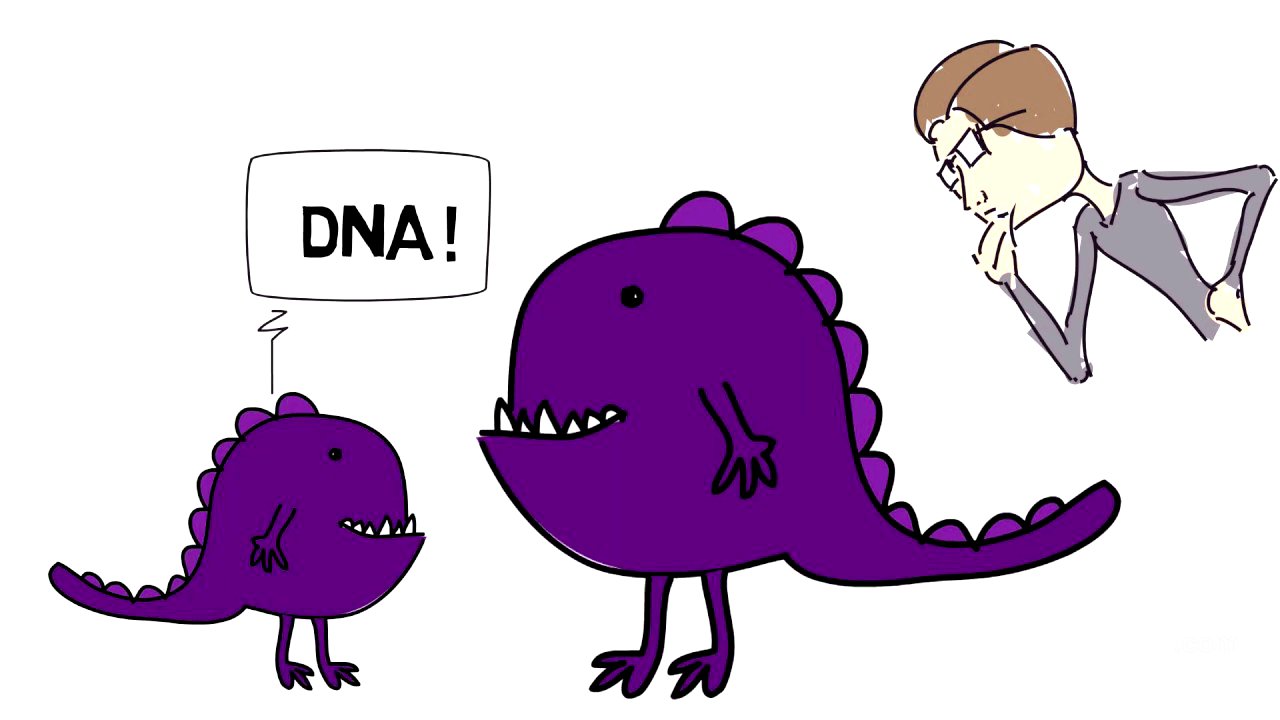
The video starts by addressing the question of why we resemble our parents, attributing it to DNA. It introduces DNA as the fundamental component that makes each individual unique. The video aims to explain DNA in a simple way.
DNA in Perspective [0:18]
The human body contains 30 trillion cells, each housing a nucleus. Within each nucleus are 46 chromosomes, which are thread-like structures composed of DNA. These chromosomes are arranged in pairs. Each chromosome consists of two DNA strands interwoven in a double helix. Every cell contains the same chromosomes and DNA. If stretched out, the DNA in all cells would extend twice the diameter of the solar system.
What is DNA? [1:21]
DNA determines our unique characteristics, influencing facial features and eye color. DNA is further divided into genes, which are specific segments coding for particular traits like eye color, height, and hair color. DNA represents our genotype, dictating how our phenotype (outward appearance) is expressed.
Structure of DNA [2:03]
DNA is a polymer, a substance made of repeating units. In DNA, these repeating units are nucleotides, each composed of a deoxyribose sugar, a phosphate group, and a base. There are four types of nucleotides, distinguished by their bases: adenine, thymine, cytosine, and guanine. The sugar and phosphate remain constant, while the bases vary.
Double Helix and Base Pairing [3:01]
DNA is structured as a double helix, with two nucleotide strands connected by base pairs. Adenine always pairs with thymine, and cytosine always pairs with guanine, a principle known as complementary base pairing. This can be visualized as a ladder, with phosphates as the sides and base pairs as the rungs, twisted into a helix.
Heredity and DNA [3:59]
We resemble our parents because we inherit half of our DNA from each. Out of 46 chromosomes, 23 come from the father and 23 from the mother. Biologists often refer to chromosomes in pairs because similar chromosomes from each parent form a pair.