TLDR;
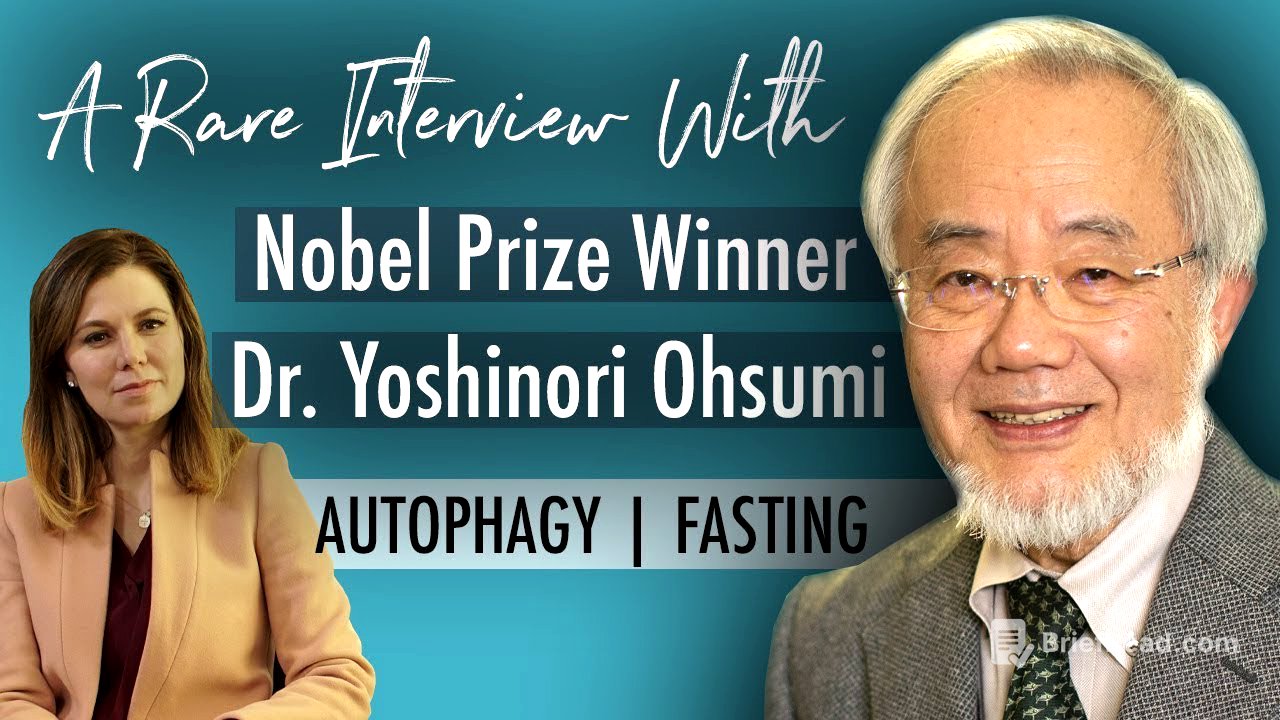
In this interview, Dr. Ohsumi discusses his journey from a malnourished childhood in post-war Japan to becoming a Nobel Prize-winning scientist recognized for his work on autophagy. He describes the significance of his early interest in science, the challenges faced in research, and the evolution of the scientific understanding of autophagy over the years. Dr. Ohsumi emphasizes the vital role of degradation in cellular processes and the importance of autophagy in maintaining health and combating diseases.
- Dr. Ohsumi faced malnutrition and hardship in his early years.
- His passion for science led him to pioneer research on autophagy.
- Understanding protein synthesis, degradation, and the implications for health are key themes.
- Ohsumi shares insights about the evolution of research in autophagy and its significance in medicine.
Dr. Ohsumi's Early Life and Scientific Beginnings [0:00]
Dr. Ohsumi recounts his challenging upbringing in Japan after World War II, highlighting the difficulties of food scarcity and his mother's health issues. Despite these hardships, he grew passionate about science, inspired partly by his father's work at a university. He expressed his dream of being a scientist from a young age, even though he did not initially aspire for awards like the Nobel Prize. His curiosity led him to focus on autophagy in 1988, a field many researchers viewed as unimportant.
Understanding Autophagy [4:50]
Defining autophagy, Dr. Ohsumi emphasizes the importance of degradation, which many scientists overlook. He believes that life is a balance of synthesis and degradation, asserting that understanding the degradation process is critical for comprehending cellular functions. He mentions that current research has only unveiled about 30% of autophagy mechanisms, suggesting significant knowledge gaps and room for future exploration.
Protein Synthesis and Autophagy [8:32]
Dr. Ohsumi discusses the body's protein dynamics, noting that while we consume about 70-80 grams of protein daily, our bodies produce around 200-300 grams, largely from recycled proteins through autophagy. He highlights the rapid turnover of proteins within our bodies, noting that even though we appear consistent over time, our protein makeup is replaced every two to three months.
Receiving the Nobel Prize [10:38]
Reflecting on winning the Nobel Prize in medicine, Dr. Ohsumi describes the surprise and excitement leading up to the award, noting how public attention surged afterward. Although he wasn't fully expecting it, he had received hints from peers about the potential recognition. The prize has led to increased interest in autophagy research, with thousands of papers published annually since his initial work began in 1998.
Advancements and Future Directions in Autophagy Research [16:20]
Dr. Ohsumi highlights the growth of autophagy research since the discovery of autophagy-related genes (ATG) and their role in advancing understanding across various organisms. He expresses enthusiasm about the implications of autophagy in human health and disease management, while acknowledging the lack of specific medications to regulate autophagy. He emphasizes the need for further research on how autophagy affects different cell types and how it can be manipulated for therapeutic purposes.
Vision and Future Goals [26:36]
At the interview's conclusion, Dr. Ohsumi shares his ambitions for the future of his research, aiming to develop quantitative methods to measure autophagy's activity and degradation processes. He stresses the importance of understanding how these processes can improve our knowledge of cellular dynamics and medical applications. His dream is to enhance analytical techniques to better comprehend autophagy in the human body and contribute more effectively to health advancements.