TLDR;
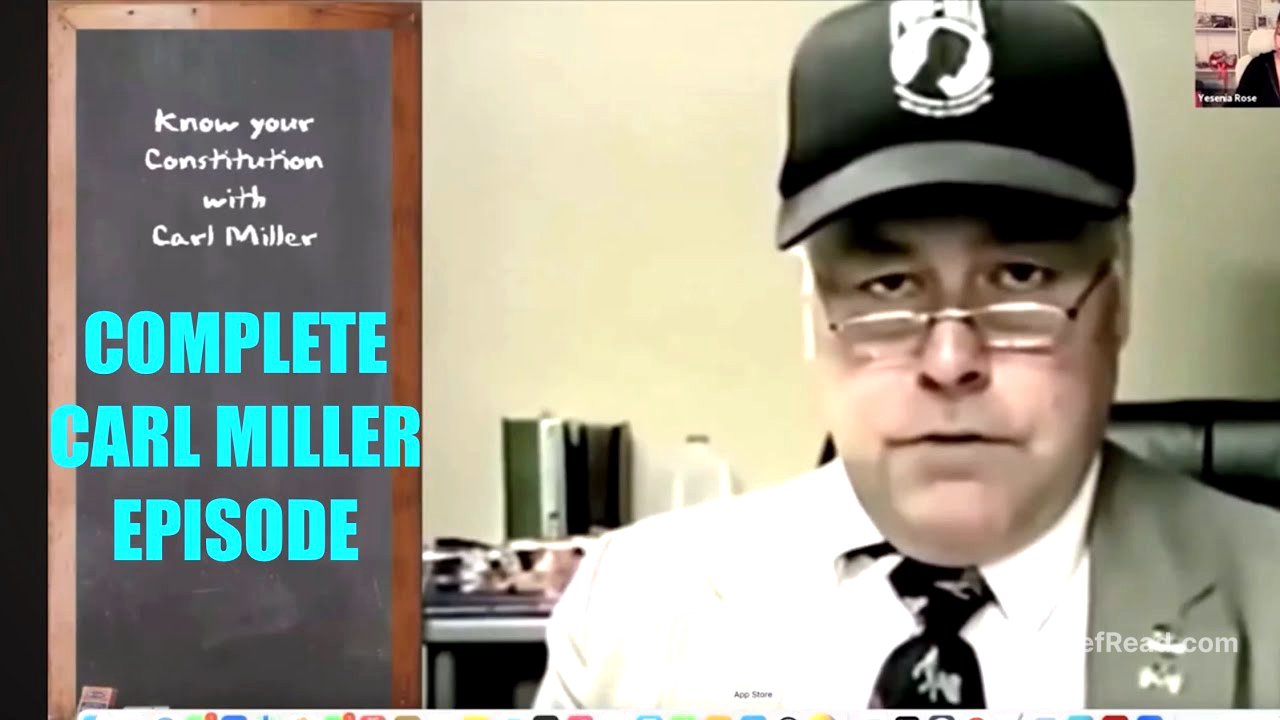
This video provides an in-depth guide to understanding and exercising constitutional rights, emphasizing that these rights are God-given and protected by the Constitution. It stresses the importance of reading and understanding the Constitution, asserting rights, and defending against government overreach. The video also touches on key amendments, landmark court cases like Marbury vs. Madison, and practical strategies for dealing with legal situations.
- Rights originate from God, Constitution protects them.
- Reading and understanding Constitution is crucial.
- Enforce rights timely, or they may be lost.
- Government is limited by the Constitution.
Introduction to Constitutional Rights [0:07]
The speaker, Carl Miller, introduces the importance of understanding the United States Constitution to effectively exercise constitutional rights, which he asserts are endowed by God. He emphasizes that the Constitution is a program designed to protect these rights equally for all citizens, provided they respect the rights of others. Miller, a prior service soldier and participant in a top-secret project, aims to instill the same understanding of duty, honor, and constitutional knowledge that was imparted to him. He stresses that ignorance of one's rights equates to having no rights and encourages viewers to actively learn and defend their constitutional rights.
Importance of Reading and Asserting Your Rights [3:24]
Carl Miller underscores the necessity of reading the Constitution to understand one's rights and assert them promptly. Failure to do so can result in the legal concept of "latches," where the right to proceed is lost due to inaction. He advises obtaining a personal copy of the Constitution from sources like congressmen or government printing offices, describing it as a powerful tool for defending one's rights in court. Miller acknowledges the challenges in asserting these rights, noting that governments and corporations often count on individuals' reluctance to pursue legal action.
The Constitution as an Ironclad Contract [7:10]
The Constitution is presented as a ratified legal document and an ironclad contract between the government and the citizens, enforceable in a court of law. This contract involves an offer by the government to govern, consideration by the citizens, a promise by the government to govern by the Constitution, and an agreement by the citizens to allow the Constitution to be in force. The speaker emphasizes that when government officials sign the Constitution, they do so both as officers of the government and as representatives of the people, creating a binding contract under the statute of frauds.
Supremacy Clause and Marbury vs. Madison [9:01]
Article 6, Paragraph 2, known as the Supremacy Clause, establishes the Constitution and federal laws as the supreme law of the land, binding judges in every state. The landmark case Marbury vs. Madison (1803) reinforces this, asserting that any law conflicting with the Constitution is null and void from its enactment, not just from when it's declared unconstitutional in court. This principle effectively nullifies laws like the Brady Bill and any legislation infringing on constitutional rights, as courts are not bound to uphold them, and citizens are not obligated to obey them.
Second Amendment: The Right to Bear Arms [17:10]
The Second Amendment guarantees the right of the people to keep and bear arms, which shall not be infringed. The speaker refutes the notion of this being a collective right tied to militia membership, asserting it as an individual right for every American. He emphasizes that the amendment contains no stipulations allowing for acceptable infringements, thus forbidding all infringements. The speaker encourages listeners to claim their rights and challenge any encroachment, using resources like Black's Law Dictionary to understand the legal definitions of key terms.
First, Fourth, Fifth, Ninth, and Tenth Amendments [21:06]
The discussion covers several key amendments, including the First Amendment's protection of life, liberty, and the pursuit of happiness, which encompasses the right to work and travel freely. The Fourth Amendment protects against unreasonable searches and seizures, requiring warrants based on probable cause. The Ninth Amendment clarifies that the enumeration of certain rights does not deny or disparage others retained by the people, limiting Congress's authority to add onto the Constitution in ways that remove previously guaranteed rights. The Tenth Amendment reserves powers not delegated to the United States to the states or the people, further limiting government authority.
Fifth and Sixth Amendments: Due Process and Rights of the Accused [31:09]
The Fifth Amendment protects against self-incrimination and ensures due process of law, stating that no person shall be deprived of life, liberty, or property without it. It also covers double jeopardy and just compensation for private property taken for public use. The Sixth Amendment guarantees the right to a speedy and public trial, an impartial jury, the right to confront accusers, the right to subpoena witnesses, and the assistance of counsel. The speaker argues that individuals are often best suited to represent themselves, provided they learn to apply the law effectively.
Seventh Amendment and Constitutional Interpretation [34:17]
The Seventh Amendment preserves the right to a jury trial in civil suits where the value in controversy exceeds $20, emphasizing the jury's role as the ultimate trier of fact. The speaker stresses the importance of understanding the Constitution as a contract and learning its terms to assert one's rights effectively. He introduces the concept of constitutional interpretation, citing legal resources that state constitutions should be liberally interpreted in favor of the citizen, especially concerning provisions safeguarding liberty and security.
Liberal Construction and Effect of Emergency [36:17]
The speaker continues discussing constitutional interpretation, emphasizing that provisions intended to confer a benefit should be liberally construed in favor of the intended beneficiary, which is the citizen. He addresses the effect of an emergency, arguing that not even a grave emergency justifies violating constitutional provisions. The speaker also touches on the construction of the Constitution with reference to common law, noting that the phrases in the Bill of Rights taken from common law must be construed in reference to the latter.
Common Law and Supreme Law [42:57]
The speaker underscores the importance of common law, especially for those not considered citizens under admiralty or maritime law. He reiterates that the Constitution is the supreme law of the land and a contract enforceable in favor of the citizen. The speaker references Am Juris Prudence, urging listeners to consult it for further understanding. He emphasizes that extrinsic aids may not be used to interpret clear and unambiguous constitutional provisions, reinforcing the importance of the plain language of the Constitution.
Enforcing Constitutional Rights [47:12]
The speaker stresses the importance of understanding the Constitution as an ironclad contract enforceable in a court of law, where citizens can claim specific performance. He cites Am Jurist Prudence to support the idea that the Constitution is intended for the judiciary's observance and that courts must enforce its provisions and guard against infringement. The speaker also discusses declaratory judgments as a means to test the constitutionality of statutes and government practices.
Unconstitutional Statutes and Emergency Powers [54:17]
The speaker quotes Am Jurist Prudence on the effect of unconstitutional statutes, stating that they are void and ineffective from the time of enactment, imposing no duties, conferring no rights, and justifying no acts performed under them. He emphasizes that no one is bound to obey an unconstitutional law, and no courts are bound to enforce it. The speaker also notes that Congress cannot give effect to a state law or constitution conflicting with the U.S. Constitution.
The Power of the Constitution [1:01:17]
The speaker emphasizes the power of the Constitution, stating that knowing what's in it puts one in full possession of their American citizenship, while ignorance makes one a slave to extrajudicial forces. He encourages listeners to learn the Constitution and defend their rights, vowing to take legal action against anyone who violates his constitutional rights. The speaker then introduces a unique argument developed over 18 years, focusing on the state's ability to convert a right into a privilege and charge a license and fee for it.
Murdoch vs. Pennsylvania: Rights vs. Privileges [1:03:38]
The speaker introduces the case of Murdoch vs. Pennsylvania (1943), a religious test case involving Jehovah's Witnesses, to illustrate that a state may not impose a charge for the enjoyment of a right granted by the federal Constitution. He emphasizes that no state may convert a secured liberty into a privilege, issue a license and a fee for it. The speaker argues that this case applies to all constitutional rights, not just religious ones, and encourages listeners to identify their rights and challenge any state attempts to convert them into privileges.
Shuttlesworth vs. Birmingham: Ignoring Unconstitutional Licenses [1:08:44]
The speaker introduces Shuttlesworth vs. Birmingham (1962), stating that if a state converts a right into a privilege and issues a license and fee for it, one can ignore the license and engage in the right with impunity, meaning they cannot be punished. He emphasizes the importance of knowing one's constitutional rights and understanding that no state may convert those rights into privileges.
United States vs. Bishop: Willful Intent [1:11:47]
The speaker introduces United States vs. Bishop, which sets a standard for what constitutes a criminal violation in terms of willful intent. He explains that willfulness is defined as an evil motive or intent to avoid a known duty or task under the law with a moral certainty. The speaker argues that if one relies on the U.S. Constitution and Supreme Court decisions, they cannot have willfully committed any crime, thus having a perfect defense to the element of willfulness.
Owen vs. City of Independence: Suing for Rights Violations [1:16:45]
The speaker introduces Owen vs. City of Independence and Maine vs. Thibido, stating that these cases establish that whenever one's constitutional rights are violated, they do so at their own peril. He explains that there is no judicial immunity for violating someone's constitutional rights, and judges are deemed to know the law and are sworn to uphold it.
Briers vs. United States: Constitutional Interpretation [1:20:59]
The speaker introduces Briers vs. United States, a search and seizure case that sets constitutional standards. He emphasizes that constitutional provisions for the security of person and property are to be liberally construed in favor of the citizen, and it is the duty of the courts to be watchful for the constitutional rights of the citizen and against any stealthy encroachment therein.
Boyd vs. United States and Miranda vs. Arizona: Protecting Liberties [1:22:52]
The speaker introduces Boyd vs. United States, stating that it protects against encroachment of constitutionally secured liberties. He also discusses Miranda vs. Arizona, emphasizing the importance of knowing one's rights to remain silent and to have an attorney present during questioning. The speaker warns against talking to federal agents without an attorney, as they may twist, lie, cheat, and steal to make it into something one didn't do.
Norton vs. Shelby County: Unconstitutional Acts [1:31:48]
The speaker introduces Norton vs. Shelby County, stating that an unconstitutional act is not law, confers no rights, imposes no duties, affords no protections, and creates no office. He emphasizes the importance of knowing the law and being able to argue effectively in court.
Practical Advice and Advanced Programming [1:33:57]
The speaker provides practical advice on how to act when pulled over by the police, recommending courtesy and calmness. He also introduces advanced programming, including reading The Federalist Papers and Joyce Lee Malcolm's book on the right to keep and bear arms. The speaker discusses the importance of understanding enabling clauses in laws and the historical review of trends and authorities in law.
Right to Travel and Shapiro vs. Thompson [1:46:40]
The speaker discusses the right to travel, citing Shapiro vs. Thompson, which establishes that all citizens must be free to travel throughout the United States uninhibited by statutes, rules, or regulations that unreasonably burden or restrict this movement. He explains how to use this case to argue against license plates and driver's licenses, stating that a state cannot convert a secured liberty into a privilege and issue a license and a fee for it.
Applying Legal Principles to Real-Life Scenarios [1:52:41]
The speaker explains how to apply the legal principles discussed to real-life scenarios, such as traffic stops. He emphasizes the importance of knowing one's constitutional rights, understanding the cases that support those rights, and being able to articulate those rights in court. The speaker also shares personal anecdotes and stories to illustrate how these arguments have been used successfully in the past.
Challenging Jurisdiction and the Importance of Knowledge [1:57:10]
The speaker emphasizes the importance of challenging jurisdiction in court, stating that once jurisdiction is challenged, the burden falls on the plaintiff to prove jurisdiction. He shares a story about a truck driver who successfully challenged jurisdiction in court, highlighting the importance of knowledge and preparation. The speaker also discusses the importance of submitting a bill for lost time from work and other damages when one wins a case.
The Power of Knowledge and the Importance of Standing Up for Your Rights [2:01:19]
The speaker emphasizes the power of knowledge and the importance of standing up for one's rights. He shares a story about a judge who was impressed by a pro se litigant's knowledge of the law and dismissed the case. The speaker also discusses the importance of treating others with courtesy and respect, even when challenging their authority.
Challenging Authority and the Importance of Community [2:06:12]
The speaker discusses the importance of challenging authority and standing up for one's rights, even when it means facing opposition. He shares a story about Dr. Kavorian, who was being unfairly targeted by the government, and how a writ of quo warranto was used to help him. The speaker also emphasizes the importance of community and supporting others who are fighting for freedom and justice.
Police Powers and Constitutional Limitations [2:08:16]
The speaker defines police powers as the right of eminent domain of a state or political subdivision to enact laws for the common good and welfare and to curb crime within constitutional limitations. He emphasizes that the 10th Amendment sets a clear limit on police powers and that they cannot be used to take away rights that were previously guaranteed under the Constitution.
The Importance of Keeping the Republic [2:10:38]
The speaker emphasizes the importance of keeping the republic and defending the Constitution. He encourages listeners to get involved in their communities and to challenge those who are violating their rights. The speaker also shares a personal story about being pulled over by the police and how he used his knowledge of the law to avoid getting a ticket.
Personal Anecdotes and the Importance of Standing Up for What You Believe In [2:12:39]
The speaker shares personal anecdotes about his experiences in court and in life, emphasizing the importance of standing up for what you believe in and defending your constitutional rights. He also discusses the importance of community and supporting others who are fighting for freedom and justice.
The Importance of Knowing Your Rights and the Dangers of Government Overreach [2:16:10]
The speaker emphasizes the importance of knowing your rights and the dangers of government overreach. He shares a story about a time when he was almost thrown in jail for defending his constitutional rights, highlighting the importance of being prepared and knowing the law.
The Importance of Remembering Patriots and Honoring Their Sacrifices
The speaker emphasizes the importance of remembering patriots and honoring their sacrifices. He shares stories about some of the people who have inspired him, including Donald, the editor of the constitutionalist newspaper, and the members of the Apache troop, first squad, ninth air cavalry.
Practical Advice for Dealing with Law Enforcement [2:24:20]
The speaker provides practical advice for dealing with law enforcement, recommending courtesy and calmness. He also emphasizes the importance of knowing your rights and being prepared to defend them in court.
The Federalist Papers and Constitutional Interpretation [1:40:25]
The speaker recommends reading The Federalist Papers to understand the intent of the framers of the Constitution. He cites Cohen versus Virginia, which establishes The Federalist Papers as the exact record of the framers' intent. The speaker emphasizes that understanding the intent of the lawmakers makes one's case even stronger for the Constitution to be interpreted in their favor.
The Importance of the Constitution and the Call to Action [3:56:00]
The speaker emphasizes the importance of the Constitution and the need to defend it against all enemies, foreign and domestic. He encourages listeners to get involved in their communities, to challenge those who are violating their rights, and to support organizations that are fighting for freedom and justice.
Title 31, Section 742: Tax Exemptions [4:49:37]
The speaker introduces Title 31, Section 742 of the United States Code, which states that all stocks, bonds, treasury notes, and other obligations of the United States government shall be exempt from state, municipal, and local authority. He argues that this law prevents states from taxing citizens based on Federal Reserve notes, as they are obligations of the U.S. government.
The Power of Quo Warranto and Challenging Authority [4:59:31]
The speaker introduces the concept of quo warranto, a legal action used to challenge the authority of a corporation or government entity. He explains how to use this tool to challenge cities and townships that are violating constitutional rights. The speaker also emphasizes the importance of knowing one's rights and being prepared to defend them in court.
The Importance of Challenging the System and Standing Up for Freedom [5:08:57]
The speaker emphasizes the importance of challenging the system and standing up for freedom. He encourages listeners to educate themselves, to get involved in their communities, and to support those who are fighting for liberty. The speaker also warns against the dangers of government overreach and the need to be vigilant in defending one's constitutional rights.