TLDR;
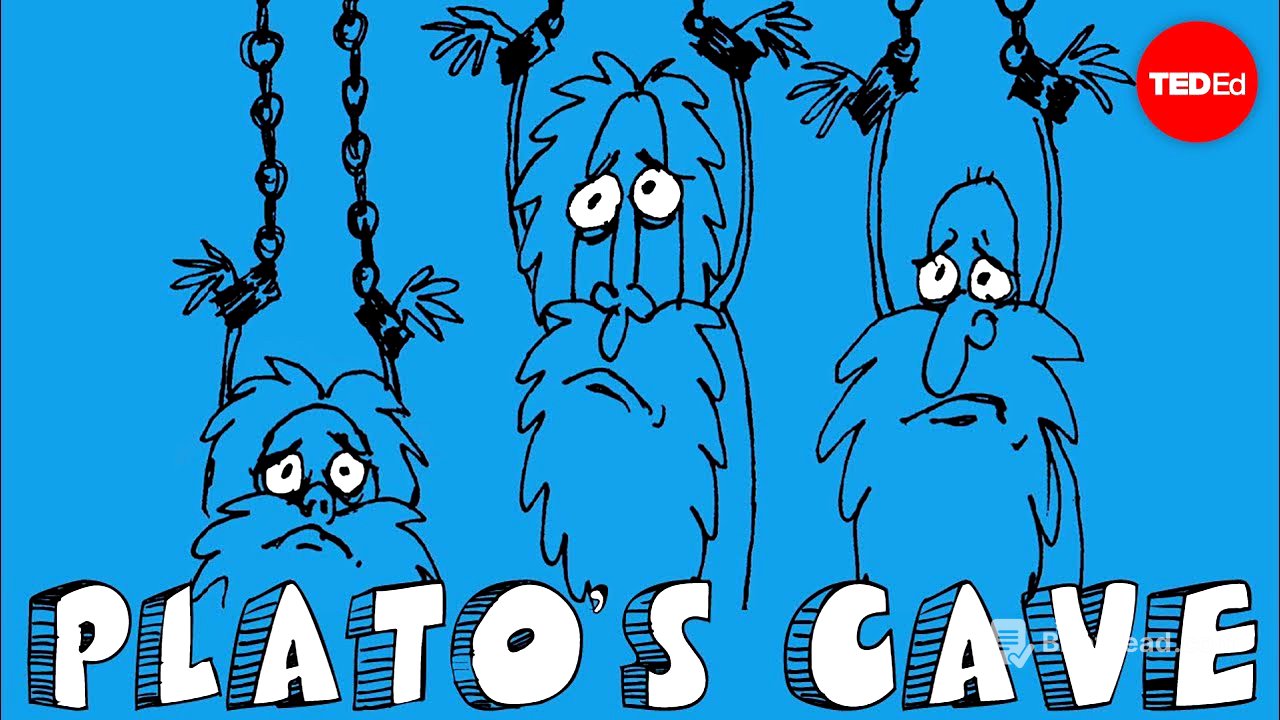
Plato's Allegory of the Cave explores the nature of reality, knowledge, and the challenges of enlightenment. The allegory depicts prisoners who mistake shadows for reality until one escapes and discovers the true world outside. Upon returning, the enlightened prisoner faces rejection and disbelief from those still in the cave. The allegory connects to Plato's theory of forms, questioning the origin of knowledge, the problem of representation, and the nature of reality.
- Prisoners mistake shadows for reality.
- An escapee discovers the true world outside the cave.
- The enlightened one faces rejection upon returning.
- The allegory questions the nature of reality and knowledge.
Introduction [0:06]
The video introduces Plato's Allegory of the Cave as a metaphor for life, contrasting it with other figurative explanations of existence. It sets the stage for exploring profound philosophical questions about reality, knowledge, and the meaning of life through this ancient allegory. The allegory, found in Book VII of "The Republic," illustrates life as being chained in a cave, forced to watch shadows on a wall.
The Allegory of the Cave [0:41]
The Allegory of the Cave depicts prisoners confined since birth in a cavern, unaware of the outside world. Chained and facing a wall, they can only see shadows cast by objects passing in front of a fire, which they believe to be real. This scenario is part of Plato's examination of concepts like justice, truth, and beauty in his vision of an ideal society. The prisoners classify these illusions, mistaking them for actual entities.
The Escape and Discovery [1:13]
One prisoner is freed and brought outside, experiencing disorientation and pain from the sunlight. Initially, the freed prisoner struggles to believe that the real objects are more authentic than the shadows. Gradually, the prisoner's eyes adjust, allowing him to see reflections, objects, and finally the Sun, recognizing it as the source of all light and reality.
The Return and Rejection [1:42]
The enlightened prisoner returns to the cave to share his discovery but struggles to see in the darkness, appearing clumsy and confused. The other prisoners perceive him as stupid and blinded by his journey, resisting his attempts to free them and rejecting the notion of a reality beyond the shadows. This return illustrates the difficulty and danger of trying to enlighten those comfortable in their ignorance.
Philosophical Implications [2:16]
Plato uses the allegory to represent the philosopher's challenge in educating the public, drawing parallels to Socrates' fate for disrupting social order. The allegory connects to Plato's theory of forms, where physical world objects are seen as imperfect reflections of ideal forms. This raises fundamental questions about the origin of knowledge, the problem of representation, and the nature of reality.
Interpretations and Modern Relevance [2:50]
The allegory's enduring appeal lies in its multiple interpretations, including theological views of ideal forms existing in a creator's mind and linguistic interpretations of abstract terms. It questions whether we can truly know if the world outside the cave is more real than the shadows, challenging our confidence in what we think we know. The video prompts viewers to consider whether they would risk breaking free from familiar illusions to pursue truth, even at the cost of social connections.
Conclusion [3:54]
The video concludes by posing the choice between truth and habit, light and shadow, acknowledging the difficulty of these decisions. It offers consolation that many others grapple with these questions, suggesting a shared human experience in the search for understanding and reality. The video encourages viewers to consider whether they will break free to struggle towards the light, even if it means standing alone.