TLDR;
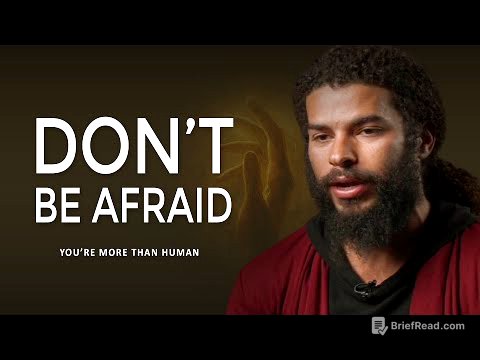
In this video, Reza Shirazi shares his personal experiences with significant trading losses and offers insight into how to recover after such setbacks. He discusses the psychological effects of financial losses and the narratives of renowned traders who faced similar challenges. The video outlines a structured approach to recovery, breaking it down into three essential stages and a 30-day recovery plan.
- Acknowledgment of experiencing significant losses in trading.
- Psychological effects of losses, compared to grieving.
- Three-step recovery process and a comprehensive 30-day plan.
Confession: I Lost 60% of My Capital in 48 Hours [0:00]
Reza begins by confessing that he has experienced profound losses in trading, notably losing 60% of his capital in just 48 hours. He recounts the shock and feelings of emptiness he faced during that time. Instead of focusing on how not to incur losses, he emphasizes the importance of how to recover after a significant setback, acknowledging that every trader eventually faces such losses. He introduces the concept that a major loss can be both a challenge and an opportunity for growth.
Why Can't You Think Clearly After a Big Loss? (MIT Research) [0:50]
Reza reveals that researchers at MIT found that areas of the brain activated during grief also respond to financial loss. This emotional turmoil impedes logical decision-making. He quotes statistics indicating that 80% of traders who suffer significant losses exit the market within six months, not due to lack of funds but due to a loss of self-trust. However, the remaining 20% often return stronger, knowing that big losses can eventually lead to significant growth.
A Personal Question: What is Your Biggest Loss? [2:30]
Encouraging viewers to reflect on their experiences, Reza asks them to remember their biggest losses and the emotions associated with these events. He sets the stage for discussing the stories of legendary traders who faced severe setbacks but made remarkable comebacks.
The Story of Paul Tudor Jones: From 70% Loss to $100 Million in One Day [2:50]
Reza shares the story of Paul Tudor Jones, who, early in his career, suffered a staggering 60-70% loss. Rather than quitting, he took months off to analyze his mistakes and learn about liquidity—realizing this was his weakness. Years later, during the market crash of October 1987, he utilized the lessons learned to profit $100 million in a single day. This story illustrates that overcoming failure can lead to immense success.
How Long Does It Take to Recover? Jones Says a Few Months, Schwartz Ten Years... [9:00]
Reza discusses the variance in recovery times for traders after significant losses using examples from Jones and Marty Schwartz, who experienced a decade of losses. The key takeaway is that recovery isn't uniform; some need months, while others might take years, underscoring the importance of personal resilience and strategy.
The Story of Marty Schwartz: 10 Years of Loss, $40,000 Debt, and a Psychological Breakthrough [9:20]
The video transitions to Marty Schwartz’s story, who dealt with a decade of continuous losses and debt. During this grueling period, he learned something pivotal: his losses stemmed from poor trading psychology rather than a flawed strategy. By recognizing his mistakes and committing to discipline, Schwartz eventually turned his situation around, exemplifying the power of persistence and mindset in trading.
What do These Two Have in Common? [14:30]
Reza outlines the common traits shared by both Jones and Schwartz, emphasizing their refusal to give in to defeat. Their resilience and commitment to analyzing their setbacks set them apart from those who stop trading after losses.
Step One of Recovery: Circuit Breaker—Why You Need to Step Away from the Market [14:50]
The first step in recovery involves taking a break from trading after a loss. Reza explains that stepping away helps lower stress hormones in the body, allowing for clearer thinking. He stresses the importance of resisting the urge to monitor the market and instead encourages self-care during this period.
Step Two: Dissection—Questions to Ask Yourself [16:30]
Reza elaborates on the second step, which involves thoroughly analyzing past trades. Traders should dissect their decision-making process, questioning their analysis and execution during the losing trades. This self-reflection is crucial in deriving lessons for future trading.
Step Three: Gradual Return—Why You Should Start with 25% Normal Volume [18:00]
In this stage, Reza explains the importance of easing back into trading using only 25% of their usual trading volume. This gradual return helps rebuild confidence and reinforces discipline while minimizing risk. He emphasizes the necessity of sticking to defined trading rules during this process.
If You’ve Made It This Far, Give a Like... [19:30]
Reza encourages viewers to show support for the content with likes and to engage in the comment section to share their own experiences with losses and recoveries.
The 30-Day Recovery System: What to Do Week by Week [19:50]
Reza introduces a structured 30-day recovery plan. He outlines specific actions to take each week, including complete withdrawal from the market in the initial days, followed by a gradual reintroduction. The purpose is to develop consistency and discipline for future trading success.
The Phoenix Law: Why Your Biggest Loss Can Be the Best Thing to Happen to You [22:00]
He discusses the Phoenix Law, which posits that significant losses can serve as advantageous lessons, providing insights that others may overlook. These experiences can become a catalyst for growth.
Final Summary: Loss is Part of the Game—Here Lies the Difference Between Amateurs and Professionals [22:30]
Reza emphasizes that losses are an inherent part of trading, differentiating between amateurs, who struggle to cope with losses, and professionals, who understand how to manage and learn from them. He reaffirms that effective recovery strategies can turn failures into valuable lessons leading to success.
Comment: What Was Your Biggest Loss and What Did You Learn? 👇 [23:15]
Concluding the video, Reza invites the audience to reflect on their biggest losses and share their learnings in the comments, fostering a community dialogue centered around growth and resilience in trading.