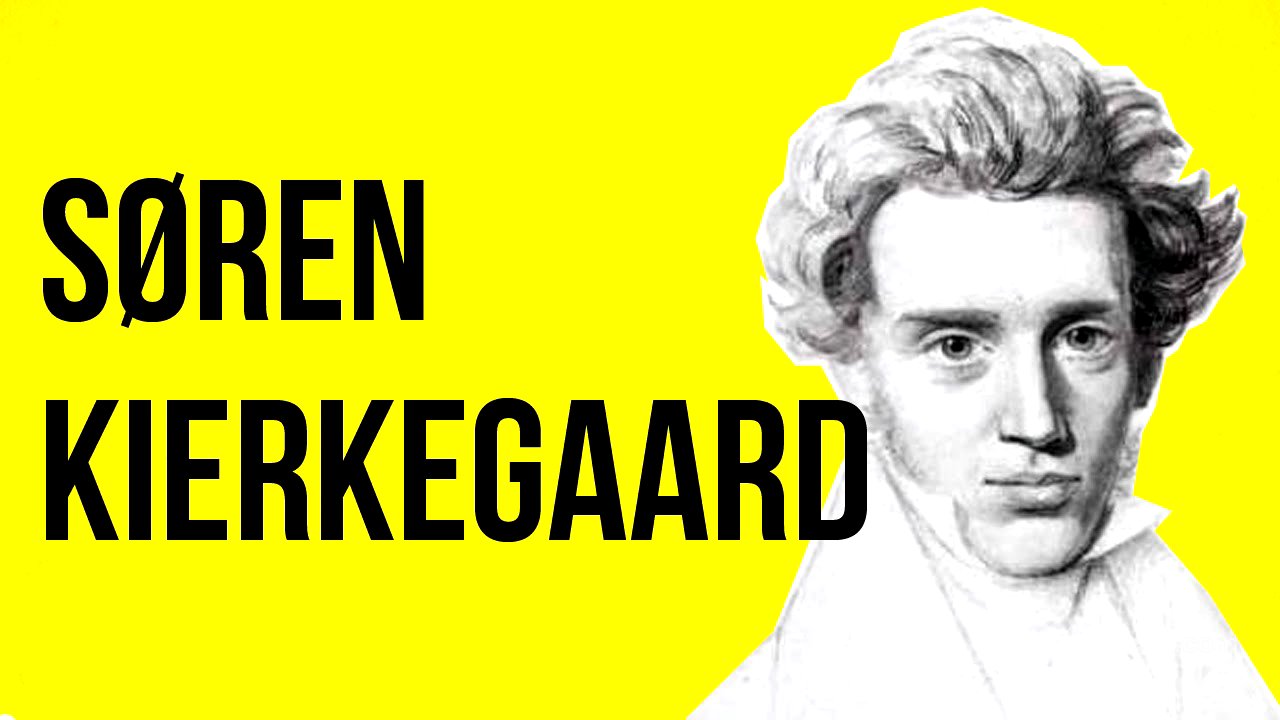
TLDR;
Søren Kierkegaard, a 19th-century Danish philosopher, is known for his exploration of anxiety, faith, and the human condition. He critiqued societal norms, particularly around love and marriage, and introduced the concept of "angst." While he proposed Christianity as a solution, his lasting impact lies in his insightful diagnosis of human struggles and his darkly humorous perspective on life's absurdities.
- Critiqued societal norms and illusions.
- Introduced "angst" as a key concept.
- Proposed a "leap of faith" towards Christianity.
- Offers a darkly humorous perspective on the human condition.
Introduction to Søren Kierkegaard [0:04]
Søren Kierkegaard, a 19th-century Danish philosopher, was known for his brilliance, gloom, anxiety, and humor. Born into a wealthy family in Copenhagen in 1813, he was the youngest of seven children and was deeply affected by death from a young age, a theme that would dominate his work. Despite his frail health and the early deaths of his siblings, Kierkegaard produced 22 books in 15 years, driven by a desire to save himself and humanity, ultimately dying at the age of 42 from a spinal disease.
Critique of Modern Life [0:58]
Kierkegaard aimed to awaken people from their sentimental illusions by attacking modern life's pillars, including faith in family, trust in work, attachment to love, and the sense of purpose. He mocked the smug, particularly the Danish bourgeoisie and the established church, for their superficial understanding of life, where meaning was reduced to material success and social conformity. He specifically criticized the 19th-century ideal of passionate marriage, which attempted to combine romantic love with the stability of a long-term relationship, arguing that passion and domesticity are incompatible.
The Tortured Love Life [2:36]
Kierkegaard's views on love were influenced by his own experience. He fell in love with Regine Olsen but broke off their engagement, realizing that marriage would extinguish the very love he felt for her. This personal conflict led him to believe in the incompatibility of romantic ideals and practical realities, famously stating, "Marry and you will regret it. Don't marry; you will also regret it," highlighting the paradoxical nature of life's choices.
Existentialism and Angst [3:27]
Kierkegaard is considered a founder of existentialism, exploring themes later embraced by thinkers like Sartre and Camus. His book, "The Concept of Anxiety," introduced the term "angst," describing the awareness of the vast number of choices we face and our limited understanding of how to make wise decisions. He believed that unhappiness is inherent in life, as no one can be completely content, even for a moment, and that life's brevity and meaninglessness are often ignored in the face of everyday routines.
The Leap of Faith [4:59]
In his later works, Kierkegaard proposed Christianity as a solution, emphasizing a surrender to the simple truths of the Gospels taught by his father. He advocated for a "leap of faith," suggesting that one should abandon rational attempts to prove God's existence and instead embrace faith as a total solution. This involved rejecting the established Danish church and embracing a simple, almost peasant-like devotion to Christ, including a willingness to sacrifice worldly attachments and love all humans.
Conclusion [5:59]
While Kierkegaard's religious solutions may not resonate with everyone, his value lies in his insightful and often bitter analysis of the human condition. He offers a perspective for those disillusioned with the world, providing understanding and companionship in dark times when sentimental illusions have faded. His work remains relevant for its profound exploration of anxiety, choice, and the search for meaning in a seemingly absurd world.