TLDR;
This video explores the resistance of indigenous Papuan communities against the Indonesian government's large-scale deforestation project for industrial food and energy production. It highlights the cultural and environmental threats faced by these communities, their unique forms of resistance, and the historical context of colonialism and military operations in West Papua. The video also uncovers the complex web of corporate interests and government policies driving the exploitation of Papua's natural resources.
- Indigenous Papuans are resisting government-led deforestation for food and energy projects.
- They employ cultural and religious symbols like red crosses and pig feasts as forms of resistance.
- The project involves powerful corporations and has a history of displacing indigenous communities.
Intro [0:27]
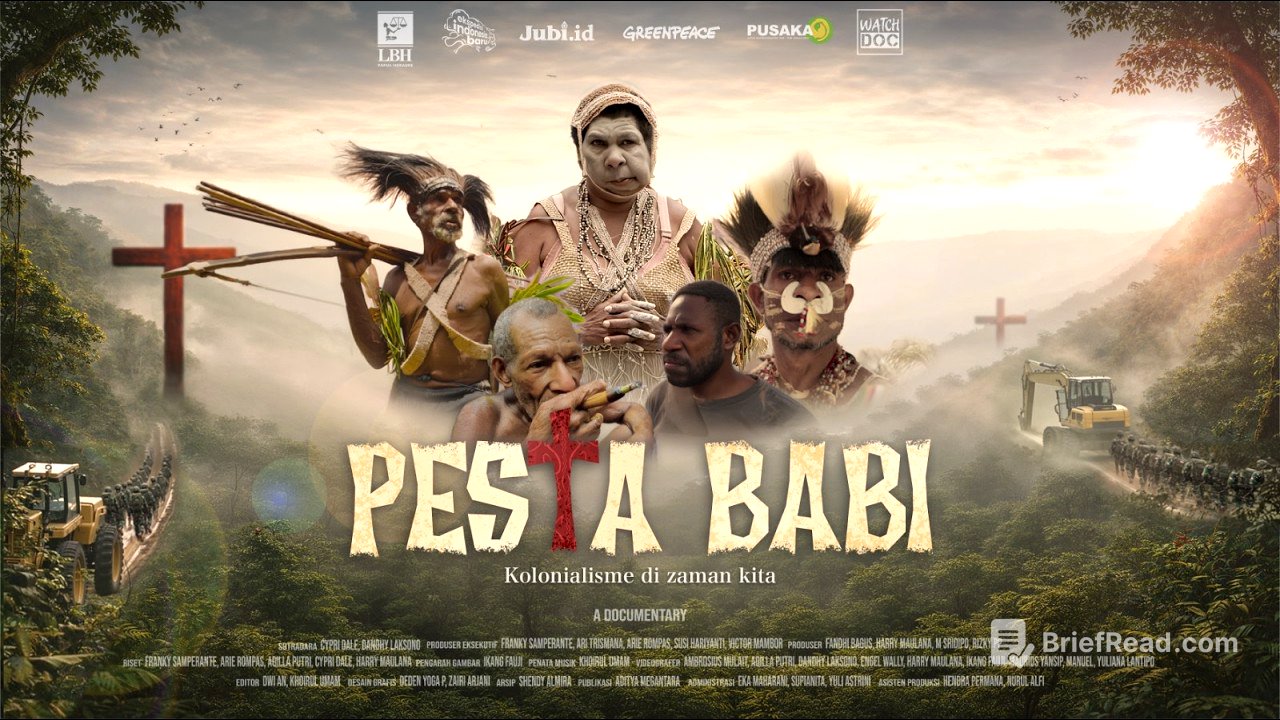
In South Papua, a 17-meter swamp ironwood is being prepared to create a towering red cross, symbolizing resistance against the Indonesian government's plan to seize 2.5 million hectares of Papuan forest for industrial food and energy initiatives. This act of defiance mirrors the Muyu people's preparation for a significant feast, both representing unique forms of opposition against powerful entities threatening their ancestral lands and way of life. These actions, like the red cross movement and traditional feasts, are becoming increasingly rare but vital expressions of cultural and social identity in the face of encroaching development.
PIG FEAST Colonialism in Our Time [5:18]
The film addresses the alarming deforestation occurring in Papua, Indonesia, which holds one of the world's largest remaining tropical rainforests. The Indonesian government is clearing over 2.5 million hectares of forest for oil palm, sugarcane, rice, and cattle ranching, a National Strategic Project for Food and Energy driven by the ambitions of multiple presidents. This project involves converting vast areas into rice fields, sugarcane plantations for bioethanol (E-10 blending with gasoline), palm oil plantations for biodiesel (B-50 blending with diesel), and cattle ranching, with ten companies, all owned by the same family, heavily involved.
The Victim [18:52]
The film introduces five indigenous Papuans, each representing communities affected by the Indonesian government's food and energy project. Yasinta Moiwend from the Marind-Anim community in Ilwayab District has seen her community's forests and swamps destroyed by the construction of a 135-kilometer road and the creation of rice fields, guarded by the Indonesian military. Natalis Buer, a millennial farmer from Tanah Miring District, feels neglected after his community’s forest was converted into rice fields, lacking the capital for intensive rice cultivation. Vincen Kwipalo from the Yei-Nan community in Jagebob District is under attack as their customary forests are destroyed for sugar and bioethanol plantations, with land seized for military headquarters. Franky Woro from the Awyu community in Fofi District faces the threat of oil palm plantation expansion for biodiesel. Wilem Kimko from the Muyu community in Woropko District prepares for the worst-case scenario, living on the periphery of these projects without formal citizenship. These individuals represent millions of indigenous Papuans whose existence is threatened by environmental destruction and military operations.
Who is threatened [12:59]
Franky Woro and the Awyu people are facing the takeover of their hunting grounds by an oil palm plantation company. They have been installing red crosses and customary blockades to resist the encroachment. Despite these efforts, they face intimidation from military personnel demanding they release their land. The Awyu communities continue to gather information and resist the company, understanding the dangers of signing any documents that could be used to manipulate them. Franky emphasizes the importance of communities willing to reject the company and chiefs willing to speak out.
The Abandoned [45:40]
Natalis Buer in Tanah Miring District, Merauke, exemplifies the struggles of indigenous Papuans in the wake of forest clearing for rice fields. Despite the government's efforts to establish rice farming, Natalis and others lack the necessary capital to buy seeds, fertilizer, and cover maintenance costs. Filomina, another Papuan farmer, shares her experience of repeatedly losing money due to the high cost of production compared to the selling price of unhusked rice, leading her to abandon her rice fields. These communities feel abandoned and are struggling to adapt to rice farming, while their traditional food and water sources are replaced by rice paddies and sugarcane plantations, leading to water contamination from pesticides.
The Failed Presidents [54:08]
The film highlights the history of failed food estate projects in Indonesia, particularly those involving the military. General Suharto's ambitious project in Kalimantan to clear one million hectares of peatland for rice fields resulted in massive deforestation, land fires, and haze disasters. Similarly, President Joko Widodo's food estate project, managed by General Prabowo, also failed. Despite these failures, the government is now attempting to clear 2.5 million hectares in Papua for similar projects. These projects prioritize energy production over food, focusing on palm oil for biodiesel and sugarcane for bioethanol, with land concessions granted to a single family.
The Companies [59:25]
In Boven Digoel, Awyu women like Priska Beni and Maria Tebung rely on fishing and gathering for their livelihoods, resisting the intrusion of oil palm and sugarcane companies. Priska, who worked nine years on an oil palm plantation, earned meager wages and had no savings, reinforcing her opposition to corporate encroachment. The film highlights the role of Korindo, a corporate group with businesses in industrial forestry and oil palm plantations, which has provided financial support to the Archdiocese of Merauke, leading to controversy. The film also discusses Indonesia's bioethanol and biodiesel programs, which mandate the blending of plant-based fuels with fossil fuels, driving the clearing of forests for sugarcane farming.
The Companies [1:09:14]
The film exposes the complex web of corporate ownership behind the sugarcane and bioethanol plantations in Merauke. Nine of the ten companies granted land concessions are ultimately owned by the Fangiono family through a series of holding companies. Martias Fangiono, a palm oil tycoon, and his daughter Wirastuty Fangiono, are key investors in the sugarcane and bioethanol projects. The film also highlights the involvement of Martua Sitorus, the owner of Wilmar International, and the connection between Sugar Research Australia and Fangiono's Global Papua Abadi Ltd. Despite past corruption cases, these global biodiesel and bioethanol giants continue to play a significant role in Indonesia's energy sector.
The Companies [1:17:59]
The film draws parallels between the current situation in Papua and historical instances of sugarcane colonialism in Java, Suriname, and Fiji, where forests were cleared, and laborers were exploited. Today, sugarcane colonialism continues in Papua for biofuel or bioethanol, with the involvement of local collaborators, bureaucrats, military, and religious figures. However, there is also resistance from people defending their land and fighting back.
The Companies [1:19:59]
The Awyu community expresses their rejection of the government's National Strategic Project, highlighting the destruction of their environment and the lack of justice for the Papuan people. They emphasize their connection to the land and their determination to protect it for future generations. Churches in Indonesia support indigenous people who reject national strategic projects and militarism. The film concludes by drawing parallels between historical atrocities and the ongoing extermination of the Melanesian people in West Papua, as well as the continuation of colonialism in the region.
The Companies [1:26:17]
Wilem Kimko and the Muyu people in the interior of Boven Digoel are preparing for a traditional pig feast called Awon Atatbon. This feast requires ten years of preparation, with pigs raised by the organizers themselves and released into the forest. The pig feast serves as a rotating savings and credit association, preserving their culture and environment. Wilem Kimko fears the vanishing of their civilization due to threats to their ecosystem and forest, and the pig feast is a way to consolidate themselves and build alliances in the face of encroaching development.