TLDR;
This video provides six key indicators to help identify when someone is lying. These indicators include observing nervous gestures, eye movements, blinking patterns, changes in saliva production, breathing patterns, and the authenticity of smiles. The video also includes an interactive game to test the viewer's ability to distinguish between genuine and fake smiles.
- Nervous gestures, especially around the face, often accompany lying due to stress.
- Eye movements can indicate whether a person is recalling or constructing information.
- Changes in blinking rate and saliva production are physiological responses to stress that can signal deception.
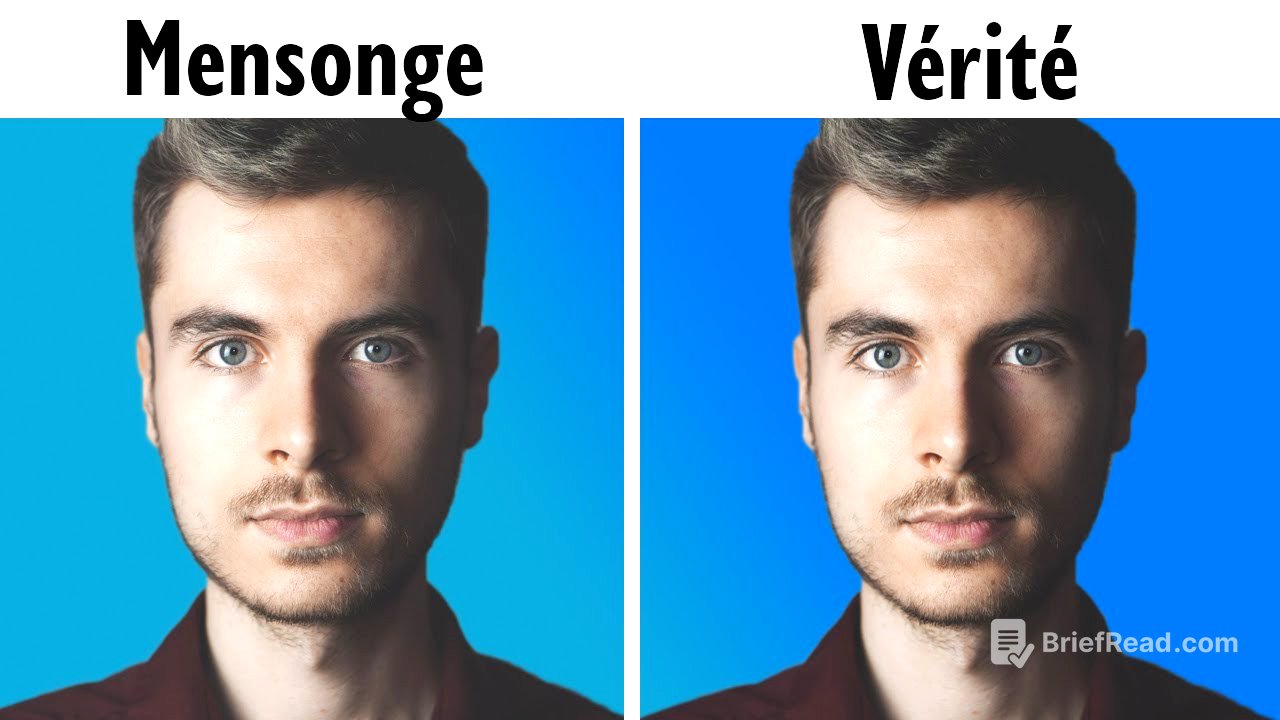
- Genuine smiles involve both the lower and upper face, particularly the eyes.
Nervous Gestures Around the Face [0:15]
When people are stressed, they exhibit nervous gestures to regulate their stress. In the context of lying, these gestures often manifest around the face. Liars may touch their mouth, nose, ear, or neck. These gestures are linked to childhood associations where covering the mouth is a reprimand for saying something wrong. Touching the nose is a modified version of covering the mouth, while touching the ear mimics blocking out unwanted information. Observing changes in these gestures compared to a person's normal behavior is crucial for detecting deception. For example, Bill Clinton was observed touching his nose 26 times during a speech about Monica Lewinsky.
Eye Movements [2:39]
Eye movements are connected to brain activity. Looking to the left and upward typically indicates recalling a memory, while looking to the right and upward suggests constructing an image. This pattern is reversed for left-handed individuals. To test this, ask someone a question that requires recall and observe their eye movements.
Blinking Patterns [3:24]
An average person blinks about six to eight times per minute. When stressed, people tend to blink more frequently, often in rapid succession. Conversely, someone who avoids blinking may be consciously controlling their gaze to mask their true emotions.
Changes in Saliva Production [3:59]
Stress reduces saliva production, leading to increased thirst and difficulty swallowing. Someone who frequently drinks water or noticeably struggles to swallow may be experiencing stress, potentially due to lying. Visible movement of the Adam's apple during swallowing can also indicate this.
Breathing Patterns [4:55]
Stress increases heart rate and breathing rate, making it difficult to regulate respiration. This can manifest as visible signs of breathlessness or discomfort, such as struggling with a tight collar.
Detecting a Fake Smile [5:25]
A genuine smile involves both the lower and upper face, particularly the eyes. The eyes will crinkle, and small expression lines will appear. In contrast, a fake smile primarily uses the mouth. To identify a fake smile, focus on the eyes; if they don't show genuine emotion, the smile is likely insincere.