TLDR;
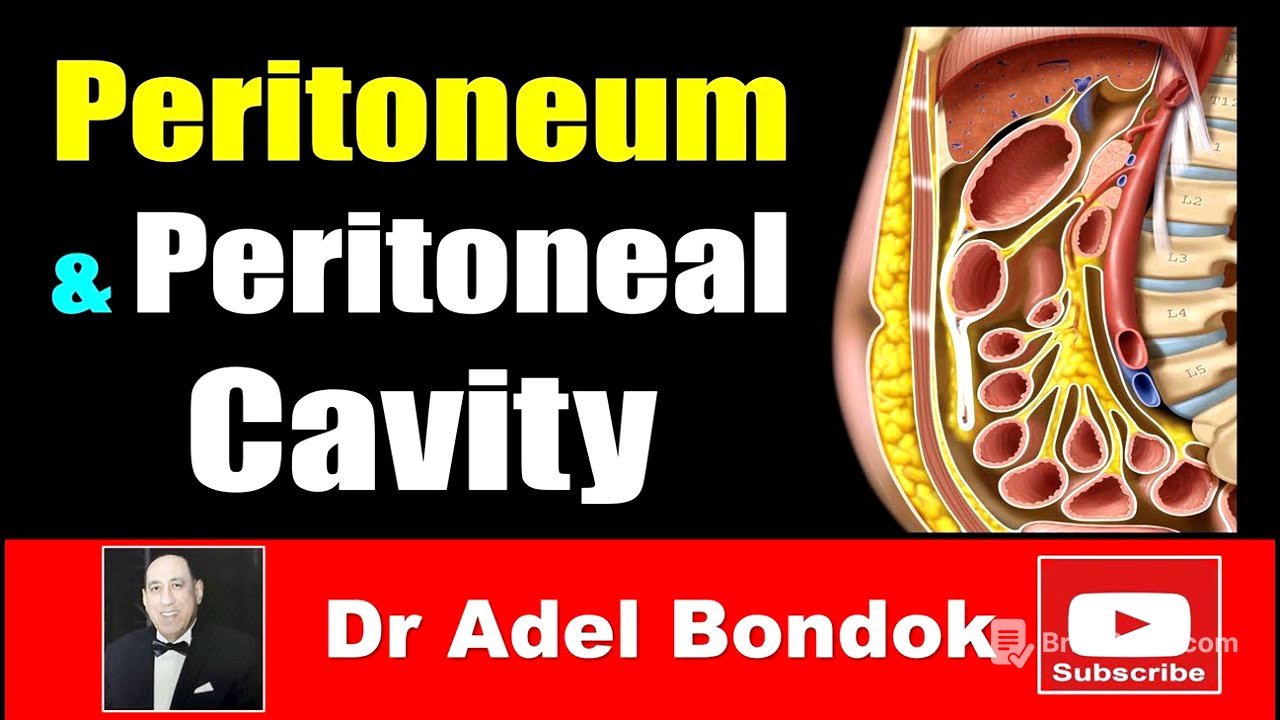
This video by Dr. Adel Banduk provides an in-depth exploration of the peritoneum, a serous membrane that lines the abdominal wall and surrounds the abdominal organs. Key topics include its organization into the parietal and visceral layers, the types of peritoneal folds, and the functions, blood supply, and nerve supply associated with the peritoneum. Additionally, it covers the peritoneal cavity, its contents, and various peritoneal recesses.
- The peritoneum consists of two layers: parietal and visceral.
- It plays crucial roles in protecting abdominal organs, providing lubrication, and allowing passage for blood vessels and nerves.
Introduction to the Peritoneum [0:00]
Dr. Adel Banduk introduces the peritoneum, describing its structure and significance. The peritoneum is a serous membrane that lines the abdominal wall and envelops the internal organs. It consists of two layers: the parietal layer, which lines the abdominal wall, and the visceral layer, which surrounds the organs.
Peritoneal Folds and Organization [0:20]
This chapter discusses the organization of the peritoneum into two layers and its folds. The peritoneal folds suspend organs from the posterior abdominal wall. Some organs, like the kidney, are retroperitoneal, meaning they are only covered anteriorly by peritoneum. In contrast, the mesentery suspends the small intestine, while additional folds such as omentum are associated with the stomach.
Peritoneal Ligaments and Major Folds [4:00]
Dr. Banduk details the major peritoneal folds and ligaments, including the lesser omentum, greater omentum, mesentery, transverse mesocolon, and sigmoid mesocolon. The lesser omentum connects the liver to the stomach, while the greater omentum connects the stomach to the transverse colon. Other ligaments connect various organs such as the liver, spleen, and kidney.
Functions of the Peritoneum [8:40]
The functions of the peritoneum include protecting abdominal organs, maintaining their positions, lubricating organ surfaces, and facilitating the passage of blood vessels, lymphatics, and nerves. The greater omentum also plays a significant role in fighting abdominal infections.
Blood and Nerve Supply to the Peritoneum [10:40]
This section covers the blood and nerve supply of the parietal and visceral layers of the peritoneum. The parietal layer shares similarities with the abdominal wall in terms of blood and nerve supply, while the visceral layer is linked with the organs themselves. Specifically, the parietal layer is sensitive to pain, whereas the visceral layer is mostly sensitive to stretch.
Understanding the Peritoneal Cavity [13:00]
The peritoneal cavity is the potential space between the parietal and visceral layers of the peritoneum. It is a closed sac in males but open in females due to the presence of uterine tubes. This cavity typically contains a thin film of serous fluid but may also contain excess fluid (ascites) or pus during inflammation.
Divisions of the Peritoneal Cavity [19:10]
Dr. Banduk describes the divisions within the peritoneal cavity, identifying the greater sac and the lesser sac. The lesser sac is located behind the stomach, while the greater sac is located anterior to it. The two sacs are connected at the epiploic foramen, enabling communication between them.
Peritoneal Recesses and Their Clinical Importance [25:00]
In this chapter, Dr. Banduk discusses the various peritoneal recesses, including the lesser sac and paracolic gutters, detailing their clinical implications. He emphasizes that these spaces can be sites for internal herniation and accumulations like abscesses, which are clinically significant during surgeries and diagnoses.
Conclusion [30:00]
The video concludes with a summary of the essential aspects of the peritoneum, its functions, anatomical relevance, and clinical significance. Dr. Banduk reinforces the importance of understanding the peritoneum for medical professionals and students.