TLDR;
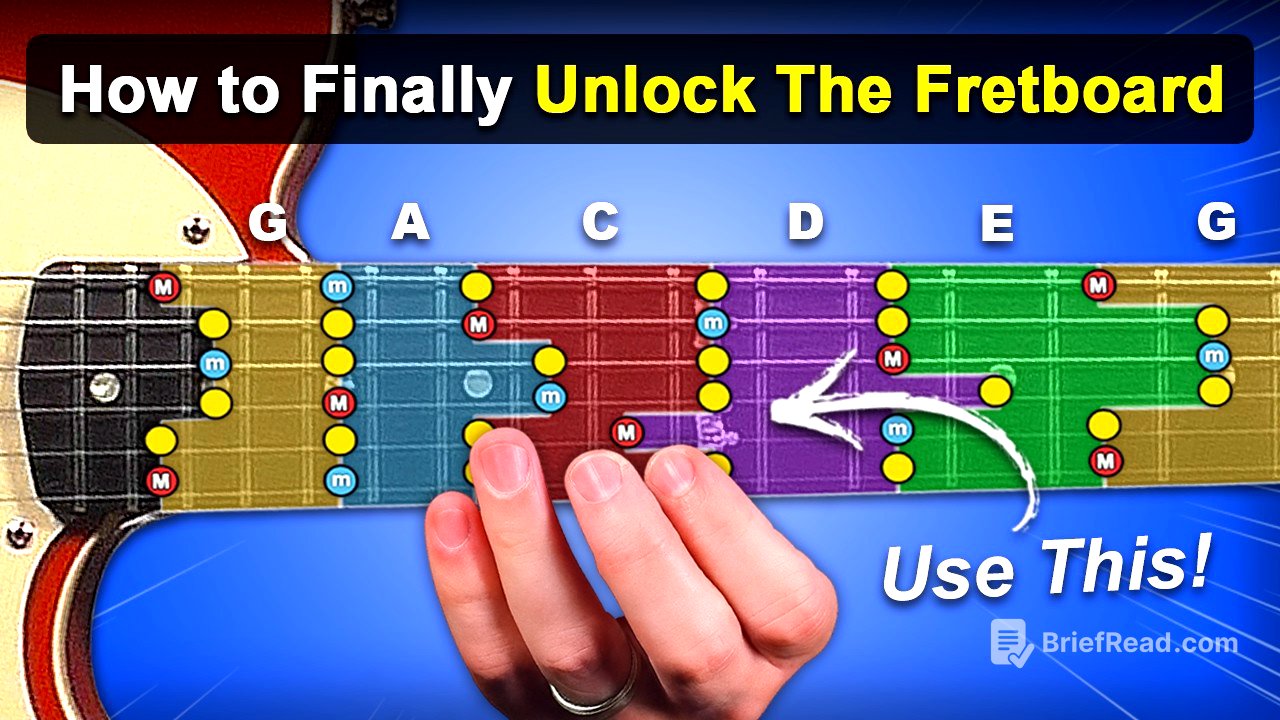
This lesson focuses on understanding the A minor pentatonic scale, which consists of five notes: A, C, D, E, and G. The key is to recognize these five notes rather than getting lost in patterns. The CAGED system is introduced as a method to visualize the pentatonic scale across the fretboard using five chord shapes. The lesson encourages players to connect these patterns musically during soloing, adapting to chord changes, and ultimately mastering the fretboard in any key.
- The pentatonic scale is made up of just five notes.
- The CAGED system helps visualize these notes in different positions.
- Connecting patterns musically while soloing is essential for creativity.
Understanding the Pentatonic Scale [0:00]
The pentatonic scale consists of only five notes: A, C, D, E, and G. Many guitar players often overlook this simplicity as they focus on various shapes and fingerings. By the end of this lesson, guitarists will learn to solo anywhere on the fretboard using the pentatonic scale.
The CAGED System Explained [0:52]
The CAGED system consists of five chord shapes: C, A, G, E, and D, which are movable across the fretboard. Each chord shape corresponds to the same five notes of the A minor pentatonic scale. For example, the C pattern can be played in different positions, each still using the notes A, C, D, E, and G.
Connecting the Patterns Musically [3:56]
It's important to not just mechanically play through the scale but to make music with it. The lesson demonstrates this by using a simple chord progression of C moving to A minor. As the instructor plays through the patterns, the tonal center shifts, affecting how the scale sounds.
Practical Application of Patterns [6:00]
The focus shifts to how to smoothly transition between CAGED patterns. Starting from one pattern and moving to another involves identifying notes within each pattern and visualizing the landing point. Techniques such as sliding between patterns and practicing in chunks make movement across the fretboard feel natural.
Expanding Your Skills [9:59]
Understanding that the pentatonic scale can be adapted to any key allows musicians to break free from feeling stuck. The instructor encourages viewers to claim a free lesson on soloing in any key, which builds upon the concepts introduced in this video. Mastery of these skills will lead to greater freedom on the fretboard.