TLDR;
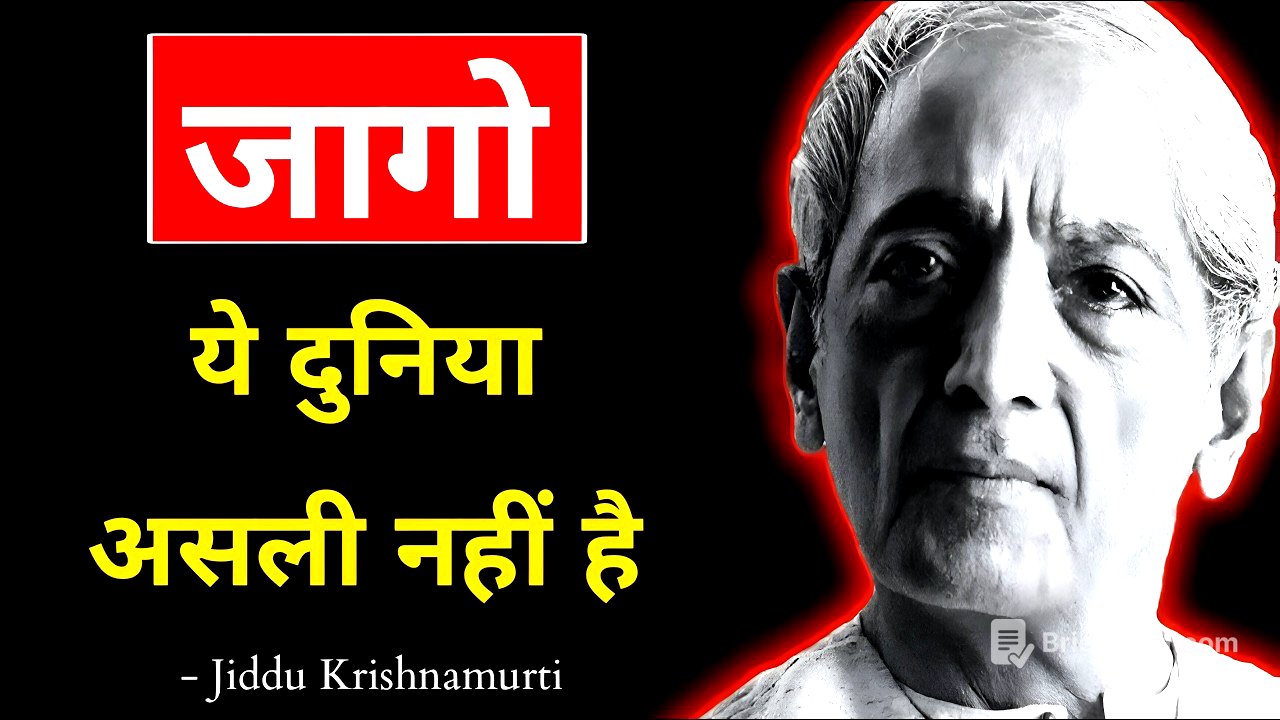
The video presents a powerful critique of the beliefs that shape our identity and perceptions. The speaker emphasizes that much of what we consider our thoughts, knowledge, and experiences are not genuinely ours but borrowed from society. The speaker introduces J. Krishnamurti's ideas on liberation from these inherited notions, proposing that true freedom comes from recognizing our dependency on knowledge and thought, as well as our egos. This understanding can lead to profound personal transformation, urging viewers to break free from societal conditioning and the superficial metrics of success and self-worth.
- Our thoughts and beliefs are not inherently our own.
- True freedom involves questioning and transcending societal constructs, including knowledge, fear, and love.
The Greatest Lie of Life [0:00]
The speaker reveals that the most significant lie in our lives is the belief that our thoughts are our own, rather than borrowed constructs created by external influences such as society, family, and education. They state that knowledge and experiences form a mental prison that limits our ability to perceive the present, urging viewers to confront these ingrained beliefs. The speaker introduces J. Krishnamurti’s message that we must dismantle these mental barriers to experience real freedom.
The Illusion of Knowledge [2:04]
In this chapter, the speaker discusses how accumulating knowledge is often mistaken for gaining freedom. Instead, they argue that knowledge acts as a filter, warping our perceptions of new experiences through old memories and judgments. They emphasize the importance of viewing each moment freshly instead of through the lens of past experiences, which can lead to misinterpretations and a failure to engage with the present fully.
Understanding Thoughts and Fear [4:53]
The speaker analyzes the nature of thoughts and fears, explaining that fear emerges from thoughts regarding the past and future rather than the present. They argue that thoughts create narratives of potential scenarios that lead to anxiety, causing us to miss the reality of the present. By recognizing that these imagined fears are products of our thoughts, individuals can understand the roots of their distress and how to navigate life more freely.
The Problem of the Ego [7:31]
Here, the speaker delves into the concept of ego, describing it as a collection of labels, experiences, and identities that individuals carry. The ego seeks security through possessions, relationships, and affiliations, leading to conflict and suffering as it tries to maintain control. The speaker challenges viewers to consider what remains of their identity if stripped of these labels, proposing that true liberation can be found in the realization that they are “nothing,” which opens the door to being truly free.
Comparison and Ambition [11:42]
The influence of comparison and the pursuit of success is examined in this chapter. The speaker claims that societal pressure to compare ourselves to others fuels ambition and causes suffering. They assert that comparison is a form of violence against oneself, as it diminishes individuality and leads to feelings of inadequacy. Instead of following externally defined metrics of success, individuals should reflect on what success means personally, beyond societal expectations.
Love and Relationships [15:26]
The speaker critiques conventional notions of love, suggesting that what many consider love is often rooted in neediness and dependency. This dependence can lead to possessiveness and fear of loss. True love, as proposed by Krishnamurti, requires the absence of ego, allowing relationships to flourish without the burden of ownership or expectations. They suggest that loving someone without trying to change or possess them is the essence of genuine connection.
Psychological Independence [19:05]
The focus shifts to the idea of psychological independence and the fear associated with it. The speaker explains that true freedom means standing alone, without reliance on external authorities or beliefs. This journey requires cutting ties with all forms of security provided by social norms, teachings, or relationships. They reinforce that the path to truth requires personal exploration without predefined frameworks or guidelines.
Awareness and Liberation [23:14]
In the concluding chapter, the speaker emphasizes awareness as the key to liberation from psychological prisons. Awareness brings clarity to how our knowledge, thoughts, ego, and desires confine us, leading to profound realizations. The video closes by challenging viewers to explore their own understanding of truth, urging a journey of self-discovery and autonomy beyond societal conditioning.