TLDR;
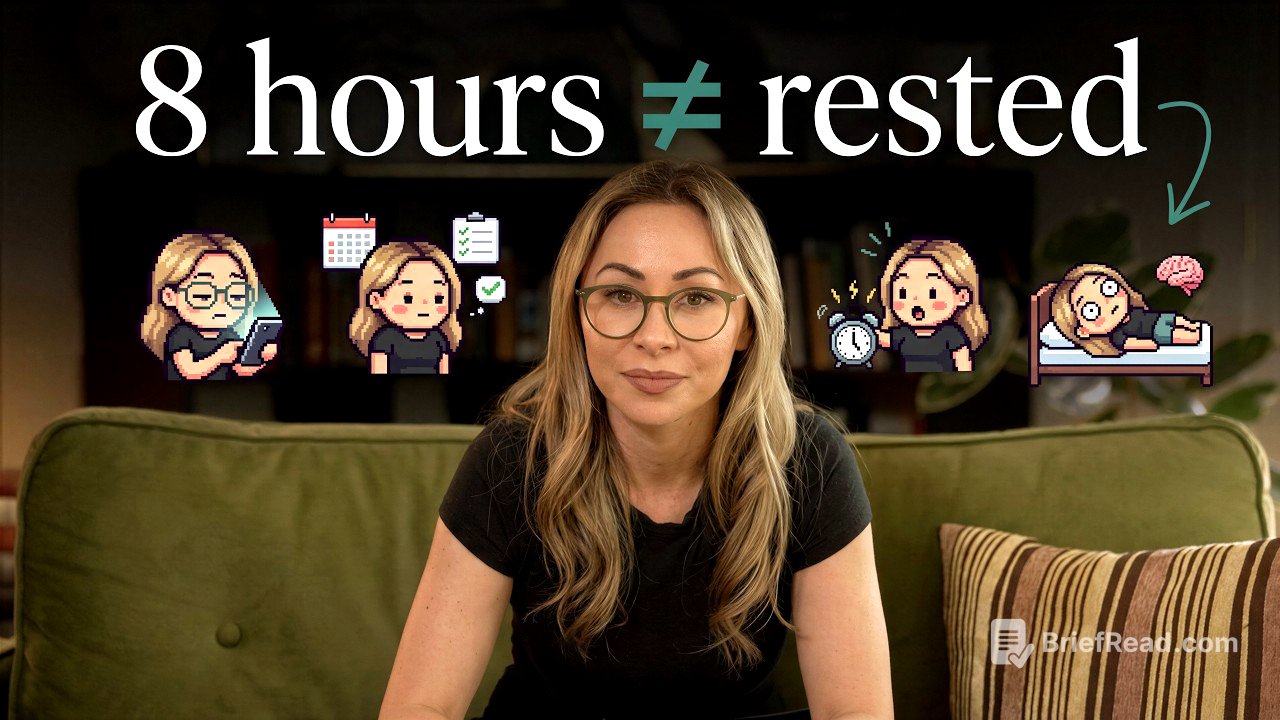
In this video, Dr. Sahar Yousef discusses the reasons behind chronic fatigue and the daily habits that drain energy. Key takeaways include the impact of nighttime phone usage on sleep quality, understanding individual biological chronotypes, and the necessity of creating a healthy sleep environment and routine.
- Nighttime phone usage can confuse the brain regarding sleep signals.
- Individual chronotypes affect optimal sleep and productivity times.
- Establishing a bedtime routine and separating work from rest can enhance sleep quality.
Understanding the Impact of Phones on Sleep [0:00]
Dr. Yousef begins by addressing how phone usage, particularly social media, affects sleep quality. Engaging in mentally stimulating activities before bed can prevent the brain from shutting down properly. This confusion introduces a 'third S' - strategy, which disrupts the brain's connection between the bed and rest. Over time, this can lead to serious sleep issues and increased risks for dementia or Alzheimer's due to poor sleep quality and missed deep sleep.
The Role of Biological Chronotypes [2:11]
The video highlights the concept of biological chronotypes, which are individual patterns of circadian rhythms that dictate optimal sleep and productivity periods. Dr. Yousef criticizes the "hustle culture" trend that encourages early rising, regardless of individual chronotype. For those who are naturally night owls, forcing an early start can lead to sleep deprivation and reduced productivity. Finding one's chronotype can help in designing a personalized daily routine that aligns with individual energy peaks.
The Importance of Deep Sleep [4:23]
Dr. Yousef emphasizes the crucial role of deep sleep in processing emotions and experiences from the day. Interfering with deep sleep can make daily stressors feel overwhelming. She argues against forcing productivity through strict routines and highlights the need for the brain to heal naturally during sleep. Recognizing and respecting one's internal clock can optimize both sleep and performance.
Creating Effective Wind Down Routines [5:57]
To combat sleep issues, Dr. Yousef proposes establishing a wind-down routine that clearly separates work from relaxation. This can include specific activities such as listening to a designated playlist or engaging in light stretching. The importance of physical cues, like placing your phone in a designated spot before sleep, can help reduce distractions and improve the likelihood of falling asleep peacefully.
Reinforcing Rest Associations [7:31]
Dr. Yousef advises against strategizing or ruminating in bed. Instead, if thoughts arise, one should physically get up and write them down or engage in a calming activity. This practice helps establish stronger associations between the bed and rest, encouraging the brain to recognize the bed as a place for sleep. The challenge presented encourages viewers to create a phone-free zone to improve their sleeping habits and overall daily energy levels.