TLDR;
This video explores the controversial "Satanic Verses" incident in early Islamic history, where the Prophet Muhammad is said to have recited verses influenced by Satan, acknowledging pagan goddesses. The video addresses the shift from a near consensus among early Muslims that the incident occurred to a near consensus today that it did not. It examines the historical evidence using both non-Muslim and Muslim methodologies, arguing that the change in Islamic theology, specifically the doctrine of the protection of prophets, led to a revision of history. The video encourages Muslims to re-evaluate the sources of their beliefs, questioning the authority of later theological developments over earlier historical accounts.
- Early Islamic sources report Muhammad recited verses influenced by Satan.
- Islamic theology changed, leading to a rewrite of history.
- Non-Muslim historians find the event indisputable.
- Modern Muslims reject the reports by applying the methodology of hadith scholars.
Introduction to the Satanic Verses Incident [0:00]
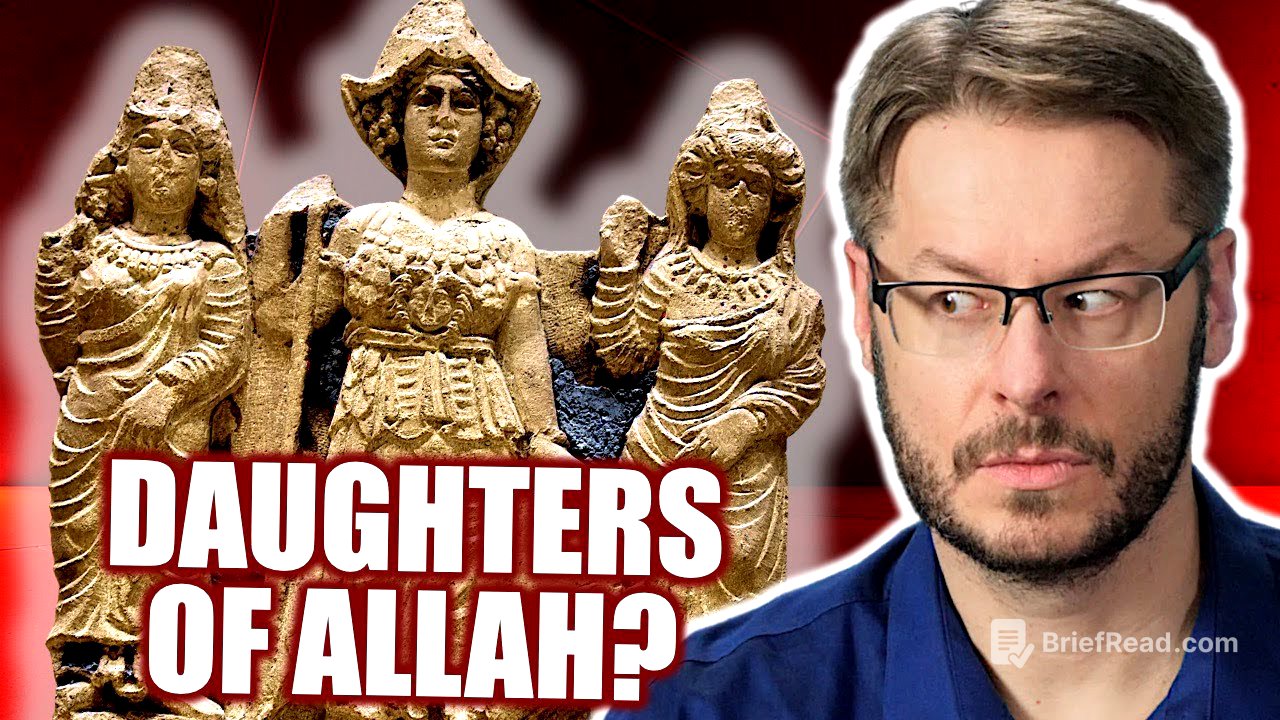
The video introduces the story of the Satanic Verses, tracing it back to 7th century Arabia and explaining its connection to Salman Rushdie's novel. It explains that early Muslim sources report that Muhammad, the prophet of Islam, delivered a revelation from Satan, promoting belief in three pagan goddesses: Allat, Aloo, and Manat, as intercessors with Allah. The incident is considered a major sin in Islam, known as shirk, associating partners with Allah. The video notes the historical shift from a near consensus among early Muslims that the incident occurred to a near consensus today that it did not, and it aims to explain this change by examining the theological developments that influenced the Muslim community's understanding of the event.
The Story of the Satanic Verses [3:33]
The video presents a medium-length report of the Satanic Verses incident, as quoted by Tabi in his history and Quran commentary. According to the report, Muhammad, seeking to avoid hostility from his tribe, recited Surah 53, including phrases that acknowledged the intercession of the pagan goddesses Allat, al-Usa, and Manat. This pleased his tribe, who then supported him. However, the angel Gabriel later informed Muhammad that these phrases were cast upon him by Satan, leading Muhammad to retract the verses. The Quran passages relevant to the story, Surah 53:19-22 and Surah 22:52, were then altered to remove the endorsement of pagan goddesses and to comfort Muhammad by stating that such incidents happen to all prophets.
Evaluating the Authenticity of the Satanic Verses [9:21]
The video outlines two primary methods for investigating the authenticity of the Satanic Verses incident: the historical method used by historians and the method used by Muslims to investigate Islamic history. It proposes to consider both methods to see where the evidence points. The video suggests that a non-Muslim historian would prioritize early sources, the number of independent sources, and the principle of embarrassment, which suggests that followers are unlikely to invent embarrassing stories about their leader.
The Non-Muslim Historical Approach [9:43]
The video details how a non-Muslim historian would approach the Satanic Verses incident, emphasizing the importance of early sources, the number of sources, and their independence. It notes that the earliest biographical records contain reports of the Satanic Verses, with at least 50 Muslim sources reporting the incident. These sources include accounts from Kab al-Qazi, Erwa Iban al-Zuber, Abu Aliyah al-Basri, and Ibn Abbas, among others. The principle of embarrassment is also invoked, arguing that it is unlikely that Muslims would invent such an embarrassing story about Muhammad. Scholars like Guom and Montgomery Watt are cited, asserting the historical authenticity of the incident.
The Muslim Historical Approach [17:03]
The video contrasts the non-Muslim historical approach with the Muslim method of historical investigation, which relies on evaluating the chains of transmission (isnad) for stories about Muhammad. It explains that Muslim scholars assess the trustworthiness of the individuals in the chain and reject stories if they find any issues with the names listed. The video argues that this approach misunderstands the proper application of Isnad criticism, as the reports of the Satanic Verses are found in Sira magazi and tapsir literature, which have different methodologies than the hadith literature.
Genres of Islamic Literature and Methodologies [18:07]
The video describes the three main genres of Islamic literature in the early centuries of Islam: Sira magazi, tapsir, and hadith. Sira magazi literature consisted of historical narratives about Muhammad, tapsir literature provided commentary on the Quran, and hadith literature consisted of sayings and deeds that established orthodox Islamic doctrine and practice. The video emphasizes that each genre had different methodologies, with hadith scholars insisting on complete isnads, while Sira magazi and tapsir scholars often used abbreviated isnads or appealed to known authorities. The video argues that modern Muslims err by applying hadith methodology to reports in Sira magazi and tapsir literature.
Applying Hadith Standards and Examining Isnad Chains [22:09]
The video examines specific isnad chains related to the Satanic Verses, demonstrating how Muslim scholars often find reasons to reject them, even when the chains appear sound. It notes that hadith scholars were primarily concerned with establishing orthodox Islamic belief and practice and were generally accepting of different methodologies in Sira magazi and tapsir literature. The video questions why hadith methodology is applied to reports in different genres that used different methodologies, especially since the Satanic Verses incident does not establish orthodox Islamic belief or practice.
Theological Change and Revision of History [24:32]
The video explains how the doctrine of ismat al-ambia, the protection of the prophets, was modified during the second century of Islam. Originally, the doctrine meant that Allah would protect a true prophet from persisting in any major error. However, it later came to mean that Allah would protect a true prophet from committing any major error and that true prophets are infallible when they transmit revelation. This modified doctrine conflicted with the Satanic Verses incident, leading hadith scholars to reject the reports and rewrite history to align with the evolving orthodoxy.
Conclusion: Re-evaluating the Sources of Belief [26:23]
The video concludes by encouraging Muslims to re-evaluate the sources of their beliefs, questioning the authority of later theological developments over earlier historical accounts. It suggests that Muslims should not feel obligated to reject the Satanic Verses incident based on changing standards and doctrines. The video proposes that Muslims could return to the original doctrine of Allah's protection of the prophets, which allowed Muhammad to fall into major error only to have Allah correct him.