TLDR;
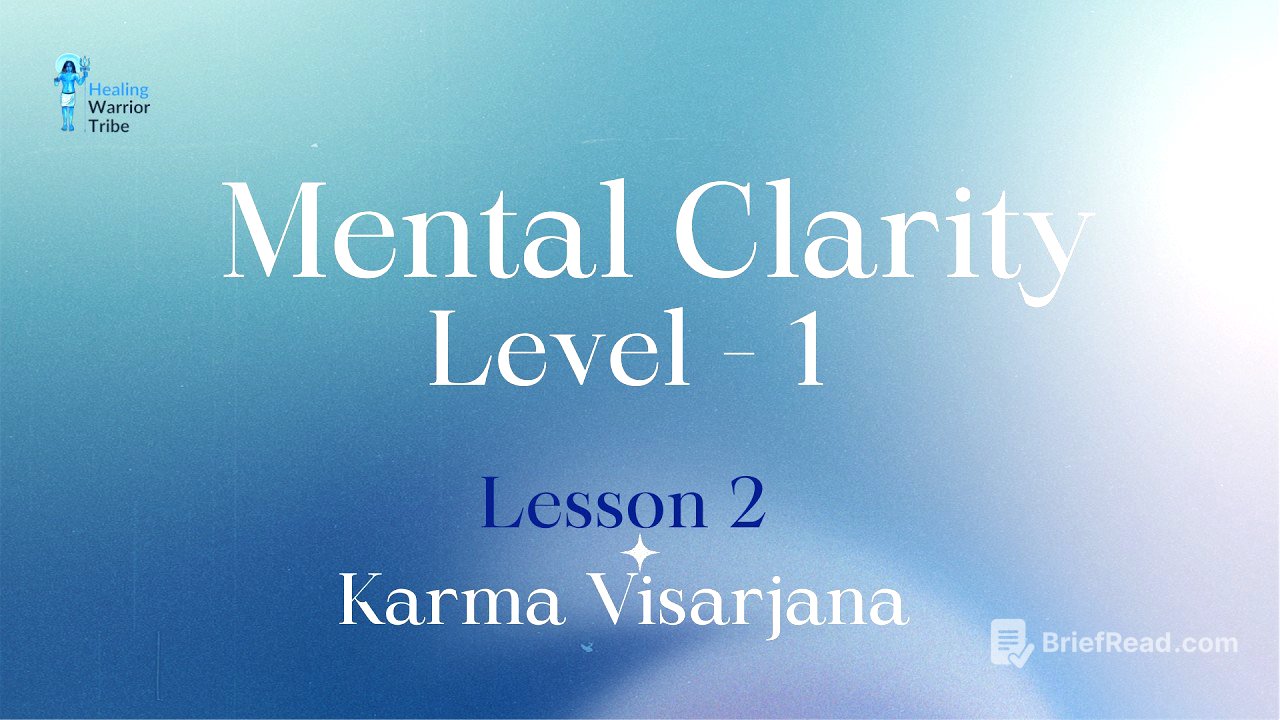
In this lesson, the instructor focuses on the ancient practice of pranayama as a vital tool for cultivating life force energy, also referred to as prana in yogic traditions and chi in Daoism. The session elaborates on various types of karma, their impact on the spirit and body, and how addressing ancestral karma can help release emotions like self-doubt. The instructor discusses the complexity of karma, its classification, and the importance of understanding one's actions and emotions to foster personal growth.
- Pranayama is a foundational practice to increase life force energy.
- There are six types of karma, each affecting relationships and emotions differently.
Introduction to Pranayama and Karma [1:00]
The instructor introduces pranayama, an ancient yogic practice that involves structured breathing techniques, which dates back over 3,000 years. The exercise involves inhaling for eight counts, holding for 32 counts, and exhaling for 16 counts. Participants are guided through multiple rounds of the breathing exercise to help them feel the effects of the practice. The concept of prana (life force energy) is explained, noting its connection to chi in Chinese medicine, emphasizing how consistent practice can substantially boost energy levels and awareness.
Understanding Karma [6:00]
The lesson delves into the nature of karma, defined as actions that have consequences. The instructor explains motor neurons' role in executing actions and how individuals must understand that they are temporary travelers in their physical bodies. Karma is linked to past actions and the concept that unresolved issues or "unfinished business" may bring individuals back to Earth in various lifetimes. Karma is described as stored information that influences physical existence and emotional responses.
Types of Karma: Agama Karma and Its Implications [11:39]
Agama karma, or ancestral karma, is presented as a significant contributor to emotional struggles like self-doubt. The instructor explains how ancestral emotions can affect current behaviors and tendencies. The practice called Pitru Shanti is introduced as a way to connect with and liberate ancestral karma, allowing individuals to break patterns of self-sabotage inherited from their lineage. Individuals are encouraged to engage with their ancestral past to foster healing.
Prarabdha Karma and its Emotional Effects [19:10]
Prarabdha karma is discussed as karma being actively expressed in one’s life. The instructor discusses how unresolved issues can lead to negative emotions like headaches, loneliness, and lack of clarity. Solutions such as the Tapa Mudra and dropping negative emotions into the blue flame (a symbolic cleansing practice) are recommended for alleviating these emotional burdens.
Relationship Dynamics: Ranabha and Emotional Healing [24:10]
The concept of Ranabha karma is introduced, emphasizing the emotional tensions that arise from personal relationships. The instructor describes the typical cycle of anger and guilt in relationships, suggesting ways to address these emotions. Techniques for releasing guilt and fostering healthy communication in relationships are recommended, including the necessity for setting clear boundaries and seeking common goals.
Vir Karma and Its Influence on Well-Being [30:37]
Vir karma is highlighted as the karma associated with one's physical health. The instructor discusses how ongoing stress and unresolved emotional issues can manifest physically in the body, suggesting practices such as identifying pain locations and using the blue flame practice to release discomfort. Recognizing how discomfort and hurdles in life may tie to deeper emotional roots is emphasized.
Sanchita Karma: Potential and Awareness [35:48]
Sanchita karma is defined as accumulated karma that has yet to be resolved. The instructor emphasizes the importance of being aware and present in life so that this undeveloped karma does not become burdensome. An awareness practice that encourages mindfulness is recommended as a way of managing expectations and outcomes in life.
Kriyamana Karma and Thought Creation [36:54]
Kriyamana karma is discussed as karma that is created actively through thoughts and words. The instructor explains how negative thoughts can lead to destructive feelings and outcomes, emphasizing the importance of mindfulness to prevent creating new karmic burdens. Techniques to manage verbal expression and emotional responses are suggested to help prevent unnecessary karma.
Concluding Thoughts on Karma and Healing [55:00]
The lesson concludes with a reminder of the importance of understanding karma in everyday life. Practical steps for releasing negative emotions and fostering a positive connection with oneself and others are highlighted. A mantra is shared to reinforce the lessons learned and promote a sense of peace and well-being, encouraging continued practice of the techniques discussed throughout the lesson.