TLDR;
This documentary explores the resurgence of agriculture in Italy, focusing on young individuals who are revitalising abandoned lands and embracing sustainable farming practices. It highlights the challenges and motivations of these new farmers, their innovative use of technology and social media, and the importance of community support and collaboration. The film showcases two distinct examples: two friends in Liguria who started a vegetable business and a cooperative near Rome reclaiming abandoned farmland.
- Young Italians are increasingly turning to agriculture, reversing the trend of an ageing farming population.
- These new farmers often lack prior experience but are driven by a desire for a connection with nature and meaningful work.
- They utilise modern technology and social media to learn, market their products, and build a customer base.
- Community support, collaboration, and diversification of income streams are crucial for the sustainability of these small-scale agricultural ventures.
Two Friends' Mission to Revitalise Agriculture in Liguria [0:04]
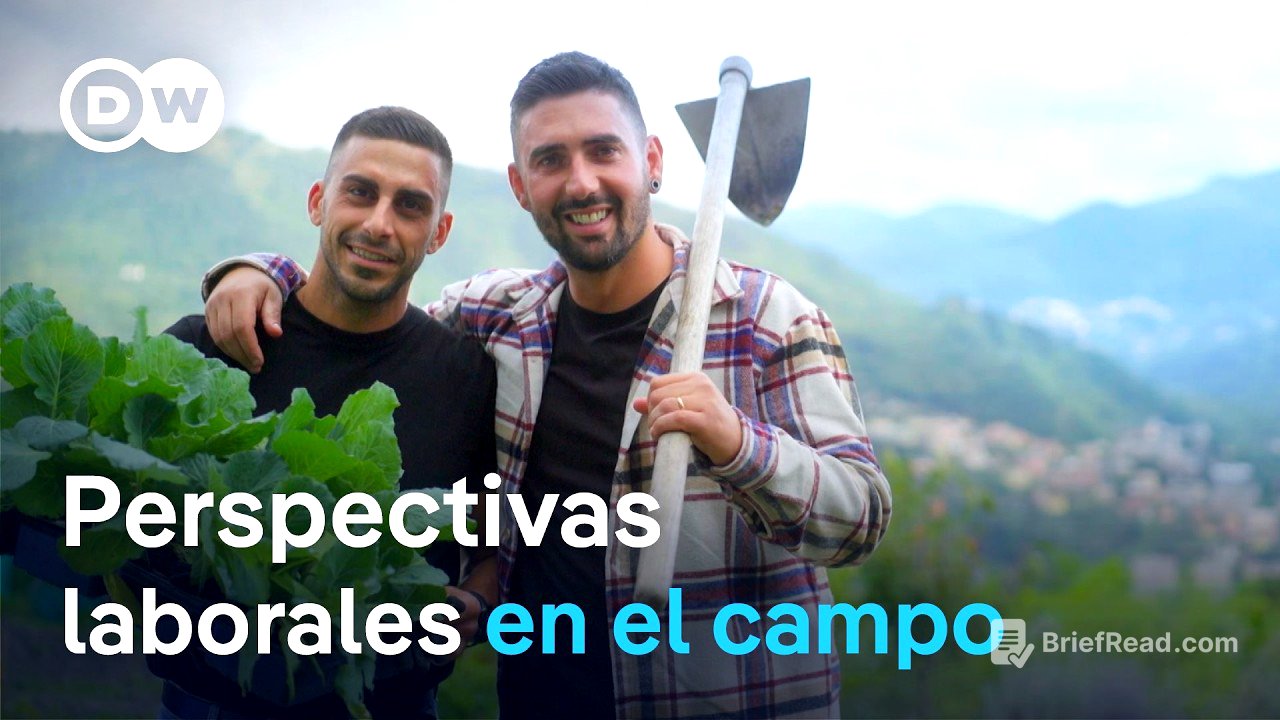
Davide Moro and Mateo Ritzitano, two friends from Genoa, embark on a mission to revitalise agriculture in their native land. Despite the challenges of the steep, inaccessible terrain in Liguria, where many farmers have given up, they are determined to make a change. Neither of them comes from a farming background, having previously worked in a car body shop, but they decided to pursue their dream of farming. The terraced landscape presents difficulties, but they find joy and satisfaction in working the land. They are part of a growing trend of young people rediscovering agriculture in Italy, driven by a desire for a different way of life.
Overcoming Challenges and Embracing a New Life [1:31]
Davide and Mateo face practical challenges, such as accessing their land, which requires a 200-metre walk to avoid wild boars that can destroy crops. They left secure jobs to start their agricultural venture during the coronavirus pandemic. The decision was mutual, driven by a desire for independence and a connection with nature, which they missed in their previous work in Genoa. They had to reclaim abandoned land overgrown with brambles and dead trees, investing incredible energy into clearing and preparing the terrain. Despite the availability of European Union funds, they find the requirements difficult to meet, highlighting the challenges faced by new, small-scale farms.
Adopting Modern Techniques and Building a Brand [3:57]
The friends acquired land at relatively low prices due to the abandonment of agricultural areas in Liguria. They aim to produce vegetables naturally, without chemical fertilisers or pesticides, learning everything themselves through trial and error. They embrace a "farmer 2.0" strategy, combining traditional knowledge with modern techniques learned online, such as mulching. Mulching helps retain soil moisture and protect roots, which is crucial as their tomatoes are never watered. They also use Instagram and Facebook to market their vegetables, providing customers with a personal connection to their produce. Instagram is their primary showcase, allowing them to share their daily activities and build a loyal customer base.
Reviving Agriculture Near Rome: Jacomo's Vision [7:33]
About 500 km south of Genoa, near Rome, Jacomo Lepri is working to revive agriculture on abandoned lands. He leased land from the city and is now president of the agricultural cooperative Coracho. Jacomo, who has a university degree in anthropology, decided to become a farmer after struggling with unemployment. His parents were initially concerned about his career change, but eventually understood his passion. With youth unemployment around 20% in Italy, Jacomo believes that new agricultural ventures can help solve the problem, but they need more recognition and support from the state. He advocates for more political support, including loans and training, for those starting in the sector.
The Coracho Cooperative: A Community of New Farmers [9:33]
The Coracho cooperative obtained 22 hectares of land from the city of Rome. Many of its members never imagined becoming farmers, as agriculture had a negative image for their parents and grandparents. Federico, who previously worked in the textile industry, joined the cooperative after participating in a grant application with friends. Beatrich, who worked in luxury fashion, left her stressful office job to join the cooperative, finding a more fulfilling environment. The cooperative's fields had been uncultivated for nearly 50 years, and they successfully opposed a construction project to build housing and a supermarket on the land.
Reclaiming the Land and Building a Sustainable Future [11:51]
The cooperative's farm includes a historic rural house, the Borghetto San Carlo, where farmers used to live. Jacomo shows photos from the early days when he and his friends fought for access to the land, advocating for land for young farmers. After winning a public tender in 2017, they began cultivating the fields again. The Borghetto was renovated and reopened in 2023. There is a growing awareness in Italy, especially in Rome, of the need to protect green spaces and recognise the role of farmers in preserving biodiversity.
Diversifying Income and Building a Community [13:49]
The cooperative's employees gather for lunch in the courtyard, where Jacomo cooks using his passion for agriculture and cooking. The Borghetto San Carlo is also rented out for events like weddings, providing additional income. Alesia spends time on the computer seeking funding and completing applications for environmental awards. The cooperative organises talks and training sessions on agriculture, and hosts events like a Sunday festival featuring traditional songs and food prepared with their own products. Jacomo emphasises the importance of returning to the origins of food and the connection between agriculture and cooking.
Collaboration and Recognition: The Success of Ortopi [14:13]
Davide delivers vegetable boxes in Genoa, prepared according to customer preferences. Meanwhile, at the headquarters north of Genoa, a local farmer delivers his products to Davide and Mateo's company, Ortopi, which means "Bee in the Garden". Through joint direct sales, everyone benefits from higher profits. Ortopi has a high-end clientele, allowing them to secure good prices, which would not be possible individually. They collaborate with over 10 farms, including Margarita and her husband Dani, who are musicians turned sheep farmers. They supply yoghurt and cheese to Ortopi. In 2023, the Association of Producers Coldiretti awarded them the Oscar Green prize.
Challenges and Strategies for Small-Scale Farmers [16:34]
Jacomo prepares vegetable boxes for customers at the Borghetto San Carlo, understanding the difficulties of surviving as a farmer. In the early years, he had a second job. He emphasises that being just a farmer is no longer enough and that offering additional services like training or gastronomy is essential for survival. Alesia spends time seeking funding for the cooperative. They organise events and workshops to promote agriculture and engage the community.
Supporting Local Agriculture and Preserving Biodiversity [19:11]
Mateo and Davide are proud that their brand, Ortopi, supplies some of the best restaurants in the region. Once a week, they travel along the coast to deliver to restaurants like L'Ortica in Pie Bigure. Chef Marco Vola, who was awarded a Michelin star in 2024, uses exclusively local products from regional suppliers, aligning with the slow food movement. Ortopi provides the quality he seeks for his dishes and is a member and promoter of their network. Chef Vola emphasises the importance of supporting the next generation of farmers to preserve unique Italian vegetables and protect the farms that cultivate them.
Building a Sustainable Future Through Collaboration and Community [21:30]
Ortopi's commitment to freshness and regionality extends to having their own garden at L'Ortica, which Davide and Mateo maintain. They reinvest all their profits into developing Ortopi and still depend on family support. The recognition they receive motivates them to continue. They believe in the power of their network to support each other and make progress. While they don't yet earn a full salary, they see progress and increasing understanding of their work.
Celebrating Community and Looking to the Future [22:43]
At the Borghetto San Carlo, the cooperative hosts a festival to close the summer season, featuring a buffet with ingredients from their own harvest. Alesia manages the cash register, while Jacomo works in the oven built with materials from their fields. Despite the challenges of agriculture, Jacomo remains committed to his work. He has become a pioneer, inspiring the city of Rome to support young farmers. The Borghetto San Carlo is not just a place for agriculture but also a green space for recreation, with a picnic area open to the public. The community values the green space over the potential supermarket.
Tradition, Modernity, and the Future of Agriculture [24:38]
There is hope for more agriculture in Rome, as the city rediscovers its agricultural heritage. A workshop is held at the Borghetto San Carlo, featuring an old peasant song about the olive harvest. The workshop is free, funded by a cultural program from the city of Rome. They hope that small-scale agriculture has a long-term perspective through the combination of tradition and modernity.