TLDR;
This video discusses the transformative impact of Bitcoin and digital money, as shared by Michael Saylor, a prominent technology entrepreneur and advocate for Bitcoin. Saylor emphasizes the differences between Bitcoin and traditional fiat currencies, the nature of investing in digital assets, and the future of AI and its implications for the economy. Key takeaways include:
- Bitcoin provides ownership and control unlike traditional cash.
- Real estate may not be the best strategy for wealth accumulation.
- Long-term investments in Bitcoin may outperform conventional stocks.
- Education and focus on valuable knowledge areas can yield personal and professional improvements.
Intro [0:00]
Michael Saylor discusses how he leveraged AI to generate $15 billion in value. He emphasizes the importance of utilizing AI to unlock unique opportunities rather than competing with automated systems. His mission centers on advocating for "digital empowerment" through Bitcoin, which he believes is the superior long-term investment.
Why Michael's Background Matters for Everything That Follows [2:47]
Saylor shares his background as a technology entrepreneur and how his company, MicroStrategy, became a leader in business intelligence. In 2020, during the economic upheaval caused by lockdowns, he discovered Bitcoin, recognizing it as a revolutionary concept that has significantly increased his company's value.
Why Bitcoin Is So Powerful Compared With Traditional Money [3:45]
Saylor explains that Bitcoin offers more security and freedom than traditional currencies, which can be seized or devalued by governments. Unlike fiat money, Bitcoin is decentralized and enables quick, borderless transfers of assets, making it a safer store of wealth.
How Digital Money Actually Works Behind the Scenes [5:02]
He contrasts fiat money, which requires bank permissions and can devalue over time, with Bitcoin, which can be held privately and transferred without intermediaries. The limitations of cash highlight the advantages of using Bitcoin as a true digital asset that bypasses government control.
What Cash Really Is—and Why Most People Misunderstand It [7:37]
Saylor discusses the historical devaluation of cash, drawing comparisons to property values in Miami. He argues that cash is inherently flawed due to its limited capacity to preserve wealth, ultimately suggesting that Bitcoin is a better long-term investment for wealth retention.
Why Buying a House May Not Be the Wealth Strategy You Think [10:29]
Saylor critiques the common belief that homeownership is essential for wealth building. He points out the costs associated with property taxes and maintenance, suggesting that investing in Bitcoin or commercial real estate can often yield better long-term financial benefits.
Why Stocks Still Matter in a Changing Financial World [14:17]
While acknowledging that stocks are a legitimate investment, Saylor highlights the volatility associated with the stock market and compares Bitcoin's historical performance favorably against traditional equities. He suggests that Bitcoin may provide better returns over time.
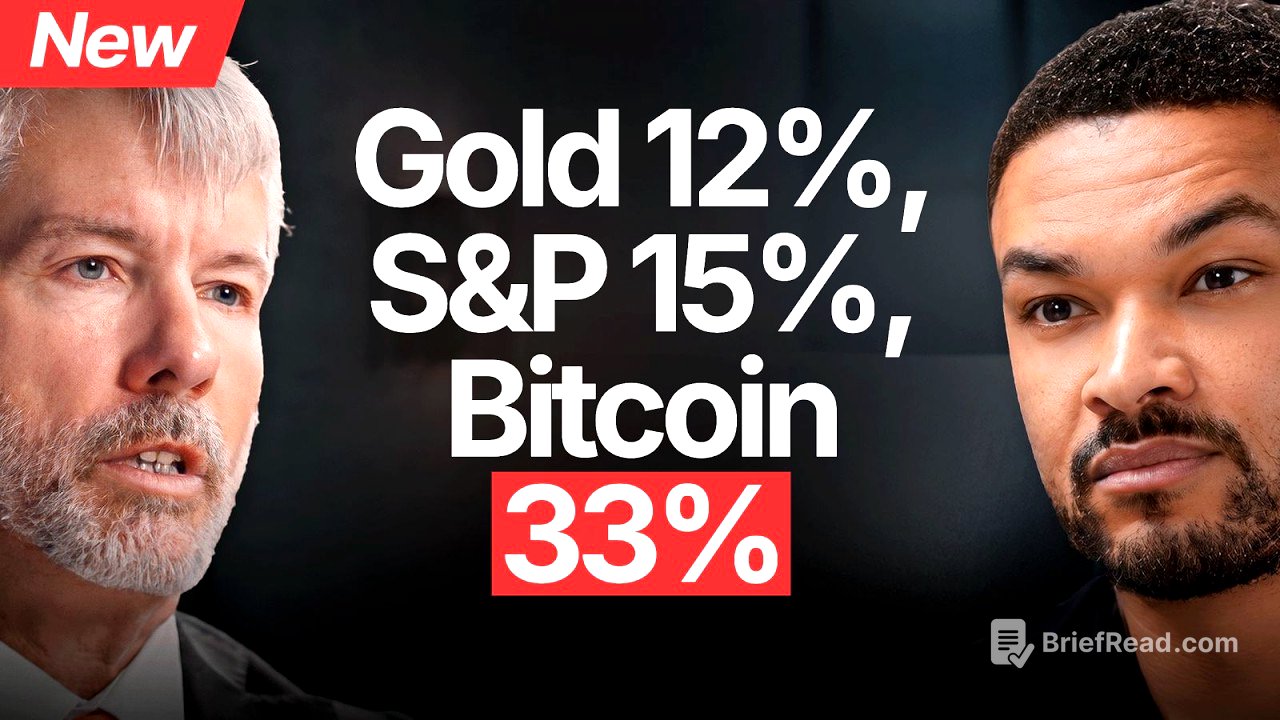
Gold vs. Bitcoin vs. Stocks: Which Asset Wins? [15:26]
Saylor compares gold, Bitcoin, and stocks based on their performance and liquidity. He concludes that Bitcoin represents a superior investment due to its scarcity and high potential for appreciation, particularly in regions suffering from unstable fiat currencies.
How AI Could Transform the Economy Faster Than Expected [17:41]
Saylor discusses the rapid advancements in AI and its potential to greatly enhance productivity, similar to previous technological revolutions. He argues that innovative uses of AI can lead to economic shifts faster than anticipated, reshaping industries.
Is the Age of Abundance Closer Than We Think? [21:34]
He speculates about the influx of goods and services that AI could provide, suggesting that the economy may evolve toward greater abundance. However, he also raises concerns about the value of money in such a future where many basic needs could be met without currency.
What Happens If AI Replaces Millions of Jobs? [27:08]
Saylor contemplates the socioeconomic impacts of widespread job displacement due to AI. He emphasizes the need for society to adapt to a world where work may become optional and suggests that education systems should prepare for these changes.
How AI Helped Generate $16 Billion in Value [32:09]
He elaborates on how AI technologies facilitated his company's financial engineering, enabling significant capital raises through innovative security instruments backed by Bitcoin. This model has propelled his firm into a dominant position in the market.
Can AI Really Help You Find Your Next Billion-Dollar Business? [37:50]
Saylor discusses the potential for entrepreneurs to use AI to generate unique business ideas and solutions. He notes that the utilization of AI can provide advantages over traditional business planning methods and unlock new opportunities.
What Happens Next in the AI Revolution [41:29]
He expresses optimism about the upcoming AI revolution, stating that it will not only generate wealth but will also give rise to new industries and job categories. He advocates for leveraging AI as a tool for innovation rather than fearing its implications.
What Will Be the Real Moat in an AI-Driven World? [48:24]
Saylor argues that creativity and the ability to adapt will be crucial in distinguishing successful individuals and companies in an AI-driven economy. Those who can harness AI to improve existing frameworks will gain a competitive edge.
Can Anyone Still Stand Out in the Age of AI-Generated Content? [56:15]
He contemplates the challenges of standing out in a landscape where AI-generated content is ubiquitous. Originality and uniqueness in content creation will become highly valuable as algorithms inundate the market with generic offerings.
Why Long-Term Thinking Creates an Unfair Business Advantage [1:12:55]
Saylor emphasizes that a long-term strategy is essential for success in business. He encourages entrepreneurs to build on existing strengths and create sustainable growth opportunities, avoiding distractions that could dilute their focus.
Michael's Best Advice for Anyone Entering Adulthood [1:18:21]
He shares 10 rules for young adults to establish solid foundations for their careers and lives, including the importance of focusing their energy, guarding their time, and surrounding themselves with positive and supportive people.
Michael's Bitcoin Accumulation Strategy Explained [1:24:32]
Saylor details his company's approach to accumulating Bitcoin as a primary strategy for increasing financial stability and value in the face of economic uncertainty. He stresses the importance of Bitcoin as a digital capital asset.
Who Shouldn't Invest in Bitcoin—and Why [1:31:34]
He warns that Bitcoin is not suitable for short-term investors or those who need immediate liquidity. Long-term holders who can afford to invest without needing funds in the near future are advised to consider Bitcoin as an investment.
What’s One Thing You Believe That People Don’t [1:34:24]
In his closing remarks, Saylor reflects on the profound lessons he has learned about wealth and money, urging individuals to invest in their knowledge and to understand the historical context of economic systems, which can lead to better financial decisions.