TLDR;
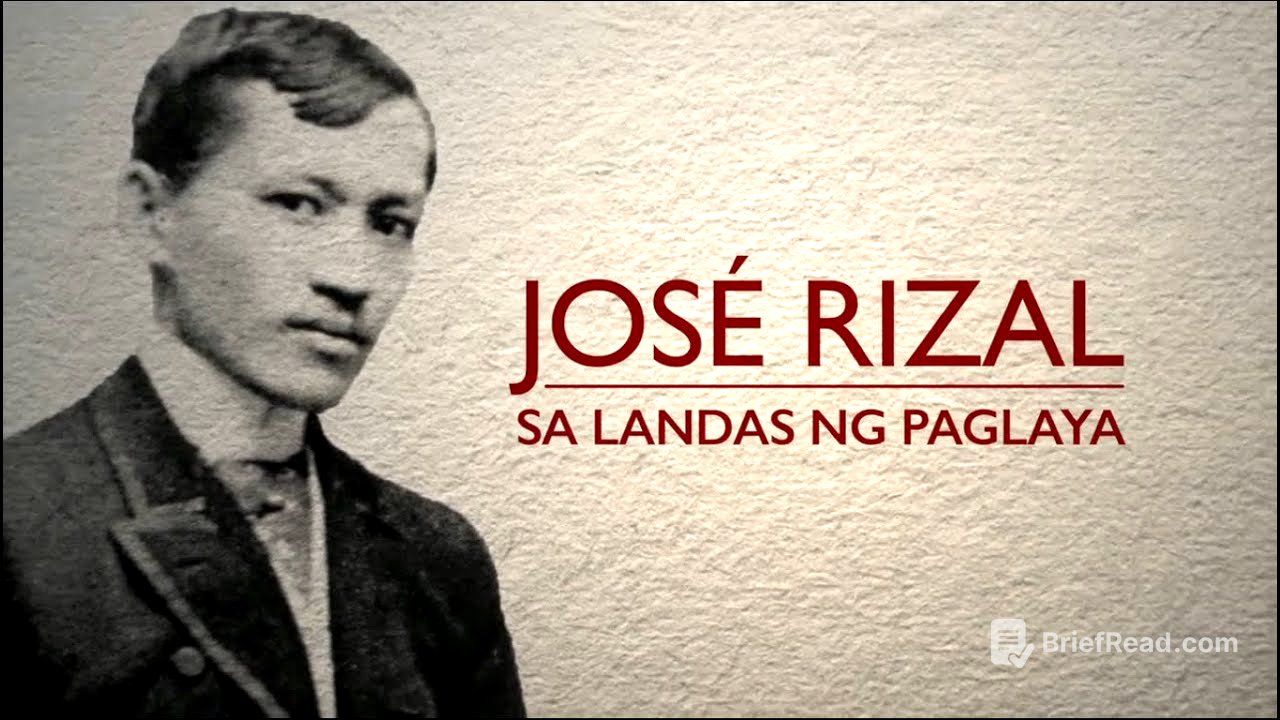
The video discusses the significance of understanding the life and legacy of José Rizal, a national hero of the Philippines. It emphasizes the need for Filipinos to read and comprehend Rizal's works to truly appreciate his contributions and sacrifices for the country. The narrative reflects on his familial relations, political activism, and ideologies regarding freedom, virtue, and national identity.
- Importance of asking "Where are we now?" in relation to Rizal's legacy.
- Rizal's life involvement, his relationships, and impact on Philippine society.
Understanding Rizal's Legacy [0:00]
The discussion begins with the importance of self-reflection regarding the current state of the Philippines in relation to its past. Questions about freedom and progress guide the narrative, and themes of darkness in life are juxtaposed with the hope for a brighter future. Rizal's role in history is highlighted, showcasing how he is often memorialized without truly being understood.
Rizal in the Philippine Landscape [2:03]
The video narrates a personal encounter with Rizal, recalling childhood memories in Piso and classroom references. The speaker reflects on how Rizal's legend permeated the Filipino culture, often overshadowing the actual understanding of his writings and philosophy. It discusses how veneration without comprehension dilutes Rizal's true impact.
Family and Personal Connections [5:06]
Rizal's relationship with his brother, Paciano, is explored, highlighting themes of familial responsibility and connection. Their correspondence reveals personal regrets and the pressures of familial duties. The training in their household emphasized a stoic approach to emotions, which affected how their sentiments were expressed in writings.
Rizal's Influence from Abroad [8:52]
The narrative shifts to Rizal’s education in Europe, where he encountered liberal ideas that shaped his perspectives on rights and equality. The struggles of Filipino youths abroad, including their vices, are critiqued as indicators of a broader cultural disconnection. The solidarity among Filipino reformists in Europe comes into focus, as they discussed the plight of their country under Spanish colonial rule.
Literary Contributions and Ideologies [12:42]
Rizal's literary works, particularly his novels "Noli Me Tangere" and "El Filibusterismo," are examined for their critical perspectives on social injustices and calls for reform. The evolution of his views regarding revolution and reform is revealed, indicating a more profound understanding of political struggle over the course of his life.
The Final Years of Rizal [14:06]
The chapter details the last months of Rizal’s life, discussing his plans for reform and the establishment of the La Liga Filipina, which aimed to unite Filipinos for progress. His return to the Philippines coincided with the onset of a revolution, leading to his trials and eventual execution, which solidified his legacy as a martyr for the nation's freedom.
Rizal's Vision for the Philippines [21:01]
Rizal’s ideology centered around virtue, sacrifice, and love for the country. The conclusion stresses the ethical responsibility of Filipinos to embody these ideals to achieve true national redemption. Teaching the younger generations about Rizal's life and principles is portrayed as pivotal in realizing a better society.
Call to Action and Reflection [30:22]
The narrative closes by encouraging viewers to reflect on Rizal's contributions and how his life serves as an example for contemporary Filipinos. It invites people to embrace Rizal’s vision of a future defined by ethical values and active citizenship, stressing the importance of learning from history to foster national identity and progress.

![The Entire Map of Money in 21 Min. [NO AI]](https://wm-img.halpindev.com/p-briefread_c-10_b-10/urlb/aHR0cDovL2ltZy55b3V0dWJlLmNvbS92aS9tbnVPWmNtb0dEOC9ocWRlZmF1bHQuanBn.jpg)