TLDR;
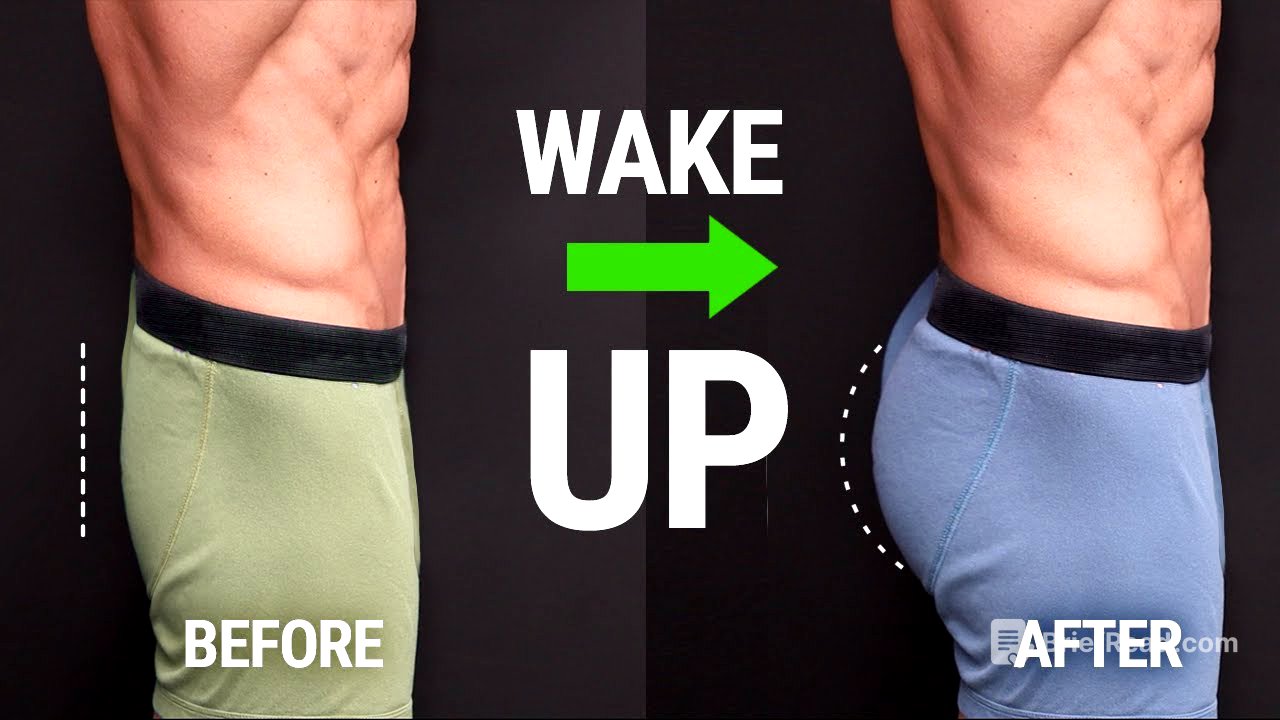
This video explains the importance of developing the Glute Medius muscle, which is often overlooked in favor of the Glute Max. Jeff Cavaliere shares four simple exercises, two performed on the ground and two standing, that can be done daily without equipment to strengthen the Glute Medius, improve hip function, and alleviate hip and back pain. The exercises focus on frontal plane abduction and rotary components, which are not as effectively targeted by Glute Max exercises.
- Focus on Glute Medius for hip function and pain relief.
- Four simple exercises: two on the ground, two standing.
- No equipment needed, can be done daily.
- Emphasize quality contractions over quantity.
Introduction to Glute Medius [0:00]
Jeff Cavaliere introduces the importance of developing the glutes, focusing not just on aesthetics but also on function. He highlights the Glute Medius, a muscle often overlooked compared to the Glute Max. Developing the Glute Medius can correct dysfunction, leading to relief from hip and back pain. He promises to share simple exercises that can be done daily to build stronger and better-looking glutes.
Ground Exercises for Glute Medius [1:07]
Cavaliere explains that while exercises like lunges, squats, deadlifts, and leg presses target the Glute Max, they often miss the frontal plane abduction and rotary component provided by the Glute Medius. For the first exercise, lie on your side with the leg in front of the body, internally rotate the hip by pointing the toe down, and lift the leg up into abduction. Focus on purposeful, quality contractions rather than speed. For the second exercise, position the hip into extension behind the body, externally rotate the hip by pointing the toe up, and lift the leg up. Lie flatter to the ground to avoid engaging the hip flexor.
Standing Exercises as an Alternative [3:23]
Cavaliere introduces standing exercises as an alternative, which he considers slightly better due to the weight-bearing, closed-chain nature that enhances muscle activation in the hip, low back, and glutes. For the first standing exercise, stand square in front of a bar or support, keep the leg in front of the body, turn the toe in, and swing the leg out to the side into abduction, allowing the hip on the opposite side to drop and come over. This works one side through flexion, abduction, and internal rotation, and the other through hip sliding. For the second exercise, angle the body towards a wall at 45 degrees, position the leg behind the body, turn the toe out, and rotate the body towards the wall while kicking the leg up.
Tips and Conclusion [5:40]
Cavaliere notes that initially, it may be hard to feel the Glute Medius contracting due to a dormant mind-muscle connection. In such cases, he recommends starting with the ground exercises for better initial connection before transitioning to the standing versions for added benefits. He concludes by encouraging viewers to choose either set of exercises to help build the important and often overlooked Glute Medius.