TLDR;
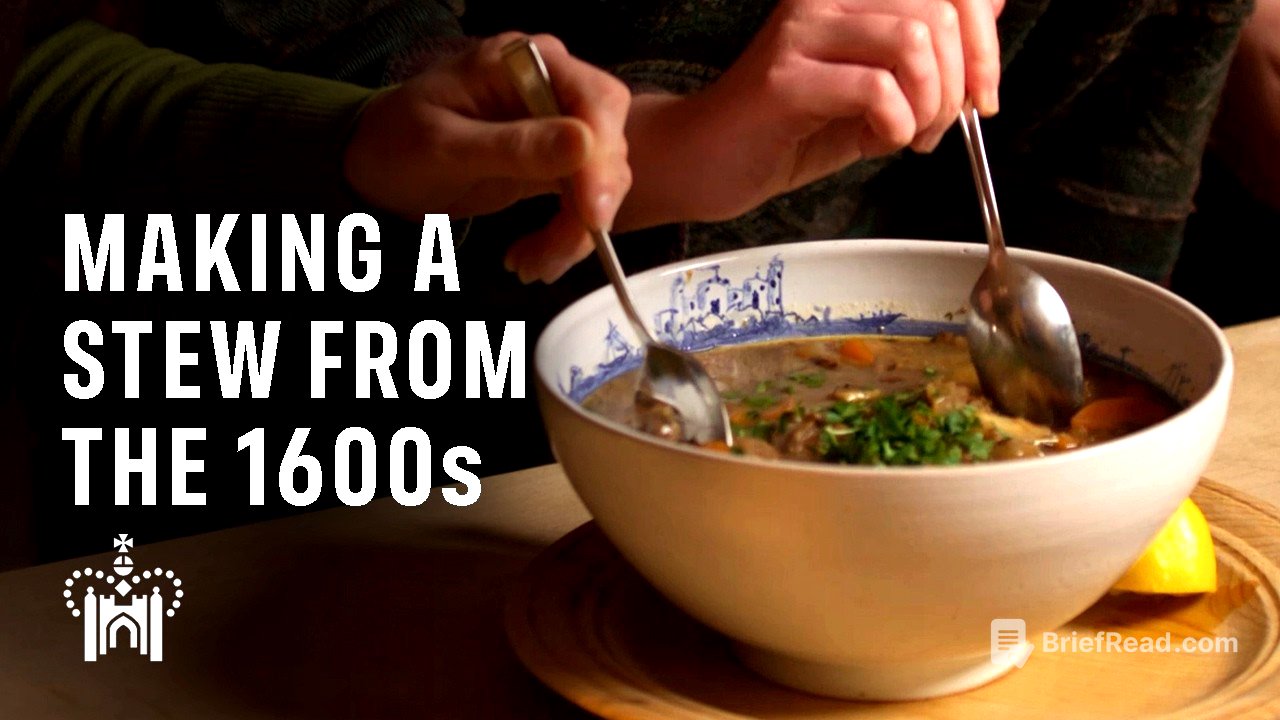
This video demonstrates a 17th-century recipe called "Queen's Hot Pot" from Sir Kenel Digby's book, focusing on historical cooking methods and ingredients. The recipe, a stew attributed to Henrietta Mariah, involves lamb (or mutton), root vegetables, and unique thickening and flavoring techniques using toasted bread soaked in vinegar. The video highlights the differences between modern and historical cooking practices, offering insights into the culinary preferences of the time.
- The recipe uses lamb or mutton, turnips, carrots, and parsnips.
- Thickening is achieved with toasted sourdough bread soaked in vinegar.
- The dish is finished with a squeeze of lemon to brighten the flavors.
Introduction [0:00]
The video introduces a 17th-century recipe, Queen's Hot Pot, from Sir Kenel Digby's book, published after his death. This stew is named after Queen Henrietta Mariah, wife of Charles I and mother of Charles II. Stews are described as basic dishes consisting of meat and vegetables, but this recipe includes unique elements not commonly found in modern cooking.
Preparing the Meat [0:46]
The recipe calls for mutton, which is sheep over two years old, but lamb is used as a substitute since mutton is not readily available today. Neck and leg of lamb are roughly cubed. Kenel Digby's recipe allows for the use of buff or beef as alternatives. Elizabeth I was known to enjoy mutton stew for breakfast. The lamb is batch-fried in butter to seal it and enhance its flavor before adding it to the stew. The presenter uses a tinned copper pan, explaining that while copper pans are excellent for cooking, they need to be tinned to prevent adverse reactions with food.
Simmering the Stew [2:35]
The recipe instructs to boil the meat for about 3 hours in a pot or cauldron to ensure it becomes juicy. The presenter uses a bronze cauldron instead of a ceramic pot (pausnet) mentioned in the original recipe. The fried lamb is added to boiling water in the cauldron and left to simmer slowly for about 3 hours to tenderize the meat, break down the fat, and develop the flavors.
Adding Vegetables and Herbs [3:31]
After simmering for 2.5 hours, turnips, carrots, parsnips, and another onion are added to the stew. Thyme, rosemary, pepper mix, and salt are also added for seasoning. The stew is then covered and left to simmer for another hour to allow the vegetables to cook and the flavors to meld together.
Thickening and Flavoring [4:21]
To thicken the stew, a fist-sized piece of sourdough bread is toasted until charred. In modern cooking, cornflour or a roux is typically used, but these require cooking out to avoid a starchy taste. Bread, especially sourdough, is a ready-made thickener that doesn't need to be cooked out. The toasted bread is then soaked in red wine vinegar to add acidity and umami flavor, a technique called "pointing up." The vinegar-soaked bread is added to the stew and simmered for about half an hour.
Final Touches and Tasting [6:37]
The stew is finished, and the vegetables are cooked. The presenter adds a squeeze of lemon juice to brighten the flavor, as suggested in the original recipe. The stew is served in a bowl, ready to be enjoyed on a cold evening. The presenter's colleagues try the stew and note the pleasant vinegary aroma and the tender, melt-in-your-mouth texture of the meat. They suggest pairing it with mashed potatoes, roasted potatoes, or bread and butter. They agree that the stew is delicious and fit for a queen.