TLDR;
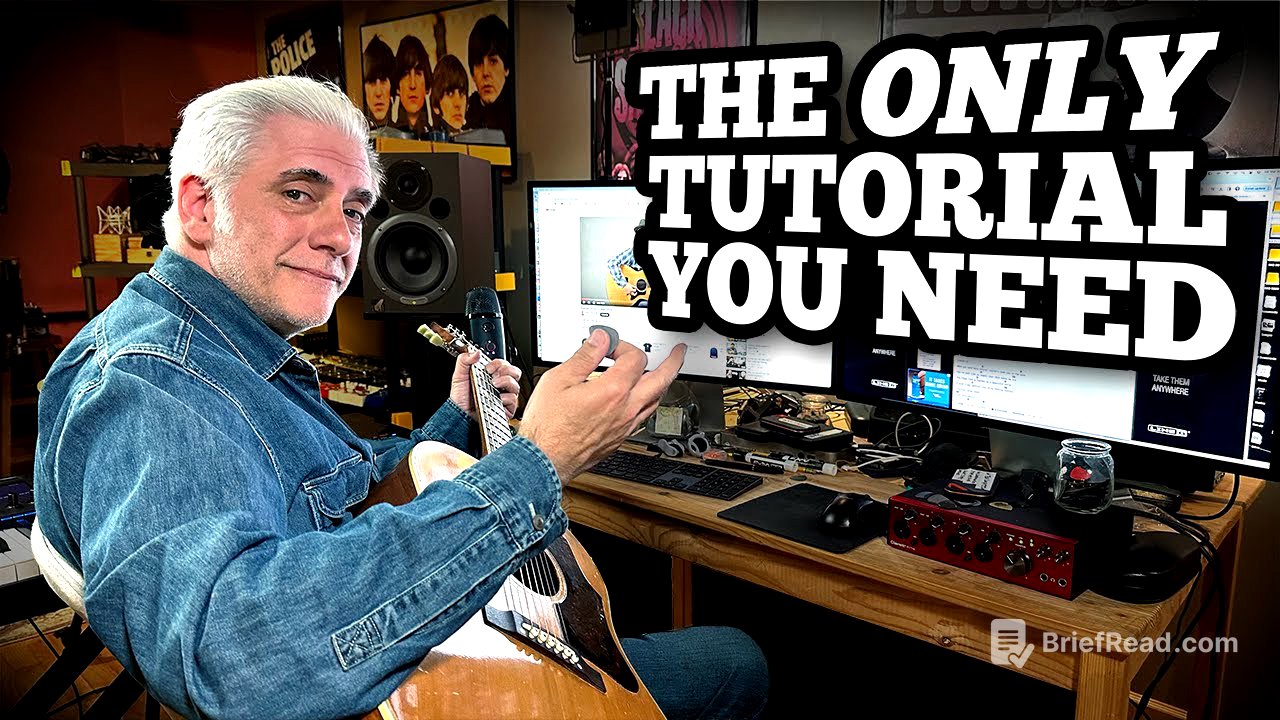
This video by Rick Beato discusses how to learn songs without relying on YouTube tutorials, highlighting the importance of developing musical ear and skills. He provides insights on what to listen for when figuring out songs, tuning instruments, and recognizing chords. Key takeaways include the significance of ear training and common sense in identifying musical components.
- Learning songs without YouTube improves musical ear training.
- Recognizing intervals and chords is essential for accurate playing.
- Understanding theory and practical skills can enhance music performance.
Introduction to Learning Without Tutorials [0:04]
Rick opens the discussion by addressing the reliance on YouTube tutorials, arguing that they hinder the development of listening skills. He emphasizes the need to train one's ear to recognize sounds and reproduce them on instruments. He mentions his ear training course as a resource for listeners.
Importance of Tuning Instruments [1:46]
The video explains tuning instruments, mentioning that it can be adjusted by ear rather than depending on tuners. Rick demonstrates tuning his guitar to a Rolling Stones song and observes the differences between harmonics and fretted notes. He shares his process of identifying chords by ear.
Identifying Chords and Notes [3:17]
Rick discusses how to identify various guitar chords and notes while listening to a song. He demonstrates his method for figuring out unique chords, employing a dictionary of recognized sounds. This part stresses using common sense and logic to narrow down possibilities based on context.
Recognizing Tuning and Open Strings [9:57]
He highlights the challenges of songs in non-standard tunings, explaining how to differentiate between open strings and fretted notes. Rick illustrates this with examples, noting the significance of being able to identify tuning peculiarities to accurately replicate the song.
Understanding Intervals [12:17]
Rick introduces musical intervals, explaining their role in ear training. He breaks down how intervals help to recognize scale patterns and the relationships between notes, which is crucial for developing a keen musical sense.
Songs That Present Challenges [18:50]
Rick tackles more complex songs, discussing the need for understanding song structure and the use of instruments like keyboards. He shares personal experiences from his youth of learning difficult songs, emphasizing the growth that comes with overcoming challenges.
Using Capos and Alternative Tunings [26:30]
The necessity of using a capo for certain songs is explained, along with tips on how to recognize when it should be employed. Rick illustrates the logic behind this adjustment, reinforcing the idea that good ear training simplifies figuring out songs effectively.
Conclusion and Course Offering [37:12]
Rick concludes with an overview of his courses, encouraging viewers to invest in their musical development through structured learning. He reiterates the importance of ear training and theory in mastering music and offers a bundle of his courses at a discounted price.