TLDR;
This video provides a powerful dopamine hack to enhance productivity and focus in daily life. It discusses how typical morning routines, like checking phones and scrolling through social media, can distract from achieving focused work or study sessions. The key points include the understanding of dopamine as a motivation and anticipation hormone, the negative effects of overstimulation from digital distractions, and practical strategies to manage dopamine levels to improve productivity.
- Understanding dopamine's role beyond pleasure.
- The impact of digital distractions on focus.
- Strategies for healthy dopamine management.
Understanding Dopamine's Role [0:00]
The video begins by discussing the common morning routine where individuals check their phones immediately after waking up. This behavior can lead to distractions and a lack of focus when trying to study later. The narrator explains that dopamine is not just a pleasure hormone; it is also related to motivation and anticipation. The release of dopamine occurs not only when one engages in enjoyable activities, but also during the anticipation of these activities.
The Cycle of Dopamine Release [0:54]
Viewers learn how dopamine release creates a cycle of addiction similar to gambling, as the thrill comes more from the anticipation of winning than from actually winning. Social media scrolling exemplifies this phenomenon; the endless search for new content triggers repeated dopamine spikes, increasing the likelihood of distraction. Engaging with high-stimulation content like fast food or social media can overshadow simpler pleasures.
The Importance of Novelty and Anticipation [2:58]
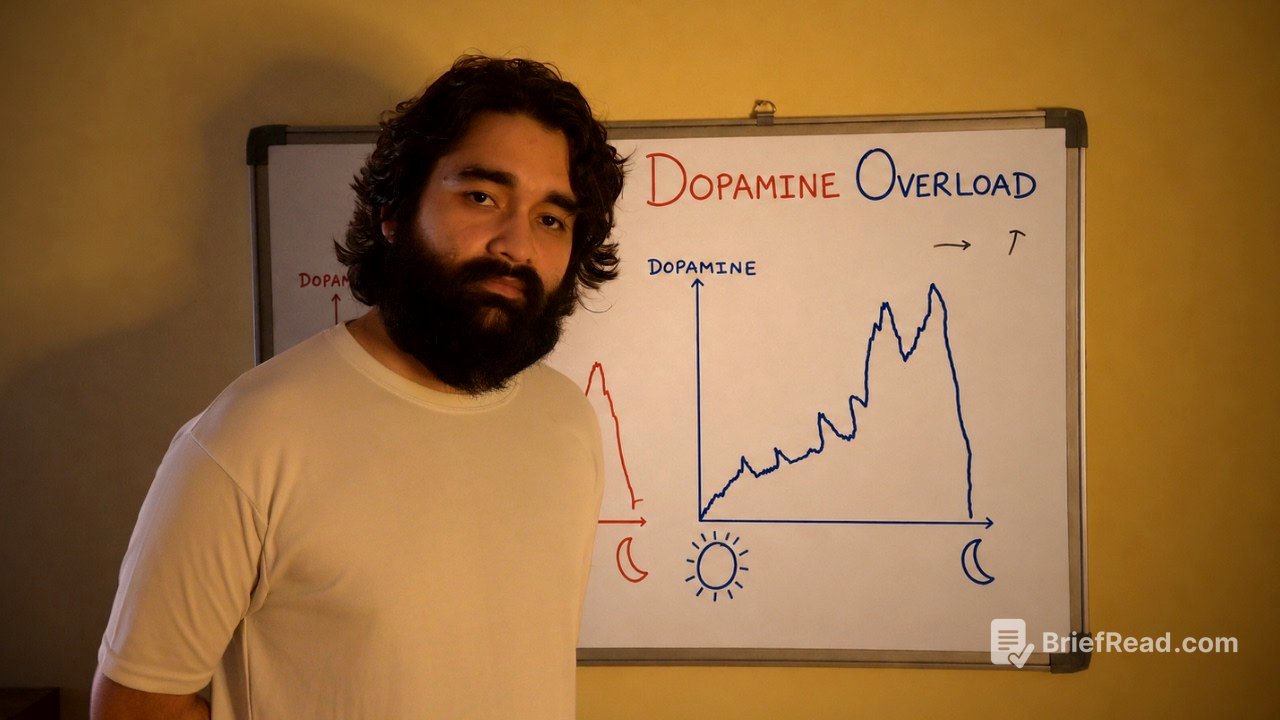
The video highlights three key aspects that drive dopamine: novelty, the suspense of potential rewards, and external stimuli that excite the brain. For instance, checking the phone first thing upon waking floods the brain with high impulses, leading to difficulty in transitioning to focused tasks like studying. The narrator emphasizes that the brain will naturally seek out high-dopamine activities, making it hard to focus on less stimulating tasks.
Overstimulation and Its Consequences [5:14]
The content explains how engaging in high-dopamine activities can lead to a decrease in attention towards productive tasks. Repeated cycles of seeking quick dopamine hits weaken one’s willpower and productivity. When faced with the less stimulating task of studying, the brain struggles to find focus, leading to procrastination and feelings of regret about time management.
The Natural Dopamine Approach [7:02]
A key strategy presented is starting the day with activities that provide natural dopamine without high stimulation. Suggestions include getting sunlight, exercising, and engaging in light music or creative tasks. These help in building a foundation for increased productivity without overwhelming the brain with excitement. By delaying high-intensity dopamine rewards until the end of the day, individuals can maintain productive focus throughout.
Daily Schedule for Better Productivity [11:05]
The video concludes with a suggested daily schedule, recommending waking up without immediately checking the phone. Instead, engaging in a morning walk for natural dopamine, followed by productive work or study tasks. Soft music and breathing exercises are advised as beneficial activities before transitioning to higher stimulation tasks at the end of the day, thus maintaining both productivity and mental well-being. The video also acknowledges the inspiration behind its content, referencing a similar English-language concept called dopamine loading.