TLDR;
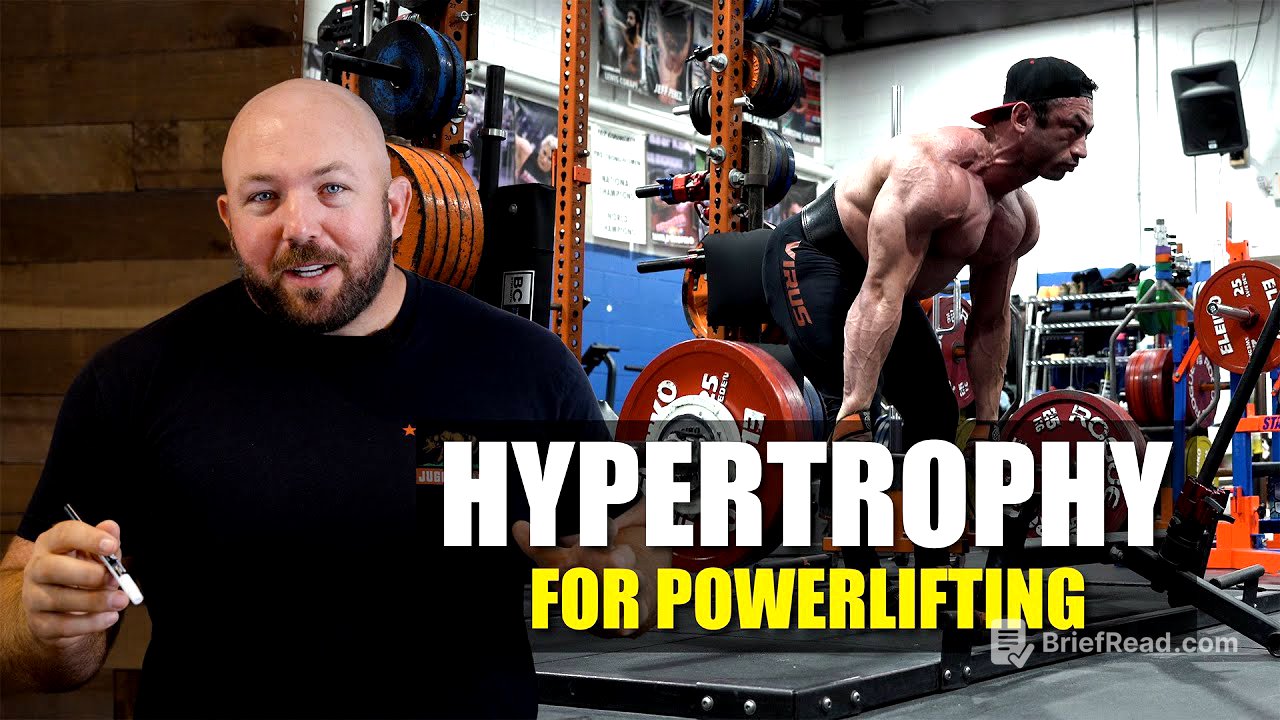
This video focuses on designing a hypertrophy block for powerlifting, emphasizing the importance of muscle gain for improved performance. The presenter outlines the foundational principles of hypertrophy training, the appropriate rep ranges, and exercise selection while addressing common misconceptions.
- Hypertrophy training is crucial for powerlifting success as it increases muscle mass and force production potential.
- Training in the 6 to 12 rep range, primarily between 60-80% intensity, is optimal for hypertrophy.
Importance of Hypertrophy for Powerlifting [0:00]
The discussion begins by highlighting why hypertrophy is essential for powerlifters. It notes that successful lifters are typically the most muscular. Increased muscle size correlates with higher strength potential, explaining how hypertrophy boosts work capacity and prepares the body for higher intensity training.
Setting Up a Hypertrophy Block [4:00]
The speaker presents how to effectively establish a hypertrophy training block, recommending a focus on training volume. A rep range of 6 to 12 is suggested for compound lifts while caution is advised against extremes; fewer than five reps lead to fatigue issues and more than 12 decrease specificity for powerlifting.
Choosing Effective Exercises [9:00]
Exercises for hypertrophy should maximize muscle engagement, avoid disrupting other lifts' training, and incorporate variation to prevent adaptive resistance. The emphasis is placed on full range of motion with recommended exercises including high bar squats, various bench press grips, and conventional deadlifts.
Weekly Training Structure [20:40]
A sample weekly training outline involves training five days, focusing on two primary bench days, two squat days, and a half day for deadlift. The structure ensures sufficient volume and variation to target muscle growth and maintain performance across all lifts while managing fatigue and facilitating recovery.
Managing Intensity and Volume [32:30]
The speaker discusses volume progression, suggesting various methods to increase workload, such as adding reps, sets, or weights weekly. It's stressed that beginners can often handle steeper increases than advanced lifters, and strategic volume management is key for long-term strength development.
Accessory Work and Recovery [43:50]
Accessory exercises for upper and lower body focus on maintaining muscle balance and avoiding overfatigue. Examples include direct shoulder and tricep work, unilateral movements for quads, and posterior chain exercises. The speaker highlights how higher reps in accessory work allow frequent training closer to failure without compromising main lifts.
Long-Term Strategy for Strength [53:20]
The video wraps up by reiterating the goals of hypertrophy training for powerlifters: building muscle, increasing work capacity, and avoiding burnout from repetitive training styles. It encourages thoughtful variations and long-term planning to enhance strength and performance while minimizing injury risk.