TLDR;
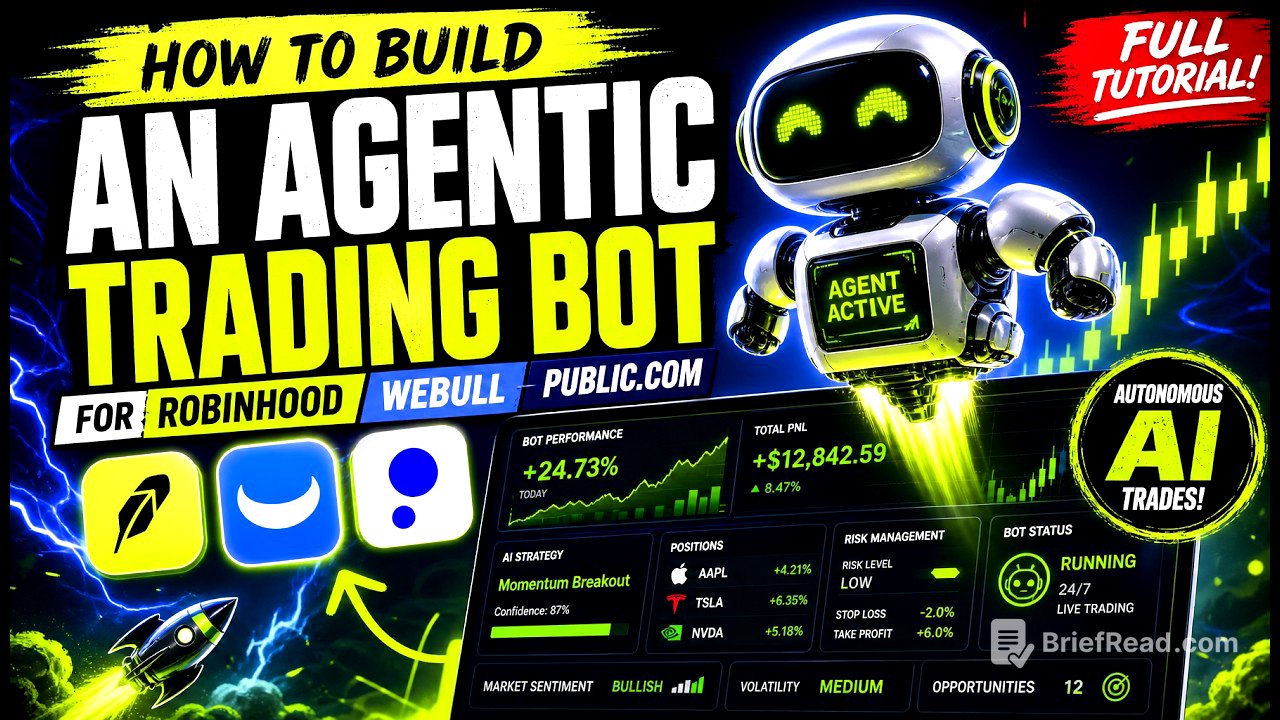
This video serves as a comprehensive guide for building a trading bot, addressing common questions and concerns about setting up the necessary infrastructure for automated trading. Key points covered include:
- The importance of establishing hard rules for trading.
- Avoiding margin trading and options for a conservative approach.
- Detailed look at software architecture, TradingView functionality, and Pine Scripts.
- Guidelines on portfolio construction, entry rules, risk management, and testing strategies.
- The use of APIs versus AI coders for executing trades and the significance of cloud-based systems for safety and reliability.
Introduction & Why This Video Exists [0:00]
The video begins by addressing frequently asked questions regarding setting up a trading bot based on previous content shared on the channel. The creator emphasizes the importance of self-custody over trading funds and the effectiveness of building one’s own trading infrastructure. The aim of this video is to guide viewers through a step-by-step process to build their trading bots compatible with major brokers.
Defining Your Trading Bot Rules [1:58]
The focus here is on creating hard trading rules that the bot will follow, specifically through coding. The creator shares personal hard rules, such as avoiding margin trading and options, as a means to ensure consistent and safe compounding growth in investments. Establishing these rules is crucial as they dictate the buying and selling actions of the bot.
Why I Avoid Margin & Options [2:51]
The creator explains the risks associated with margin trading and options, citing personal experience with losses incurred through these methods. Emphasizing a conservative trading philosophy, the creator aims to minimize stress associated with trading while promoting steady, reliable growth without unreasonable risk.
Taking Breaks & Trading Philosophy [4:18]
Taking breaks during high-impact trading periods is discussed as a strategy to only trade effectively for a limited part of the year while still achieving desired profits. This chapter emphasizes the importance of individual trading strategies and stresses that each trader must find their own rhythm and methodology.
Software Architecture Overview [5:44]
A detailed look at the software architecture required for a trading bot is presented, describing the need for a user interface (UI), a server, and API connections for effective communication between software components. The use of multiple technologies and their interactions are vital for successful bot functionality.
TradingView as the Brain of the Bot [7:39]
TradingView is presented as the primary cognitive component (the "brain") of the trading bot, responsible for generating trade signals based on set strategies and indicators. The importance of advanced Pine Scripts, which allow for automation of trading decisions based on complex conditions, is also discussed.
Using Multiple Indicators in Pine Script [8:44]
This chapter covers the use of Pine Scripts to automate trades utilizing a combination of indicators like RSI, MACD, and Bollinger Bands. The creator explains how to translate a manual trading strategy into a Pine Script to automate trade decisions by incorporating various indicators for enhanced decision-making.
Why a Paid TradingView Plan Matters [10:27]
The necessity of investing in a paid TradingView plan is highlighted for anyone serious about using multiple indicators and achieving favorable trading outcomes. The free version limits access to essential tools and indicators needed for reliable automated trading, while a paid plan allows for broader strategy implementation.
Portfolio Construction & Position Sizing [12:45]
Guidelines for constructing a trading portfolio are discussed. The creator shares personal rules regarding stock selection, position sizing, and awareness of potential risks based on historical performance trends. Examples from the creator’s own trading philosophy shed light on how to establish safe trading parameters.
Entry Rules & Risk Management [15:07]
Entry rules specification is critical in determining when trades are placed. The importance of risk management is also discussed, highlighting how setting alerts and adhering to predetermined conditions can prevent impulsive trades and incur losses.
Claude, Codex & OpenClaw Explained [16:41]
This chapter describes different automated coding tools like Claude, Codex, and OpenClaw which can aid in developing the bot's UI and server infrastructure. Understanding the role these tools play in support of creating a smooth trading experience is emphasized.
How TradingView Connects to Your Broker [18:18]
A detailed explanation of integrating TradingView with a broker using a custom application is provided. The process involves sending trading signals from TradingView to a broker through a series of intermediary steps, ensuring effective trade execution without compromise.
APIs vs AI Coders for Trade Execution [20:44]
The discussion contrasts using APIs and AI coders for executing trades, emphasizing that APIs are crucial for actual trading actions, while AI coders play supportive roles in structuring the overall system and managing upgrades to the trading bot.
Planning the Build with OpenClaw [21:43]
Building a trading bot’s infrastructure with OpenClaw is outlined, detailing how to articulate requirements and expectations effectively while consulting on specific needs for custom build-outs. Proper planning is essential to ensure all functionalities are addressed during the development process.
Building the UI, Server & Cron Jobs [22:46]
A breakdown of the process to construct the bot’s user interface, server, and necessary cron jobs for automated performance is presented. This section explains how these components interact to ensure consistent bot operations while users are not actively monitoring it.
Webhooks Explained [24:03]
Webhook functionality is explained, illustrating how they facilitate communication between TradingView and the custom-built application by notifying it of trade-related events. Understanding webhooks is essential for effective application responsiveness during trades.
OpenClaw vs Claude Workflow [25:39]
The workflow between OpenClaw and Claude in the context of building a trading bot is delineated. The focus on assigning roles and responsibilities to each tool helps streamline the development process and ensure efficient functionality within the trading system.
Why I Avoid Localhost Deployments [27:03]
The dangers associated with using local servers for trading bots are discussed, highlighting the increased risk of security breaches as sensitive data housed locally can be easily exploited. The creator recommends using cloud-based solutions for safer operations.
My Cloud-Based AI Builder Setup [29:21]
The creator shares insights into their setup for a cloud-based AI builder to deploy a trading bot effectively. This method provides both security and scalability, allowing for seamless connection to brokerage accounts and automation of trading actions.
TradingView → Custom App → Broker Architecture [30:08]
An overview of the architecture linking TradingView, the custom app, and the broker is presented. This structure defines how signals are processed to ensure timely and efficient trade execution while maintaining alignment with established rules and strategies.
Using Broker APIs & Order Controls [31:31]
The use of broker APIs to execute trades and manage order controls within the trading bot is discussed. The chapter examines how to utilize various API functionalities, such as setting stop-loss and limit orders, to enhance trading strategies and manage risk.
Testing with Paper Trading [34:17]
The importance of testing trading strategies with paper trading techniques is highlighted. Paper trading allows for risk-free evaluation of the bot’s performance against real market conditions, ensuring that all functionalities work correctly before moving to live trading.
Hard-Coded Safety Rules [35:12]
Hard-coded safety rules for the trading bot are crucial to maintaining trading discipline. The creator discusses personal rules, such as never selling at a loss, and how these guidelines help ensure that trading decisions remain consistent and within desired risk parameters.
Never Selling at a Loss Strategy [36:00]
The strategy of never selling a stock at a loss is thoroughly outlined. The creator shares their rationale behind this philosophy, emphasizing the importance of patience and waiting for the right conditions before making any trades.
Final Trading Bot Architecture Recap [37:03]
The video concludes with a comprehensive recap of the trading bot architecture, summarizing the roles of each component from TradingView, through custom applications, to broker connections. This recap reinforces the importance of maintaining a structured, rule-based approach to automated trading.