TLDR;
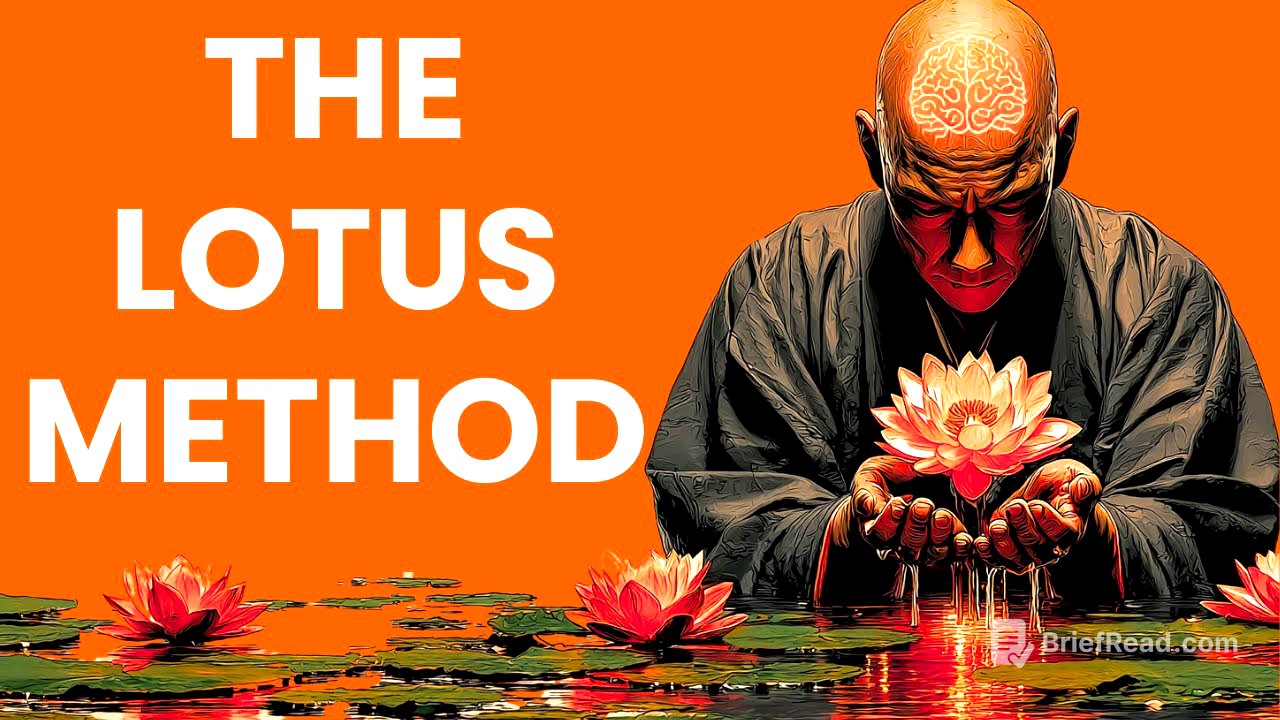
This video tells the story of Takumi, a young monk struggling with a restless mind, who learns the "Lotus Method" to find inner peace and enlightenment. The key takeaways include:
- The "Lotus Method" uses meditation (Zazen) to transform the "mud" of negative thoughts and emotions into the "lotus" of purity and calm.
- Shikantaza, or "just sitting," is a core principle that involves observing thoughts without judgment and returning to the breath.
- The practice involves understanding the science and wisdom behind meditation, deepening the practice through daily life, and confronting the ego.
- The ultimate realization is that the journey of self-improvement is continuous, and enlightenment is found in the process itself, not as a final destination.
Intro [0:00]
The video opens with a scene of a young monk, Takumi, standing before a muddy pond at Mount Iheisen in Japan. He is about to learn that the most beautiful thing emerges from the filthiest place, which will change his life forever. The video promises to reveal the true power of the mind.
CHAPTER 1 – TAKUMI'S AWAKENING [0:40]
Takumi, known as the boy with the monkey mind, arrives at Iheisen, the temple of eternal peace. He struggles with constant worrying and an inability to quiet his thoughts. Before leaving home, his father tells him that his mind is like iron extracted from the earth, which needs to be purified and forged. In the monastery, Takumi envies the monks' calm but fails to imitate them, becoming frustrated by his inability to meditate. One morning, the abbot, Hakuin Roshi, finds him in tears and explains that his mind is the mud from which a lotus can grow. He advises Takumi to allow the lotus to grow without wrestling with the mud.
CHAPTER 2 – THE PRINCIPLE: SHIKANTAZA [5:11]
Hakuin Roshi teaches Takumi the principle of Shikantaza, which means "just sit". He explains that meditation is not about achieving something but simply sitting. Thoughts are like clouds in the sky, and the key is not to climb onto the clouds but to remain the sky. Hakuin Roshi teaches Takumi a method involving counting the breath, maintaining body posture (lotus position), cultivating "Fosshin" (immovable mind), and practicing "Mushin" (mind of no mind). Mushin means not clinging to thoughts but simply observing them. Hakuin Roshi emphasizes that the lotus doesn't worry about how long it will take to bloom; it simply grows.
CHAPTER 2 – THE PRINCIPLE: SHIKANTAZA [10:54]
Hakuin Roshi explains the wisdom and science behind the practice. He quotes Miyamoto Musashi on seeing what must be seen, emphasizing that most people don't see their thoughts. He references the Lotus Sutra, explaining that the lotus blooms in the mud but is not stained by it, describing the enlightenment process. Hakuin Roshi describes how Zazen changes the brain, strengthening the prefrontal cortex (for attention), calming the amygdala (reducing fear responses), and quieting the default mode network (reducing wandering thoughts). He explains neuroplasticity, noting that the brain is like clay shaped by practice. Zazen involves the body sending signals of stability, the mind focusing on breath, observing thoughts without reaction, and physical changes in the brain. The Lotus method works universally because it addresses fundamental aspects of the human mind.
CHAPTER 4 – THE TRANSFORMATION [16:24]
One year into his practice, Takumi is transformed. He receives news that his father is gravely ill. Unlike before, he feels the emotions but isn't overwhelmed by them. He seeks permission to depart and sits by the lotus pond, maintaining a calm mind. Hakuin Roshi notes that Takumi is no longer in the mud but has risen above it. Takumi travels to his village and finds his father weak. His father acknowledges Takumi's peace and says he no longer fears death. Takumi's father dies peacefully, and Takumi sits in Zazen, allowing grief to come in waves without clinging to it. Upon returning to the monastery, Takumi shares his experiences with Hakuin Roshi, who notes that the lotuses have begun to wither, but new seeds will sprout in spring. He emphasizes that suffering is part of growth and that understanding this leads to flow.
CHAPTER 5 - DEEPENING: THE DAILY ALCHEMY [21:36]
Takumi enters a new level of practice where Zazen becomes natural. He practices non-attachment while watering the garden, giving water without expecting gratitude. Hakuin Roshi introduces the concept of "Ichigo," emphasizing full attention and presence in every moment. Takumi becomes a master of life as Zazen. Hakuin Roshi sends him into the forest to find a word that describes his practice, and Takumi returns with "Fullness." Hakuin Roshi explains the paradox that the lotus is empty of its own nature but full of everything. Takumi learns additional practices such as Kohan Rizu (two mirrors practice), Susokan (observation of breath), Coan practice, and Tonglin (breathing in suffering, sending compassion out). Takumi stops expecting and simply sits, lives, and is, leading to peace, clarity, and compassion.
CHAPTER 6 - THE FINAL CONFRONTATION:THE DEATH OF EGO [26:21]
Twenty years after arriving at the monastery, Takumi faces his final test: the spiritual ego. During morning Zazen, he has a thought that he is enlightened, which tempts him to cling to it. He sees the thought, recognizes the danger, and lets it dissolve. The thought returns in various disguises, tempting him with recognition and praise. Takumi goes to Hakuin Roshi, sharing his struggles. Hakuin Roshi explains that the ego is the mud that will always be there, and practice is not to kill the ego but to see it clearly. Takumi realizes that even in this problem, he is practicing. He understands that there is no final state, only the way, which continues forever. He laughs, realizing he had been seeking enlightenment as an end point, but it is the journey itself.
THE LESSON FOR YOU [31:06]
The video concludes by stating that the mud in life is real, but it is also the soil for growth. The Lotus Method involves sitting in lotus position, breathing from the har, counting to 10, and observing thoughts without expectation. The video suggests that one day, the mud will settle, the water will clear, and something pure will bloom. This is not about becoming better but becoming real, living with presence and purpose, and blooming from the mud.