TLDR;
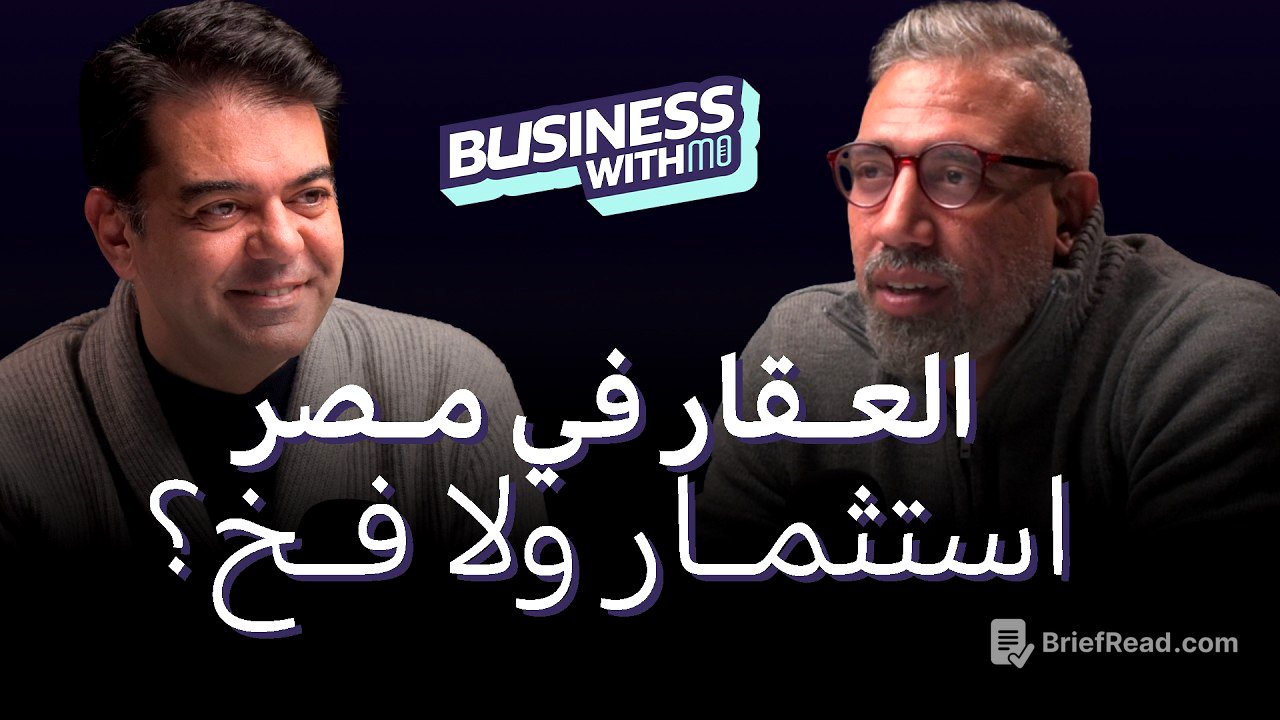
This YouTube video features a discussion about the Egyptian real estate market, addressing concerns about a potential real estate bubble. The speakers discuss the role of developers, pricing strategies, investment risks, and the impact of government policies. They also offer advice to potential buyers and discuss the challenges in the rental market.
- The discussion highlights the importance of transparency and realistic pricing in the real estate sector.
- It warns of potential risks associated with speculative investments and encourages buyers to be cautious.
- The speakers emphasize the need for regulatory oversight to ensure market stability and protect consumers.
مقدمة: هل السوق العقاري المصري في خطر؟ [0:00]
The video starts by addressing concerns about a slowdown in real estate sales in Egypt and questions whether there is a real estate bubble. It mentions that warnings about problems in the market have been circulating for over five years, but some stakeholders have ignored these concerns. The discussion aims to bridge different viewpoints and encourage industry stakeholders to listen to each other to reach common ground.
هل في فقاعة عقارية في مصر؟ [0:17]
The discussion begins by acknowledging the existence of alerts regarding the real estate sector in Egypt for more than five years. Some individuals have highlighted issues in the market, urging quick action, but their concerns were ignored. The signs indicating that developers were on the wrong path and that the market needed review have been present for over 15 years.
دور المطورين وتأثيرهم على الأسعار [0:57]
The speakers discuss the role of developers and the lack of regulations in the Egyptian real estate market. They mention that when the market is doing well, and money is flowing, people tend to ignore the warning signs. The discussion aims to avoid the traditional debate of whether there is a bubble and instead focuses on aligning perspectives.
سر تسمية الفقاعة بـ "هيام" والرهن بـ "حمادة" [2:03]
The speakers propose using the names "Hayam" for the bubble and "Hamada" for mortgages to avoid sensitivities around these terms. They define a mortgage as a financing method that relies on collateral, which is the residential unit itself. The conversation explores whether financing and facilities are available and whether they are provided by banking institutions or the developers themselves.
صدمة 2026: تباطؤ البيع ومرتجعات بالمليارات [3:12]
The real estate market is experiencing a significant slowdown in sales, with increasing return rates. Some developers have stopped selling altogether. One developer reported returns of over 3 billion Egyptian pounds, while another reported returns exceeding 1.8 billion Egyptian pounds. The government is taking initiatives to rescue the real estate sector, such as the introduction of tripartite contracts.
التمويل العقاري وقنوات القروض: الوضع الحالي [7:25]
The speakers discuss the availability of financing and facilities, questioning whether they are provided by banking institutions or the developers themselves. They highlight that developers are offering facilities without collateral, which is riskier than traditional mortgages. The government's potential involvement as a third party in real estate contracts is due to the existence of mortgage-like practices without actual collateral.
كيف تتكوّن أسعار العقارات؟ العوامل المؤثرة [9:41]
The current prices in the market do not reflect the true value of assets, indicating a form of inflation in pricing. Price out occurs when a price is outside the market range due to increased costs or inflationary waves. Ultimately, the price must be agreeable to both the buyer and the developer for a transaction to occur. The speakers define real estate bubble as current prices in the market not reflecting the true value of assets.
نصائح للمشترين: متى تشتري؟ ومتى تنتظر؟ [18:27]
The discussion shifts to the demand for real estate, distinguishing between the need for real estate and the ability to purchase it. Demand should be calculated based on the ability to purchase from the real market, not from speculators. The price-to-income ratio in Egypt ranges from 15.1 to 21.2, while globally, it averages between 3 and 7. The safe range for this ratio in Egypt is between 8 and 12.
أزمة الإيجار (Rent) وصعوبة الاستثمار [22:17]
The speakers address the rental crisis and the difficulty of investing in real estate. The rent ratio accounts for 39% of the average salary. The price-to-rent ratio in city centers in Egypt was 19.75 as of June 2025, while the global average is 9, and the appropriate ratio for emerging markets is between 12 and 14. The high price-to-rent ratio indicates that people cannot afford to rent.
الاستثمار العقاري: فرص ومخاطر في السوق المصري [27:57]
The discussion covers real estate investment, emphasizing that it should be a productive asset, not just a store of value. The lack of trust in the market is highlighted, with concerns about the resale market and sales tactics. The speaker mentions that the secondary market should run parallel with the primary market, and the increasing number of real estate investors is a positive sign.
المنافسة المستحيلة: المطور ضد "الريسيل" (Resale) [31:16]
The speaker explains that a critical point in the market is reached when the number of units for sale by owners equals the number offered by developers. Developers argue that owners will need money and sell at a lower price, but this leads to unfair competition. The three pillars of investment are capital gain, return from operation, and liquidity. When liquidity is difficult, the value of the investment decreases.
الرد على حجة "العقار مخزن للقيمة" وارتفاع الدولار [37:44]
The speakers discuss the argument that real estate is a store of value and the impact of the rising dollar. They criticize the pricing practices of developers and their reluctance to adjust prices. The speaker argues that developers are betting against the country's economy by hoping that the stability in the exchange rate does not last. The discussion also addresses the claim that a developer's ability to sell is not an indicator of a healthy market.
توقعات المستقبل: سيناريوهات لأسعار العقارات [47:57]
The conversation shifts to future expectations and scenarios for real estate prices. The speaker references a past correction in the 1990s and emphasizes the importance of transparency and collaboration among developers, the government, and other stakeholders. The speaker highlights the need for a clear plan for price correction and expresses concern about the current state of the market.
هل يعيد التاريخ نفسه؟ تصحيح التسعينات وهبوط 50% [55:14]
The speaker recalls a similar situation in the 1990s when a slowdown led to a recession in the real estate market, with prices dropping by about 50%. The speaker emphasizes that if the real estate sector, which now contributes about 20% to the GDP, collapses, it would be a disaster. The speaker also mentions the Economic Complexity Index, which measures a country's ability to handle crises, and notes that Egypt's index has declined.
دور الدولة في السوق العقاري: منافس أم منظم؟ [1:06:52]
The discussion explores the role of the state in the real estate market, questioning whether it should be a competitor or a regulator. The speaker argues that the state's presence is necessary to regulate the market and address segments that developers may overlook, such as middle- and low-income housing. The speaker also questions whether the state's involvement is at the request of developers who cannot afford land prices.
تأثير قروض البنوك على الطلب والسعر [1:16:08]
The speakers discuss the impact of bank loans on demand and prices. The speaker mentions that banks have largely withdrawn from financing the real estate sector due to a lack of trust. The conversation explores a hypothetical scenario where banks offer loans to buyers in the secondary market, potentially stimulating the market but also posing risks.
مخاطر المستثمرين والاحتياطات العملية [1:22:37]
The speaker warns that if current trends continue, there will be a prolonged recession until income levels align with real estate prices, as happened in the 1990s. The speaker identifies investors, developers, and the state as being at risk. The speaker emphasizes the need for recognition of the problem and calculated measures to correct the situation.
نصيحة للمطور، المستثمر، والمشتري [1:28:13]
The speaker advises developers to be honest with themselves and acknowledge the administrative errors that have occurred. For potential buyers, the advice is to wait and not rush into purchases. Current owners who need to sell may have to significantly lower their prices. The speaker calls for government intervention to regulate the sector and expresses concern about developers using the state's involvement as a justification for their actions.
الخلاصة والتوصيات النهائية من د. رامي خضير [1:41:42]
The speaker criticizes the creation of artificial scarcity in the market and argues that it is ethically wrong. The speaker also criticizes developers for misleading buyers and creating a false sense of demand. The speaker urges developers to stop making excuses and to work together to address the issues in the market. The speaker advises potential buyers to be cautious and not rush into purchases.