TLDR;
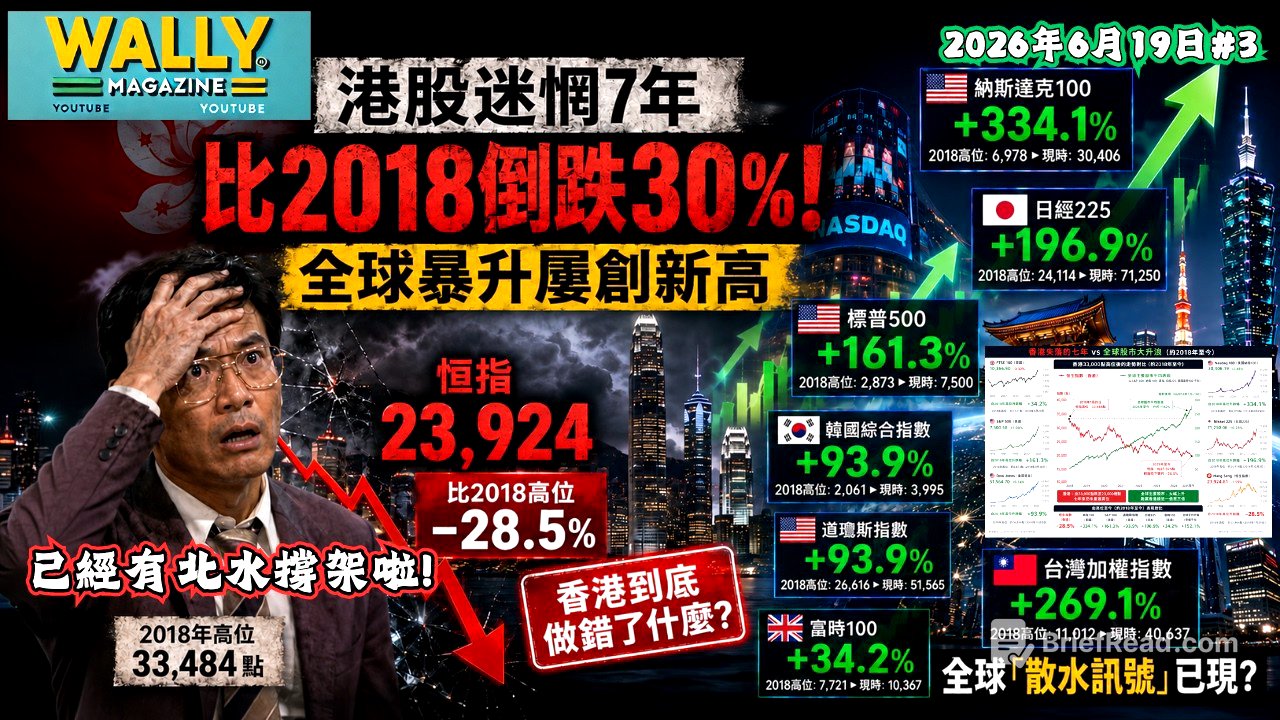
This video focuses on the current state of the Hong Kong stock market amid global financial contexts. It highlights significant declines in the Hong Kong stock index despite other global markets reaching new highs. Risk factors affecting the local market include geopolitical tensions and economic signals from mainland China.
- Hong Kong stocks experienced a drop, with the Hang Seng Index falling below 24,000 points.
- The disparity between Hong Kong's market performance and rising global markets, such as the US and Japan, raises concerns.
- Key reasons for Hong Kong's difficulties include investor sentiment and economic pressures in mainland China.
Overview of Current Market Conditions [0:00]
The video begins with an introduction to the current situation of the Hong Kong stock market as of June 19, 2026. It notes that while major global stock markets are reaching new heights, Hong Kong's market is struggling, seeing significant drops in its indices. Recent events have caused the Hang Seng Index to fall below 24,000 points, indicating a recent low for the market.
Contrasting Global Market Performance [1:45]
The presenter contrasts the Hong Kong stock performance with other global markets that are doing well. Notably, despite challenges like geopolitical conflicts and inflation concerns worldwide, stock markets in the US and Japan have been reaching record highs. This stark discrepancy raises questions about Hong Kong's performance and its investment appeal.
Factors Contributing to Hong Kong's Decline [3:01]
Several factors are affecting the decline in Hong Kong's stock market. The presenter elaborates on the market's ongoing bearish sentiment, evident from recent trading volumes and IPO performances. Notably, sectors sensitive to interest rate changes, such as real estate and retail, have faced significant pressure, causing stock declines.
Investor Sentiment and Economic Signals [4:04]
Investor concerns about the future economic landscape in China further complicate the situation. Reports suggest that a section of mainland Chinese capital is flowing out of Hong Kong, impacting investor confidence. The market reacts negatively to any mention of potential interest rate hikes from the US Federal Reserve, which causes further pressure on local stocks.
Comparative Analysis with Other Markets [5:40]
The video includes a comparative analysis with international markets that have been faring better. It mentions specific stock performances, highlighting that other markets have shown resilience even amidst difficult global conditions. This raises pressing questions about the underlying issues that prevent Hong Kong stocks from rebounding.
Upcoming Market Events and Potential Risks [9:42]
Looking forward, the presenter discusses the implications of approaching stock unlock periods in July, which could lead to increased selling pressures. He emphasizes the need for investors to remain informed about market shifts and be cautious amid emerging trends. Risks identified include potential profit-taking actions by investors and large-scale financing activities that could destabilize the market.
Conclusion and Viewer Engagement [15:14]
The video wraps up by reiterating the complexity of the current financial landscape in Hong Kong. The speaker invites viewers to engage by sharing their thoughts or experiences related to the market. Overall, the content aims to keep viewers informed about significant market indicators and potential risks associated with investing in Hong Kong.