TLDR;
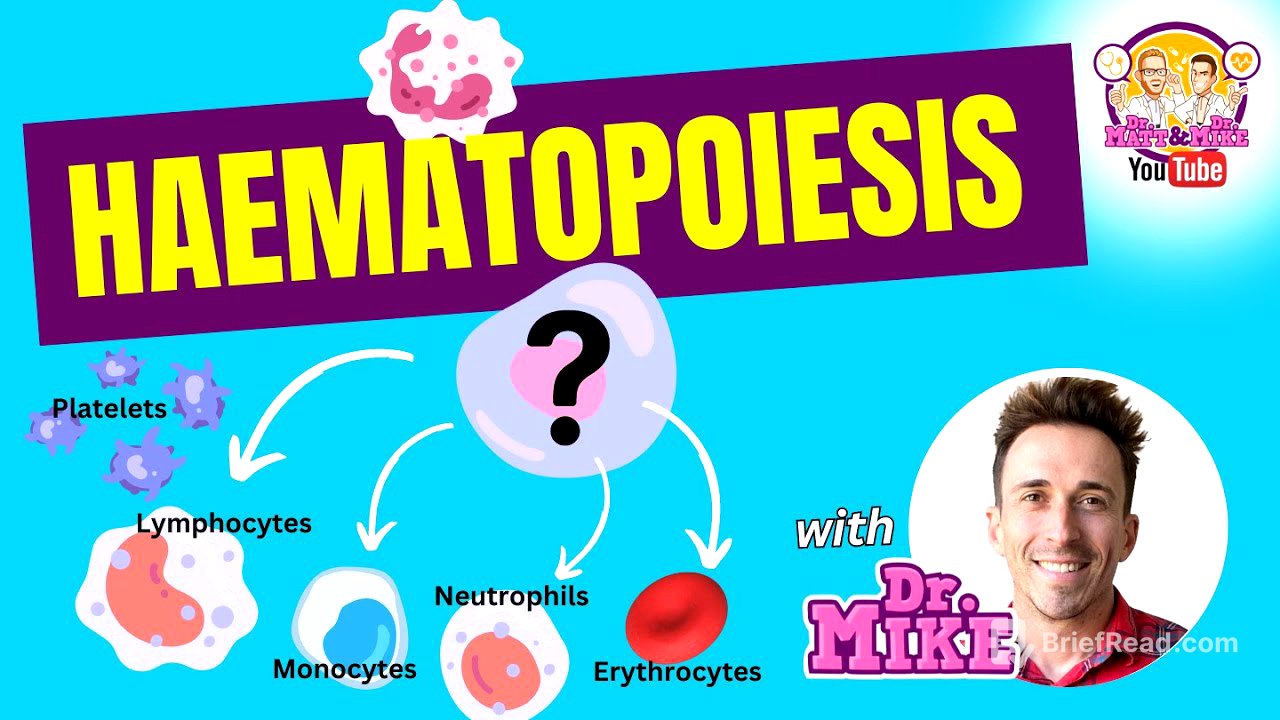
This video by Dr. Mike explains hematopoiesis, the process of blood cell production, starting from stem cells to various blood cell lineages. It covers the location of hematopoiesis at different stages of life, the differentiation of hematopoietic stem cells into lymphoid and myeloid progenitor cells, and the subsequent development of these progenitors into specific blood cells like T cells, B cells, red blood cells, and platelets. The video also discusses the regulation of red blood cell production by erythropoietin (EPO) from the kidneys.
- Hematopoiesis starts with pluripotent stem cells in the bone marrow.
- Lymphoid progenitors produce T, B, and NK cells for the immune system.
- Myeloid progenitors produce red blood cells, granulocytes, monocytes, and megakaryocytes.
- Erythropoietin (EPO) from the kidneys regulates red blood cell production based on oxygen levels.
Introduction to Hematopoiesis [0:00]
Dr. Mike introduces hematopoiesis as the production of all blood cells, including red blood cells (erythropoiesis), and platelets (technically cell fragments). The discussion will focus on how these blood cells are formed in the body.
Hematopoietic Stem Cells [0:32]
Hematopoiesis begins with a hematopoietic stem cell, which is pluripotent, meaning it can differentiate into various cell lineages while also replicating itself to maintain the stem cell population. In adults, these stem cells are primarily located in the red bone marrow, but their location varies throughout development. In early gestation (2 weeks), they are in the yolk sac, around 3 months gestationally, they are in the liver and spleen, and by birth, they reside in the red bone marrow. This process in the bone marrow is called medullary hematopoiesis. In adults around 20 years old, about 50% of red bone marrow converts to yellow bone marrow (fat), which does not participate in hematopoiesis unless triggered by specific needs. Red bone marrow in adulthood is mostly relegated to the axial skeleton (skull, sternum, vertebral column, pelvis) and the ends of long bones (femur, humerus).
Lymphoid Progenitor Cells [4:07]
Hematopoietic stem cells differentiate into two main lineages: lymphoid and myeloid progenitor cells. Lymphoid progenitor cells produce NK cells (natural killer cells) for the innate immune system, which target and kill infected cells. They also produce lymphoblasts, which mature into T cells and B cells (lymphocytes). B cells mature in the bone marrow, while T cells mature in the thymus. T cells can further differentiate into T helper cells (with CD4 glycoproteins) and cytotoxic T cells (with CD8 glycoproteins). B cells can turn into plasma cells, which produce antibodies. T helper cells, cytotoxic T cells, and antibodies work together to fight infection, signaling each other and recruiting other immune cells.
Myeloid Progenitor Cells and Erythropoiesis [9:08]
Myeloid progenitor cells differentiate into several cell types, including red blood cells. The process begins with a pro erythroblast, which matures into an erythroblast, then a reticulocyte. Reticulocytes enter the bloodstream and mature into erythrocytes (red blood cells) in 1-2 days by losing intracellular organelles and packing with hemoglobin. Normal levels are about 5 million erythrocytes per microliter. Measuring reticulocyte and erythrocyte levels can indicate the origin of anemias. High reticulocyte levels with low erythrocytes suggest hemolytic anemia (red blood cells being destroyed), while low levels of both suggest a production problem. Folate, B12, and iron are essential for red blood cell production. This process of red blood cell production is called erythropoiesis.
Granulopoiesis, Monocytopoiesis and Thrombopoiesis [12:26]
Myeloid progenitor cells also produce myeloblasts, which differentiate into granulocytes: neutrophils, basophils, and eosinophils. Neutrophils are the first responders to infection and form pus. Basophils and eosinophils are important in allergic responses and parasitic infections. Myeloid progenitors also produce monoblasts, which become monocytes in the bloodstream. Once monocytes leave the bloodstream, they become macrophages in tissues or dendritic cells. Additionally, myeloid progenitors produce megakaryoblasts, which mature into megakaryocytes. Megakaryocytes extend arms into the bloodstream, fragmenting into platelets (thrombocytes). Platelets are crucial for blood clotting. The production of monocytes is called monocytopoiesis, granulocytes is called granulopoiesis and platelets is called thrombopoiesis.
Regulation of Erythropoiesis [17:46]
Erythropoiesis is regulated by erythropoietin (EPO), a hormone released by the kidneys in response to low oxygen levels in the blood. The kidneys constantly filter blood, allowing them to monitor oxygen concentration. When oxygen levels are low, EPO is released, travels to the bone marrow, and binds to receptors on precursor cells, stimulating them to differentiate into red blood cells. As red blood cell quantity increases, oxygen-carrying capacity rises, inhibiting EPO release in a negative feedback loop.