TLDR;
This video explains the three primary methods of heat transfer: conduction, convection, and radiation. It highlights how heat always moves from hotter to colder objects and how different materials affect this transfer. Understanding these principles is crucial for various applications, including improving energy efficiency, ensuring safety, and developing new technologies.
- Conduction involves direct contact between substances.
- Convection is the movement of gases and liquids due to heat transfer.
- Radiation involves electromagnetic waves transferring heat through space.
Introduction to Heat Transfer [0:10]
Heat transfer is a constant phenomenon, influencing our daily experiences such as the temperature of a beach, the coolness of a pool, and the melting rate of an ice cream cone. Heat consistently moves from hotter objects to colder ones, with certain materials affecting this process more significantly than others. The lesson will cover three methods of heat transfer: conduction, convection, and radiation.
Conduction [0:52]
Conduction is the transfer of heat between substances that are in direct contact. The rate of heat transfer depends on the material's conductivity. Good conductors, like copper, silver, iron, and steel, facilitate rapid heat transfer. Poor conductors, such as wood, styrofoam, paper, and air, impede heat transfer. For example, metal coins heated by the sun can burn your hand, while wooden nickels remain safe to touch.
Convection [1:21]
Convection involves the upward and downward movement of gases and liquids due to heat transfer. When a gas or liquid is heated, it becomes less dense, expands, and rises. Conversely, as it cools, it becomes denser and falls, creating a convection current. This is the primary mechanism for heat transfer in gases and liquids. Examples include warmer water on the surface of a pool, hot air balloons, and cool evening breezes in a house.
Radiation [2:02]
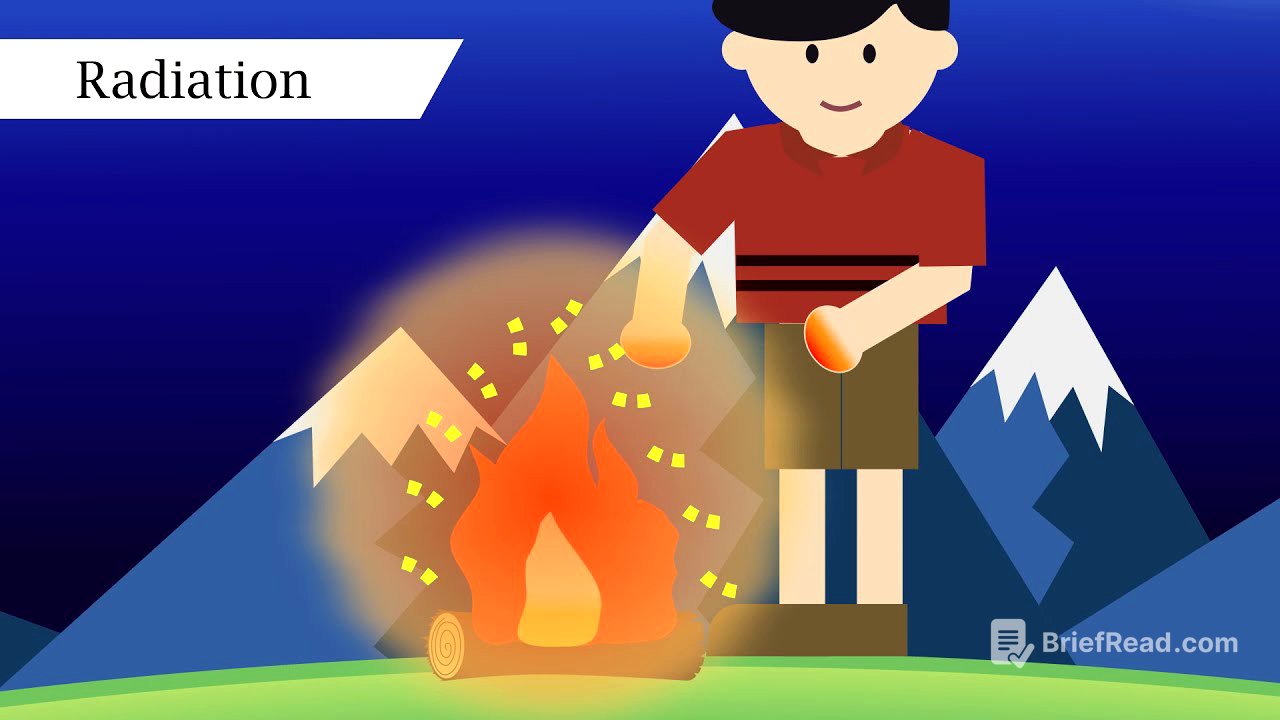
Radiation is the transfer of heat through electromagnetic waves traveling through space. When these waves come into contact with an object, they transfer heat to it. This heat travels in the form of visible and non-visible light. Examples of radiation include feeling warmth from a campfire, reheating pizza in a microwave, and using light to find a phone.
Conclusion [2:33]
Conduction, convection, and radiation are essential ways heat moves through our environment. Understanding these heat transfer principles allows for the development of efficient methods to heat and cool homes, protect individuals from overheating, and create innovative technologies.