TLDR;
This video documents the ambitious and challenging journey of creating a playable spinning guitar. It covers the initial inspiration, design process, multiple failed attempts, and eventual success in building a unique instrument.
- The initial design involved stacking strings on a central rod, using custom-made cylindrical pickups, and incorporating Bluetooth connectivity.
- The project faced numerous setbacks, including issues with string height, excessive noise, bending of the neck, and a mirrored design.
- The final version utilized an aluminum pipe for stiffness, balanced layers, and a motor for controlled spinning, resulting in a playable instrument capable of various techniques like shredding, slide playing, and even using a violin bow.
Inspiration and Initial Design [0:00]
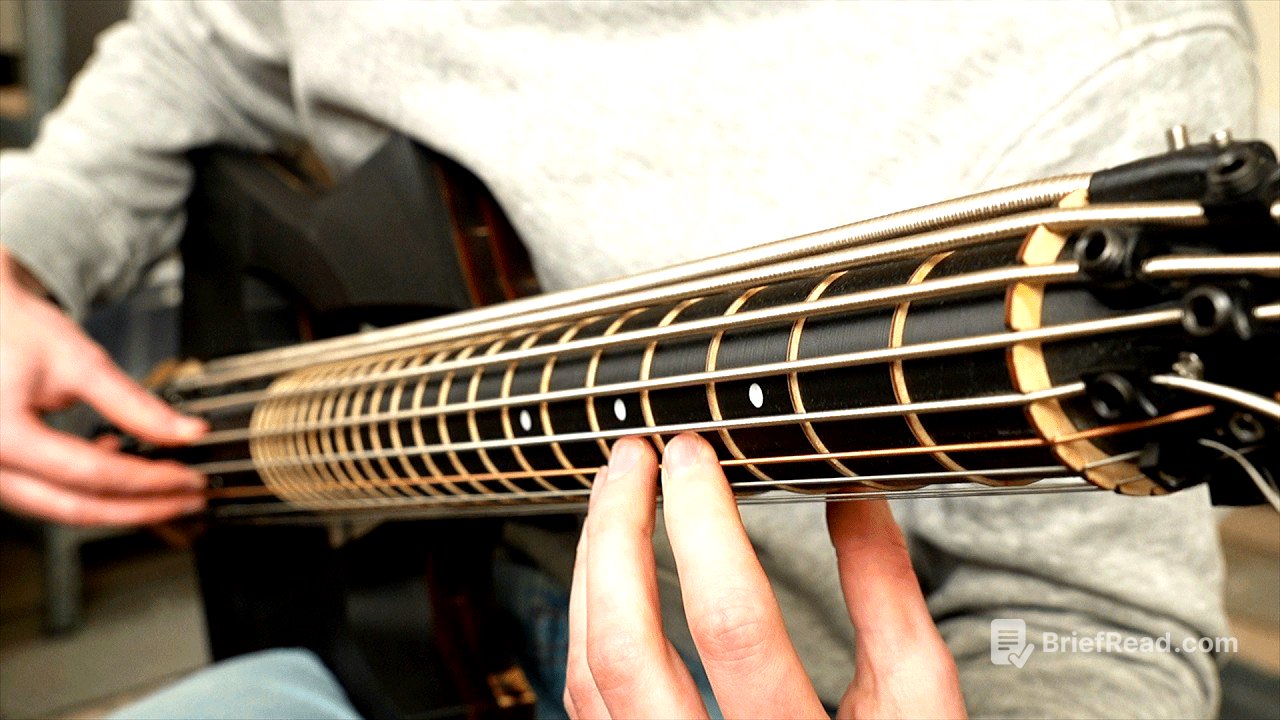
The creator was inspired by a Beatles documentary featuring a rotating guitar neck designed by Magic Alex, which was ultimately deemed unplayable. This sparked the idea to create a functional spinning guitar. The initial design involved a cylindrical neck with strings wrapped around it, utilizing custom-made cylindrical pickups to capture the sound.
Early Challenges and Setbacks [0:34]
The project faced numerous challenges, including the complexity of guitar building and the need for precise engineering. Early versions suffered from issues such as incorrect string height, excessive noise, and bending of the neck during rotation. The team experimented with different materials and construction techniques, including using Lego bricks for stability.
Bluetooth and Tuner Design [4:00]
To avoid wiring issues, the guitar was designed with Bluetooth connectivity, allowing it to transmit sound directly to an amplifier. The tuners were also designed in a cylindrical fashion, mirroring the overall design of the guitar neck. Despite these innovations, the initial prototypes still suffered from playability issues.
The Mirrored Design Blunder [8:26]
A significant design flaw was discovered: the string direction was mirrored, making it impossible to play conventional chords. This required a complete redesign and reconstruction of the guitar, highlighting the importance of attention to detail in the building process.
Final Design and Construction [9:15]
The final version of the spinning guitar featured a more robust design, utilizing an aluminum pipe for increased stiffness and balanced layers to prevent bending. A guitar body was built using a unique technique, and a motor was added to control the spinning of the neck.
Playability and Techniques [9:55]
The final guitar proved to be surprisingly playable, allowing for techniques such as playing regular chords, shredding, and switching between guitar, bass, and fretless sections. The motor-controlled spinning added a new dimension to playing, although it also presented challenges in terms of control and precision.
Experimentation and Future Ideas [13:25]
The creator experimented with various playing styles, including slide guitar and using a violin bow, which produced unique and interesting sounds. The video concludes with a call for design ideas and suggestions for future experiments with the spinning guitar, indicating a desire to continue exploring its potential.