TLDR;
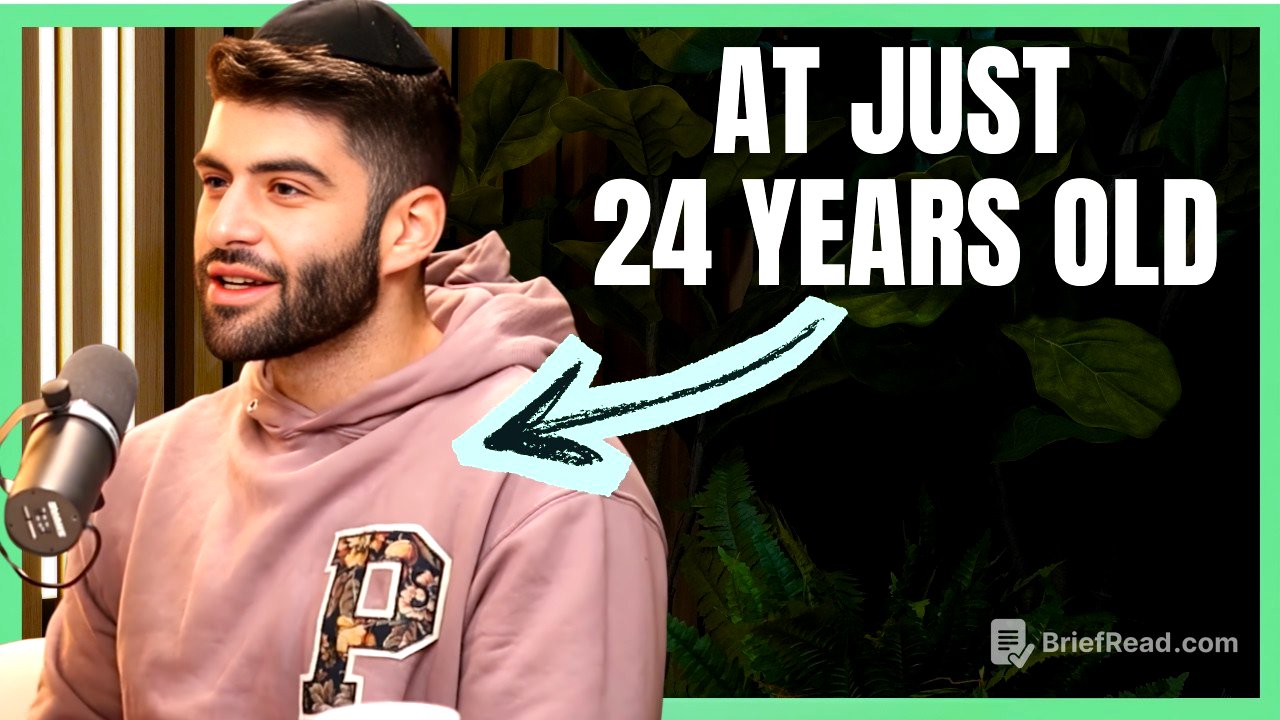
This episode of Kosher Money features Dave Katz, a 24-year-old entrepreneur, who shares his experiences with early financial success and the importance of intentionality in managing money. He discusses the challenges of sudden wealth, the lack of financial education in his community, and the emotional aspects of money management. Dave emphasizes the need for open conversations about finances, budgeting, and seeking guidance to make informed decisions. The episode also touches on the value of physical health, continuous learning, and giving back to the community.
- Importance of intentionality in managing money
- Challenges of sudden wealth and lifestyle creep
- Need for open conversations about finances
- Value of budgeting and seeking financial guidance
- Importance of physical health, continuous learning, and community involvement
Introduction [0:00]
The host introduces Dave Katz, a 24-year-old who achieved significant financial success early in life. The episode aims to explore Dave's experiences and insights on managing wealth with intention, highlighting the potential pitfalls of financial success without a clear plan and the importance of aligning financial decisions with personal values.
Dave's Background and Early Success [1:52]
Dave recounts his entrepreneurial journey, starting in e-commerce and quickly growing his own company with a partner. He describes the initial shock of finding himself in a higher income bracket than his peers and the subsequent identity work he undertook. Dave realized that his spending increased with his income, but without a clear plan for saving or investing. This led him to understand the importance of budgeting, financial planning, and intentionality, especially within the context of the from community where discussions about spending money are often lacking.
The Shock of Quick Money and the Need for Intentionality [4:34]
The host emphasizes the rapid pace at which young people can now generate income, contrasting it with the slower wealth-building of previous generations. This rapid financial gain can be overwhelming, leading to a lack of preparedness in budgeting and financial planning. Dave shares that he started working at 19 and by 23 he already had his own company. He noticed a trend among his friends of quickly spending their initial salaries without considering long-term financial goals. This lack of planning often leads to financial strain, especially as they get married and start families.
Seeking Guidance and Talking About Money [7:10]
Dave mentions listening to Kosher Money and being inspired by an episode featuring Simmyi, a Jewish money therapist. He emphasizes the importance of talking about money and not being afraid to seek advice from others. Dave acknowledges his own ongoing struggles with spending habits and anxieties about money, but stresses the value of open conversations and recognizing that everyone faces similar challenges.
Bonus App Advertisement [8:55]
A brief advertisement for the Bonus app, which helps kosher grocery shoppers save money by automatically finding eligible coupons from scanned receipts.
Newberger Quinn Gilen Ruben and Gibber Advertisement [11:02]
An advertisement for the law firm Newberger Quinn Gilen Ruben and Gibber, highlighting their expertise in halachic estate planning. The importance of having a will and other important documents structured properly according to Jewish law is emphasized.
The Emotional Relationship with Money [14:07]
The host notes that Dave has learned valuable lessons about money at a young age, particularly the emotional aspect of financial management. He references Simmy Manglebomb, a financial therapist, and her impact on Dave's understanding of the psychological factors influencing financial behavior. Dave shares that conversations with Simmyi helped him realize that people in similar financial situations can have vastly different feelings and approaches to money.
Overcoming Avoidance and Gaining Control [17:24]
Dave admits that his initial reaction to financial success was to avoid looking at his bank accounts and credit card statements. He describes the sense of control he gained by confronting his financial situation and developing a budget. The conversation touches on lifestyle creep, where increased income leads to increased spending, often resulting in ending the month with no savings. Dave emphasizes that intentionality allows for healthy lifestyle creep, where spending is aligned with conscious decisions and financial goals.
Intentional Spending and the Psychology of Money [18:37]
Dave stresses that the key to financial well-being is intentionality, not feeling guilty about spending money if it aligns with a thoughtful plan. He recommends thinking about purchases and avoiding spontaneous decisions based on fleeting impulses. The discussion references Morgan Housel's book on the art of spending money and Remit Sethi's "Money for Couples," which explores different money personalities and the importance of feeling good about spending when it's done intentionally.
Practical Steps Towards Financial Intentionality [21:51]
Dave shares practical steps he has taken to be more intentional with his money, including investing for retirement and budgeting. He emphasizes the importance of automating savings and setting up systems that don't require constant attention. Dave also mentions being more intentional about making money by aligning his career goals with his values and long-term aspirations.
The Power of Focus and Saying No [30:03]
The conversation shifts to the importance of focus and the ability to say no to opportunities that don't align with one's goals. Dave shares that his greatest successes have come when he is hyper-focused on one thing rather than spreading himself thin. The discussion touches on the need to persevere in the face of challenges, but also knowing when to give up on something that is not working.
The Value of Taking Risks and Intentional Career Choices [33:35]
Dave encourages young people to take risks and explore different career paths in their 20s, rather than solely focusing on the highest paycheck. He emphasizes the importance of intentionality in career choices and pursuing opportunities that align with personal goals and values. The discussion highlights the need to balance pursuing dreams with being open to opportunities that may arise.
The Importance of Simplicity and Open Communication [35:13]
The conversation emphasizes the importance of simplicity and direct communication in all aspects of life. Dave shares a quote about not overcomplicating things and being straightforward in expressing one's needs and feelings. The discussion touches on the evolving nature of relationships and the importance of deeper connections and open communication.
Integrating Fitness and Mental Health [38:30]
Dave discusses his focus on fitness and its positive impact on his mental health. He emphasizes the importance of physical activity and setting fitness goals. The conversation touches on the challenges of maintaining physical health and the importance of finding activities that one enjoys.
Overcoming Comfort Zones and Embracing New Experiences [40:47]
The host and Dave discuss the fear of getting too comfortable and not starting new things as one gets older. They emphasize the importance of surrounding oneself with supportive friends and creating systems that make it easier to try new experiences. The conversation touches on the ability to change one's mind and adapt to new perspectives, even in later life.
The Importance of Annual Physicals [44:44]
The host emphasizes the importance of getting annual physicals and taking care of one's body.
The Excitement of Intentionality and Helping Others [46:48]
Dave shares his excitement about intentionality around money and creating awareness about it. The host suggests that Dave could share his story and insights with high school and college students. Dave expresses interest in helping others and discusses the problem of a lack of intentionality and conversation around finances.
Addressing the Problem of Financial Illiteracy [48:34]
The conversation focuses on the problem of financial illiteracy and the need for earlier conversations about money. They discuss the roles of schools, parents, and families in educating young people about finances. The simplest solution is for everyone earning a dollar to have some sort of budget.
Patching Together a Framework for Financial Education [51:21]
The conversation emphasizes the importance of increasing conversation and being more intentional about finances. This will set up future generations to be ahead of the game. Creating good habits when younger is important.
The Importance of Budgeting [52:21]
Rabbi Khani says that if someone doesn't budget, it's an aveira because you will be led to a world of jealousy.
The Best Return on Seducka [53:32]
Dave expresses his excitement about doing something in the financial space. He spoke to Rabbi Matis Gilbert who said that all the money that is invested now in people my age 25-30 years old is the best return on seducka that you'll ever get.
Messianic Roadmap [56:55]
Rabbi Lawrence Hajio said that this is a messianic roadmap in that people are not going to have to work at a certain point and money and resources will be provided without it.
Closing Thoughts and Remarks [58:27]
Dave's email address is [email protected]. He says that the key thing is to talk about money and intentionality.
Conclusion [1:00:38]
The host summarizes the key takeaways from the episode, emphasizing the importance of intentionality in managing money, time, and energy. He encourages listeners to talk about uncomfortable topics and take steps to improve their financial literacy. The episode concludes with acknowledgments to the sponsors and resources for those seeking financial assistance and coaching.