TLDR;
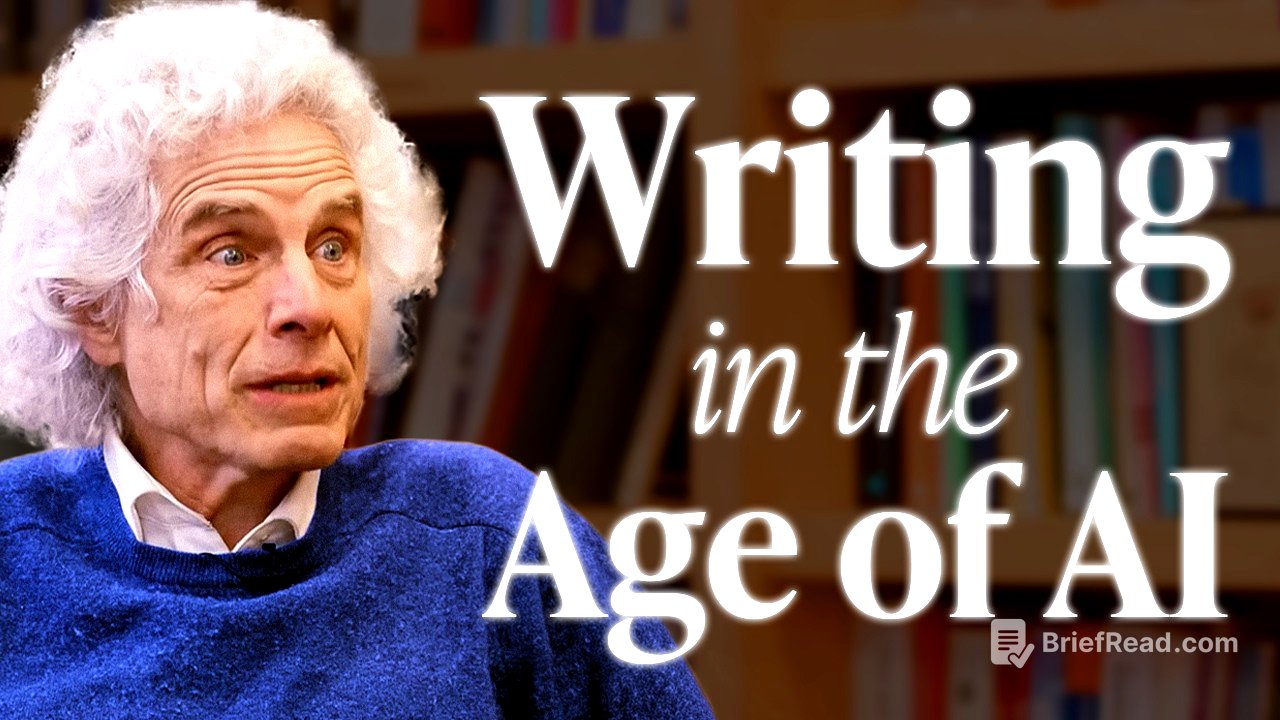
In this interview with Steven Pinker at Harvard, the discussion revolves around effective writing, the reasons behind common writing pitfalls, and how writing differs from speaking. Pinker shares insights on various aspects of language, communication, and the challenges faced by writers, particularly in academic settings. He emphasizes the importance of clarity, empathy toward the audience, and the beauty of language.
- Bad writing often results from the "curse of knowledge," where writers forget what their audience may not know.
- Visualizing concepts and using concrete examples can enhance writing.
- Writing requires more structure and effort than speaking, partly due to the lack of immediate feedback in written communication.
- Shorter, clearer writing is generally more effective and pleasing for readers.
Intro [0:00]
The introduction features Dave Perell interviewing Steven Pinker, a renowned author and expert on language and cognition at Harvard. They focus on practical writing advice and the implications of AI on nonfiction writing.
Why Is There So Much Bad Writing [0:28]
Pinker discusses the prevalence of bad writing, linking it to the "curse of knowledge" where knowledgeable individuals fail to communicate clearly with a broader audience. He asserts that poor writing often arises from incompetence rather than malice. He illustrates this with an anecdote of a molecular biologist whose jargon-heavy presentation lost the audience's engagement.
How To Make Your Writing Visual [7:05]
Pinker emphasizes the necessity to make writing visual and concrete to aid understanding. He argues that language alone is not sufficient to communicate ideas, which must often invoke sensory images in the reader’s mind. Utilization of visual metaphors can enhance clarity, as effective writing should allow readers to form mental images.
What Makes Writing So Much Harder Than Speaking [11:50]
The complexity of writing, compared to speaking, is highlighted as it lacks immediate feedback and shared context. In conversation, speakers can adjust based on body language and cues, whereas writers must preemptively consider the context for potentially diverse audiences. This inherent challenge makes the writing process more arduous.
Why Examples Without Context Are Useless [14:18]
Pinker states that generalizations without examples are often vague and unhelpful, while examples without context can leave the reader confused. Effective communication balances detailed examples with overarching generalizations to convey meaning clearly. Each informs the other, enhancing understanding.
What Makes Writing Beautiful [20:07]
Beauty in writing stems from clarity, rhythm, and aesthetics. Pinker opines that good writing should engage readers not just intellectually but also emotionally. The harmony of words and sentences contributes to the overall experience, making the prose more enjoyable to read.
Why Academics Are Such Terrible Writers [22:35]
Pinker critiques academic writing for being verbose and inaccessible, stating that it often fails to communicate effectively to broader audiences. The esoteric nature of academic jargon alienates readers and hampers engagement, leading to a waste of intellectual efforts meant to inform.
What Kids Teach Us About Clear Explanations [25:14]
He touches on how children's unique perspectives enable them to express complex ideas simply and vividly. Pinker suggests that their fresh interpretations remind adults to avoid over-complicating explanations and reconnect with clearer, more straightforward language.
Why Shorter Writing Is Always Better [28:33]
Pinker argues for brevity in writing, explaining that shorter sentences are easier to understand and maintain reader engagement. He correlates the principle of brevity with clarity and suggests that excessive words dilute the message and frustrate readers.
Why AI Writing Feels So Bland [34:53]
On AI-generated writing, Pinker notes that while AI tends to produce structurally sound prose, it often lacks depth and originality. Its responses can be generic, lacking the nuanced creativity that human writers typically bring to their work.
How AI Would Rewrite My Books [41:16]
Pinker reflects on how he would approach writing differently if utilizing AI, recognizing the potential to extract meaningful ideas from extensive data. He stresses the importance of understanding the distinct nature of human cognition versus AI capabilities, emphasizing the more interactive learning that characterizes human intelligence.