TLDR;
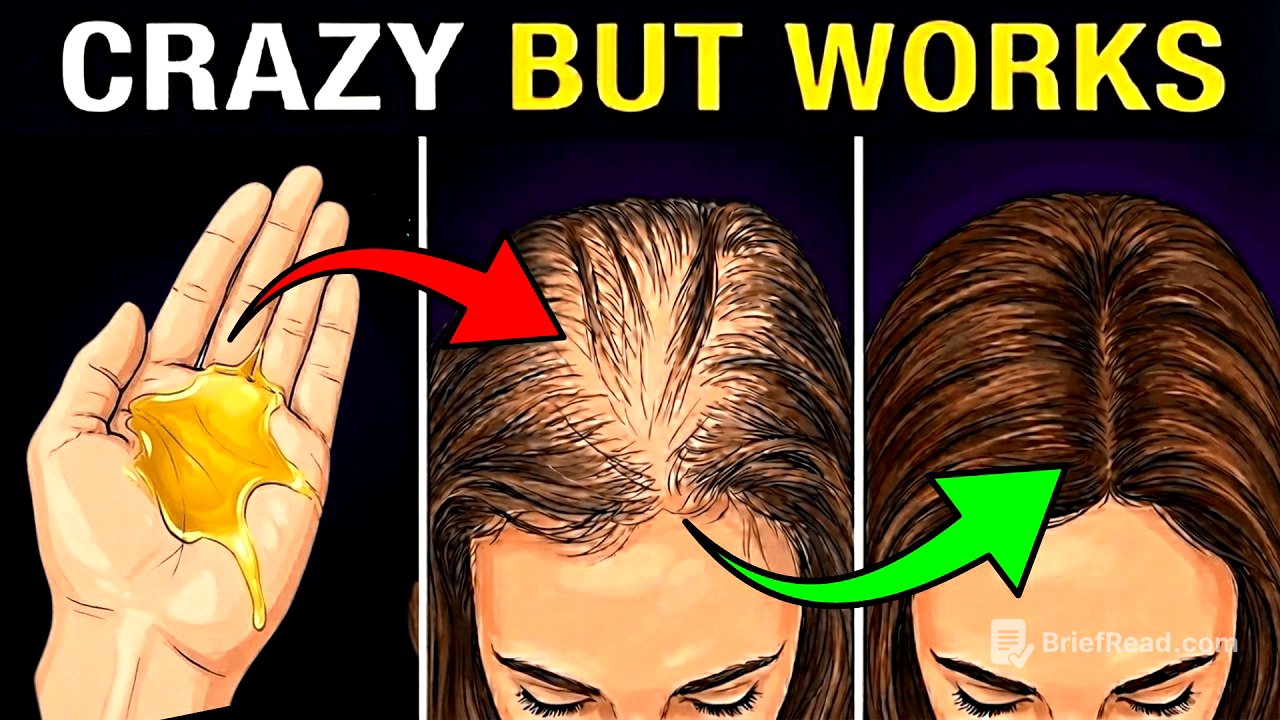
This video discusses how to reactivate dormant hair follicles using specific kitchen oils. It emphasizes that hair thinning is often due to reduced blood flow and microinflammation, not necessarily follicle death. The video ranks six kitchen oils from least to most effective, highlighting their properties and proper usage for optimal hair regrowth. The top recommendation is a combination of jojoba oil and fresh onion juice, used nightly, alongside other supportive oil treatments.
- Hair thinning is often due to dormant follicles caused by reduced blood flow and microinflammation.
- Specific kitchen oils can reactivate these follicles by improving blood flow and nutrient delivery.
- The top-ranked oil combination is jojoba oil and fresh onion juice, known for DHT blocking and scalp absorption.
Why your follicles aren't dead — they're just sleeping [0:00]
The video begins by explaining that losing 50-100 hairs daily is normal, but after age 60, hair follicles shrink, leading to visible scalp thinning. However, most of these follicles are not dead but dormant. The speaker claims that using the right kitchen oil can reactivate these follicles in as little as 48 hours, resulting in a warm tingle across the scalp, indicating renewed blood flow. The video will rank six kitchen oils from least to most effective, revealing that the number one oil has been shown to increase hair density by up to 300% in six months in a Japanese university study.
The 40% blood flow drop silently suffocating your scalp [1:45]
After age 50, blood flow to hair follicles decreases by approximately 40%. Dermal pillar growth factor, which is essential for hair growth, diminishes, causing follicles to shrink and weaken. Reduced blood flow prevents nutrients from reaching the root and allows toxins to accumulate, accelerating miniaturization and causing microinflammation around the follicles. Traditional treatments like minoxidil and sulfate-free shampoos only address the symptoms, not the root cause of collapsing blood flow and microinflammation. The speaker asserts that this process is reversible by restoring dermal pillar activity using specific kitchen oils with fatty acids and antioxidants that nourish follicle cells directly, improving nutrient delivery by 35-55% in a week.
How specific oils flood starved follicles with nutrients again [3:30]
Specific kitchen oils can restore dermal pillar activity through biochemistry proven in clinical studies. Fatty acids and antioxidants in these oils penetrate the scalp, feeding starving follicle cells directly. This process involves vasodilation and lipid permeation, opening blood vessels and allowing nutrients to soak deep into the root. Improved nutrient delivery can increase by 35% to 55% within a week, reducing dryness, calming itching, and loosening tight scalp. Over time, miniaturized follicles thicken, new growth emerges, and widening part lines start to close. However, not all kitchen oils are equally effective; some may clog pores or have minimal impact.
Oil #6: The popular combo that actually suffocates your follicles [5:00]
The first oil discussed is a combination of olive oil, rosemary, and peppermint. While rosemary extract has been shown to match minoxidil's performance over six months in a 2024 study, and peppermint oil increases local blood flow, olive oil is heavy and comedogenic, meaning it clogs pores. This combination can suffocate follicles, trap dead skin, feed scalp yeast, and accelerate miniaturization, especially for those with oily skin, dandruff, or seborrheic dermatitis. A 2023 analysis found that heavy carrier oils on oily scalps increased sebum-related shedding by up to 18%. If used, it should only be applied to genuinely dry and flaky scalps for no more than 45 minutes, followed by a double shampoo. This method may yield only an 8-12% improvement in hair density over six months.
Oil #5: The "blessed seed" most people warm the wrong way [6:45]
Black seed oil, often called the "blessed seed," contains thymoquinone, a potent anti-inflammatory compound that can calm scalp irritation. A 2024 study showed that topical black seed oil produced noticeable hair regrowth in participants with telogen effluvium over 90 days. However, its effects on follicle reactivation are minimal because it doesn't penetrate deep enough to directly stimulate the dermal pillar. Undiluted black seed oil can irritate sensitive scalps and cause contact dermatitis. It should be diluted in a carrier oil at a 1:5 ratio and applied consistently three times per week for at least three months for a 10-15% improvement in thickness over 90 days. It is important to warm it gently in a bowl of hot water instead of microwaving, as microwaving destroys thymoquinone.
Oil #4: The thick sticky oil nobody talks about that forces growth [8:30]
Castor oil, combined with tea tree oil, is a powerful but less discussed treatment. Castor oil contains ricinoleic acid, a rare fatty acid that makes up nearly 90% of its composition. Ricinoleic acid activates prostaglandin E2 receptors in the scalp, signaling follicles to stay in the growth phase longer. A 2003 study found that ricinoleic acid application increased hair density by 32% over 12 weeks. Tea tree oil is a potent natural antifungal that kills Malassezia yeast, reducing dandruff and follicle inflammation. Together, castor oil forces follicle growth while tea tree oil clears blockages. Mix 5 tsp of castor oil with 8-10 drops of tea tree oil, massage into the scalp, and leave for 30 minutes maximum. Never use more than a 2% concentration of tea tree oil to avoid scalp burns. Those on blood thinners should consult their doctor before using castor oil topically.
Oil #3: The lightest oil that descales years of buildup from your roots [10:15]
Grape seed oil, combined with fresh lemon juice, is a more controversial but effective treatment. Grape seed oil is a light oil that can penetrate past the outer scalp layer to reach the dermal pillar directly. The citric acid in fresh lemon juice chelates, grabbing mineral buildup, calcium deposits, and hard water residue that encrust follicle openings. This clears the path for grape seed oil to flood the root with procyanidin B2. A 2022 study showed procyanidin B2 increased hair growth by 38% in just four months. This blend is safe for all scalp types and won't clog pores. Mix two tablespoons of cold-pressed grape seed oil with half a teaspoon of fresh lemon juice, apply to dry scalp, leave for 20 minutes, and then double cleanse. Lemon juice can mildly lighten dark hair with repeated sun exposure, so rinse thoroughly and avoid direct sunlight for an hour after washing.
Oil #2: The fresh curry leaf blend that must be made every single time [12:15]
Coconut oil, infused with curry leaves and fenugreek, creates a follicle reactivation supercharger. Coconut oil is the highest natural source of lauric acid, which can physically enter the hair shaft and stop hair from breaking while nourishing the follicle root. Curry leaves are loaded with beta-carotene and proteins that directly feed the dermal pillar cells, while fenugreek contains diosgenin, which stimulates follicle stem cells. A 2021 study found that a coconut oil and fenugreek preparation increased new hair growth by 44% over eight weeks. To prepare, warm 4 tablespoons of virgin coconut oil on low heat, add a handful of fresh curry leaves and 1 tbsp of crushed fenugreek seeds soaked overnight, heat gently for 5 minutes, strain, and let cool. Apply immediately and do not store, as the active compounds in curry leaves degrade within hours once heated. Massage into the scalp for 3 minutes, leave for exactly 30 minutes, and then wash.
Oil #1: The kitchen juice that achieved 87% regrowth in one study [14:15]
Jojoba oil mixed with onion juice is the top recommendation for reactivating dormant follicles. Jojoba oil is a liquid wax with a molecular structure nearly identical to the scalp's natural sebum, allowing it to absorb without clogging or buildup. Onion juice is the highest natural source of quercetin and sulfur compounds, with quercetin inhibiting the five-alpha reductase enzyme responsible for converting testosterone into DHT, which miniaturizes and kills follicles. A 2022 study found that participants applying onion juice to their scalp twice daily for two months showed an 86.9% regrowth rate. Jojoba oil acts as the perfect delivery vehicle, carrying the sulfur compounds and quercetin deep into the follicle without triggering inflammation.
Why evening application is critical for follicle repair [16:30]
To use the top recommendation, grate one medium white or red onion and squeeze the juice through a cheesecloth to get about 2 tbsp of fresh onion juice. Mix it with one tsp of pure jojoba oil and apply directly to the scalp every evening, focusing on thinning areas, temples, and the part line. Evening application is critical because follicles enter their active repair cycle at night, maximizing absorption and the effects of quercetin. Use fresh onion juice every time, as the sulfur compounds break down within hours of juicing. Some people may notice increased shedding during the first 5-7 days, which is a purge phase.
Your 30-day plan and the purge phase you shouldn't panic about [18:15]
The recommended 30-day plan starts with jojoba oil and onion juice every evening, massaging 2 tbsps of onion juice and 1 tbsp of jojoba oil into the scalp for 3 minutes. In the afternoon, add either the castor oil and tea tree blend or the grape seed oil and lemon juice treatment, picking one and staying consistent. For maximum impact, rotate in the coconut oil, curry leaf, and fenugreek preparation three to four times per week as a pre-wash treatment. Within 3 days, itching will lessen, and scalp tension will soften. Within a week, excessive shedding will start to fade. Within 2 weeks, tiny new hairs will appear along the hairline and temples. Within a month, hair will thicken dramatically.
5 mistakes that block oils from ever reaching the root [20:00]
Avoid applying oils to a wet scalp, as water creates a barrier. Towel dry completely before application. Do not shampoo with hot water the next morning; use lukewarm water and double cleanse by applying shampoo to dry hair first, emulsifying, rinsing, and then shampooing a second time with water. Do not expect overnight miracles, as full follicle reactivation takes 4-8 weeks of consistent use. Do not stop any prescribed hair loss medications without consulting a doctor. Finally, do not buy cheap synthetic jojoba blends that are mostly filler oils; pure jojoba oil is essential.