TLDR;
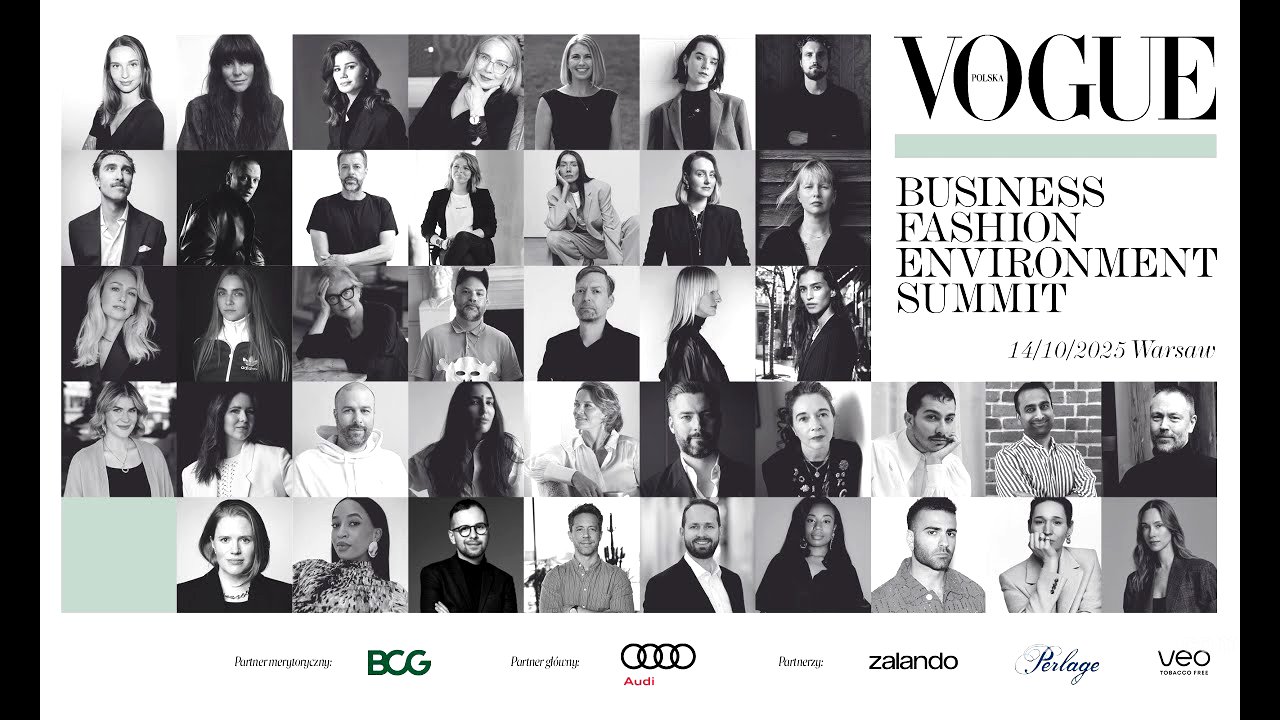
The Vogue Polska Business Fashion Environment Summit 2025 addresses the fashion industry's challenges and opportunities, emphasizing sustainability, technological integration, and evolving consumer values across generations. Key points include:
- The fashion industry is at a crossroads, balancing growth with accountability amid rising emissions and changing consumer demands.
- Generational differences in shopping habits and values require tailored approaches from brands.
- Sustainability is evolving beyond marketing buzzwords to encompass empathy, intuition, and genuine change.
- Technology, especially AI, is transforming e-commerce and supply chain management.
- Mental health and well-being are becoming central to the industry's focus, influencing design and business practices.
Welcome Remarks [0:00]
The fashion industry in 2025 is at a crossroads, balancing acceleration with accountability. Fast fashion continues to grow, but emissions are rising, and luxury brands are losing consumers due to greedflation and ethical concerns. The industry faces challenges from tariffs, wars, climate disasters, and creative turnover, but technology like AI offers solutions for smarter production. The summit aims to navigate these challenges, focusing on systems, design, innovative materials, well-being, and empathy.
Presentation: BCG Report: “Redefining Value in a Multigenerational World” [5:28]
Octavian Zions from BCG presents a report on redefining value across generations, highlighting the diverse shopping behaviors of Gen Alpha, Gen Z, Millennials, Gen X, and Boomers. Younger generations value socializing and inspiration in shopping, often making spontaneous purchases and using "buy now, pay later" options. The secondhand market is booming, especially among Gen Z, who treat their closets like stock portfolios. Wellness and longevity are increasingly valued, with younger generations using data devices and daily rituals to prolong their lives. AI plays a significant role in shopping decisions, with Gen Z using tools like Chat GPT for assistance.
Panel: BCG Report: “Brands and Generations in Dialogue: New Values, New Choices” [17:16]
The panel discusses generational stereotypes, the importance of physical stores, and how different generations handle money. Panelists emphasize that Gen Z shops both online and in physical stores, valuing experiences and socializing. They are also conservative with their money, saving for the future. Retailers are adapting by training staff to approach different customer segments differently and by offering online experiences for luxury goods. The panel stresses the importance of being real, listening to customers, and using technology to facilitate business.
Keynote: The Great Disruption [39:40]
Li Edelcourt discusses the great migration from big cities, the rise of handmade goods, and the increasing concern of fathers with babies. She also touches on the great resignation, noting the greater freedom in dress and house, and the rise of work wear as a sophisticated fashion category. The great isolation is manifested in the growth of single units and products designed for individuals, leading to a focus on quality. The great medication reflects society's focus on mental health and well-being, influencing design and lifestyle. The great generation is motivated to clean up the planet, using nature and understanding the new ecosystem. The great intuition emphasizes the handmade and unique, while the great fascination looks to the past for inspiration. The great veneration contemplates splendid ornaments, and the great celebration expresses disorientation through dancing and dining. The great radicalization reverses war materials to metals, while the great romantization delivers beauty to despair. Finally, the great animation embraces virtual bubbles and eccentricity.
Conversation: Luxury in Crisis [1:19:53]
Astrid Venland and Camila Vagner discuss the luxury sector's moment of reckoning, including labor scandals and plunging stocks. They explore the rise of dupe culture and growing pushback on prices, forcing heritage brands to rethink true value. Mistweed, an independent media, holds luxury brands accountable, encouraging freedom of speech in a responsible manner. The luxury crisis is more of an evolution, with people changing the way they buy and brands needing to refresh their narrative. The retail department store sector is struggling, with many businesses on the border of bankruptcy. Small brands may need to create a cooperative to compete against larger corporations.
Presentation: I Visited 100 Factories Worldwide So You Don't Have To [1:39:16]
Will Lazri shares his journey from reviewing fashion items to visiting over 100 factories worldwide, leading to the creation of Glass Factory, a marketplace connecting brand owners with the best factories. He emphasizes that sustainability is often greenwashing, with brands using buzzwords without truly tracking their supply chains. It takes about 41 factories to make a pair of jeans, making it nearly impossible for brands to track their entire supply chain. Brands should write the factory where they are producing instead of the country of origin. Factories need to pave the way, educate brands, and market themselves better. The most sustainable product is one that is never produced, and upcycling is the best thing to do if clothes must be made.
Panel: Navigating the Unpredictable Year [1:57:10]
The panel discusses the challenges the fashion industry faces in unpredictable times, including trade wars and climate change. Thomas Gratovski notes that Europe is rethinking some regulations, and US tariffs are creating an environment of rerouting global trade. Agata Savitzka shares that Gen Z and Gen Alpha are mostly on TikTok, following TikTokers and driving viral product trends. Karine Martin sees exciting opportunities in the spirits market with the younger generation drinking less alcohol but still wanting flavor. Gna Struga emphasizes the importance of recognition and differentiation, with social media being the main source of information. Shik shares that banks are perceived as utilities by younger generations, and the exclusive communication channel is the app.
Presentation: The Future of E-Commerce, Powered by Gen AI [2:24:42]
Matias Hassa from Zelando discusses the future of e-commerce powered by Gen AI, noting that return rates have a direct influence on customer loyalty. Customers seek more information and inspiration, with 80% coming to the platform not with a pure intent to buy. Zelando is using stories as a content format and has changed the product discoverability on its platform, prioritizing video content. Gen AI technologies are used to create artificial videos, and the company is swapping its footwear assortment into a virtual one. Customers can virtually try on products and create digital doodles of models. Personalizing content increases engagement, and adding video experiences increases TV uplift.
Pre-Recorded: Powering the Future: Apple’s Renewable Energy Vision [3:00:00]
Lisa Jackson from Apple discusses the company's commitment to protecting the planet, designing every product with the environment in mind. Apple aims to become carbon neutral across its global footprint by 2030, having cut its emissions by more than 60% since 2015. Suppliers are transitioning to 100% renewable energy for all Apple production by 2030. Apple is investing in new solar arrays in Spain, Greece, and Latafia, a wind farm in Romania, and a growing portfolio of renewable energy in Italy.
Panel: Material Innovation: Leather 2.0. [3:04:58]
The panel discusses innovation in leather materials, with Emma Hukinson advocating for moving beyond animal skins and using biomaterials that benefit people, animals, and the planet. Gabrielle Rolandelli emphasizes improving existing supply chains and dealing with waste, while Marta Goss introduces chocolate leather made from food waste. The panel explores the importance of being real, staying in touch with the audience, and not forgetting the human touch.
Panel: Blue R/evolution: Denim [3:30:30]
The panel discusses the future of denim, with Anna Foster redefining the denim industry through 100% upcycling. Jonas Clayon emphasizes the importance of sustainable fabrics and working with good suppliers. Kenya Schneider reinvents fashion by rethinking denim, experimenting with the material and expressing freedom. Maretta Hoing promotes best practices in the denim industry, emphasizing the importance of social media and differentiation.
Presentation: Re•Framing Sustainability [3:53:49]
Marina Tastino discusses reframing sustainable fashion, noting that it often comes across as boring and unengaging. She presents a formula for typical sustainable campaigns, which often include plants, neutral colors, and serious tones. Tastino advocates for elevating the narrative around sustainable fashion, making it colorful, stylish, and accessible. She shares her campaigns, such as "One Dress to Impress" and "Yellow Like a Lemon," which use creativity and color to talk about consciousness and sustainability. Her latest project, Reframe, turns fashion's hidden waste into powerful visual storytelling.
Panel: “It Takes Many”: Transforming the Industry [4:10:00]
The panel discusses the importance of collaboration in transforming the fashion industry. Elizabeth Carter highlights Zelando's role in connecting brands and customers, while Ty Martins shares Tommy Hilfiger's goal of having all products contribute to the circular economy by 2030. Jules Lenon introduces the Fashion Remodel, a project focused on scaling circular business models. The panel emphasizes the importance of transparency, authenticity, and engaging storytelling.
Conversation: Patchwork Politics: Clothing as Manifesto [4:47:21]
Osola Dcast Castro discusses the importance of mending in a broken world, noting that it is endemic to humanity. She emphasizes that the secondary market is the only true rival to fast fashion and that a fresh generation is making a statement by reselling clothing. Castro notes that sustainable fashion has been trendified and that the industry does not want to be changed. She advocates for bringing back honesty and accuracy and for investing in the people that have the solutions.
Panel: Heritage Reimagined [5:10:00]
The panel explores how heritage shapes fashion, with Salim Aam drawing inspiration from the humble spirit of Lebanese mountains. Tolu Cocker intertwines autobiography with identity, using tailoring and fluidity to create functional and gentle designs. Zofia Hilak connects her collections with family stories and Polish heritage, using pearls as symbols of sadness. The panel emphasizes the importance of social media, differentiation, and pampering the customer.
Conversation: Fashioning Masculinity [5:33:20]
York Kau and Julie Palipas discuss fashioning masculinity, with Julie emphasizing bringing masculinity into feminine wear and York noting the reemergence of classical male models. Julie discusses the importance of optimization in upcycling, while York notes that AI provokes the development of unique businesses. The panel emphasizes the importance of personality and autobiography in fashion.
Conversation: Furniture is the New Fashion [5:59:10]
Lisa Carmona discusses bringing nature into the drawing board, seeing nature as a collaborator rather than a resource. She emphasizes the importance of working with the community and understanding their needs. Carmona notes that everything is made more beautiful but not so glamorous, and there is a contained beautiful finish.
Conversation: Slowing the System: Mental Health in Fashion [6:26:42]
Simon White House discusses the relentless nature of the fashion industry and the importance of having personal boundaries. He notes that there is a higher consciousness of the vocabulary and general feeling of energy. White House emphasizes the importance of acting fast, learning, and using the tools that are available.
Presentation: Purpose-Driven Fashion Leadership [6:49:44]
Stephanie Gonzalez discusses purpose-driven fashion leadership, emphasizing access, alignment, and advocacy. She notes that the fashion industry doesn't lack talent but lacks support and that the future of fashion relies on people who do not guard the gates but build bridges. Gonzalez encourages everyone to reflect on whose name they will carry with them in the next room and whose growth they will support.
Conversation: The Business of Pleasure: Sexual Wellness [6:59:40]
Nash Haroch and Khloe McIntosh discuss the business of pleasure, noting that it is a vital need that was uninvestable for a long time. They emphasize the importance of opening up the conversation, creating space, and being real. The panel notes that the sexual wellness industry is a segue out of the sex industry and that the people creating sexual wellness brands need to be well themselves.
Presentation: Rituals’ "Profit Pledge": Sacred Forests [7:20:30]
Rosemarine Copen from Rituals shares the story behind the brand's profit pledge, which dedicates 10% of profits to projects that give back to people and the planet. Rituals is BC Corp certified, and 80% of its best sellers are refillable. The company invests in pristine nature areas, such as forests and oceans, and helps people reconnect with nature.
Panel: The Longevity Playbook: Wellness, Tech & Self-Optimization [7:35:00]
The panel discusses longevity, with Katana noting the growing gap between lifespan and health span. She emphasizes the importance of prevention and lifestyle choices. Sidart Agraal notes that patients are well-educated and that doctors and patients are now partners in the process. Jagger Khulz discusses using wearable data to personalize the experience and build customized coaching.
Closing Remarks [8:00:55]
The summit concludes with a reminder that the full recording is available on the Vogue Polska YouTube channel and that summaries are available on the summit's website. The team is thanked for their efforts, and attendees are encouraged to return next year.