TLDR;
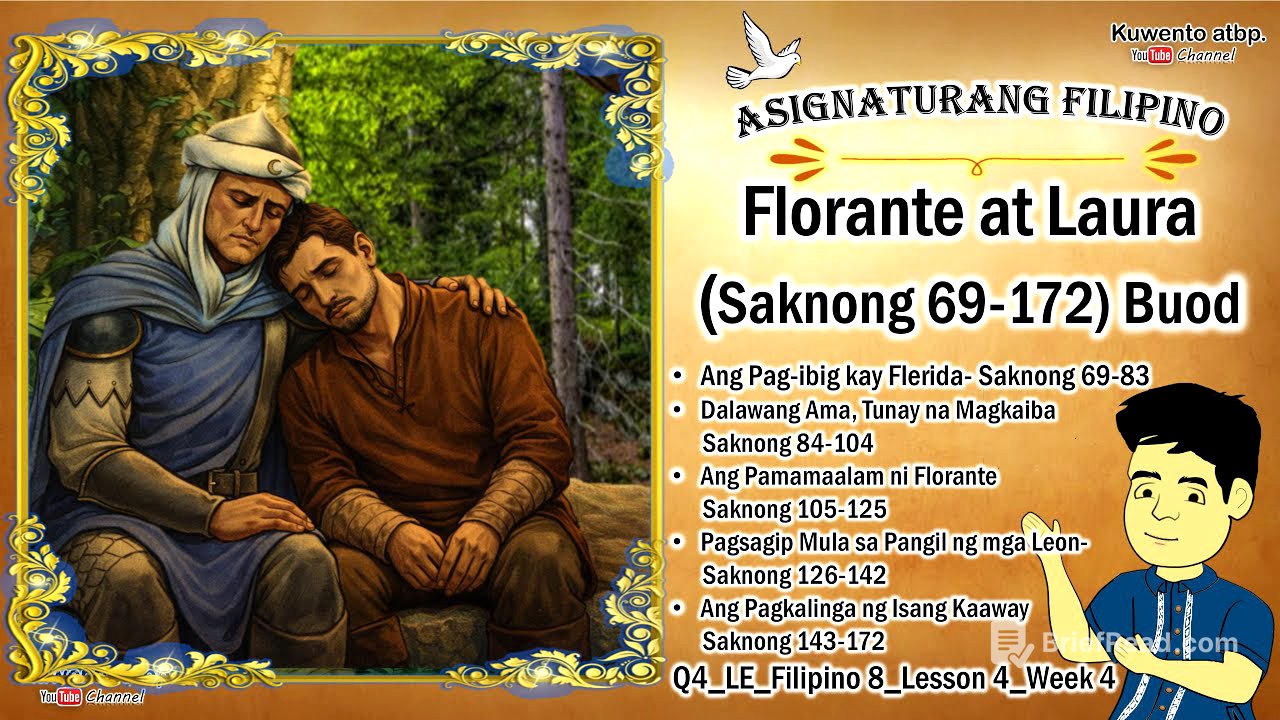
This video summarizes stanzas from "Florante at Laura," focusing on themes of love, betrayal, sacrifice, and compassion. It covers Aladin's sorrow over losing Flerida, Florante's lament for his father and lost love, Aladin's rescue of Florante from lions, and the unexpected kindness between enemies. The video highlights the importance of goodness, sacrifice, and understanding beyond racial divides.
- Aladin's sorrow and sacrifice due to his father's actions.
- Florante's lament and despair over his father's death and Laura's perceived betrayal.
- Aladin's courageous rescue of Florante from lions.
- The unexpected compassion and care between Aladin and Florante, despite their different backgrounds.
- Moral lessons on valuing goodness, sacrifice, and understanding beyond racial divides.
Aladin's Grief and Sacrifice [1:24]
Aladin, a Moro warrior from Persia, arrives in a dark forest seeking respite. He is deeply saddened because his own father has taken his beloved Flerida from him. Despite his strength and ability to fight for his love, Aladin chooses to respect and obey his father, sacrificing his own happiness and enduring immense emotional pain.
Florante's Lament [2:24]
Aladin hears Florante's sorrowful cries and investigates. Florante recounts the cruel fate of his father, Duke Briseo, who was beheaded by the traitor Adolfo, who forbade a proper burial. Florante mourns his father's kindness, love, and justice. Aladin reflects on his own father, Sultan Ali-Adab, who, unlike Duke Briseo, is cruel and selfish, having stolen Flerida and wishing harm upon his own son. Florante experienced true parental love, while Aladin grew up in sorrow and without a mother's care.
Florante's Farewell [3:51]
Aladin overhears Florante's farewell, where Florante bids goodbye to Laura, wishing her happiness even with Adolfo. He also says goodbye to his homeland, Albania, lamenting its descent into evil and chaos under Adolfo's rule. Florante expresses regret for not fulfilling his dream of serving and protecting his country. He directs his bitterness towards his ungrateful nation for denying his father a proper burial and towards Laura, whom he believes has betrayed him, which is the most painful part of his suffering. As Florante speaks his farewell, two fierce lions appear, seemingly ready to attack him.
Rescue from the Lions [5:38]
Aladin, unable to bear Florante's cries any longer, searches for the source of the sound. He cuts through the thick forest and finds Florante before sunset. Initially hesitant to help a Christian, whom he considers an enemy, Aladin quickly overcomes his hesitation when he sees the lions about to attack Florante. He bravely fights and kills the lions. After the battle, he unties Florante and is filled with compassion for the young man's dire condition.
Kindness from an Enemy [7:06]
Florante regains consciousness and calls out for Laura. Aladin remains silent, fearing that Florante might be shocked to see a Moro, considered an enemy, and that it might worsen his condition. When Florante opens his eyes again, he is surprised to find himself in Aladin's care. Aladin reassures him that he is safe, explaining that despite their different backgrounds, compassion moved him to help someone on the brink of death. He also tells Florante that he killed the lions. Florante realizes he would have died without Aladin's help and acknowledges his kindness. Aladin moves Florante to a safer place, feeds him, cares for him, and watches over him throughout the night. By morning, Florante's strength begins to return, and Aladin expresses his desire to know Florante's story so he can help in any way he can.
Lessons and Insights [9:24]
The story emphasizes the value of goodness and compassion, as shown by Aladin's willingness to help an enemy. It also highlights perseverance and endurance in suffering, as demonstrated by Florante. Sacrifice for family and country is another key theme, with Florante sacrificing his own happiness out of respect for his father. The narrative also promotes friendship and unity despite conflict, showing that goodness can bridge divides. The moral lessons include that kindness is more important than anger and revenge, true courage involves helping those in need, and life's trials can be overcome through determination and valuing what is right. Even in the direst situations, hope and help can come from unexpected sources.