TLDR;
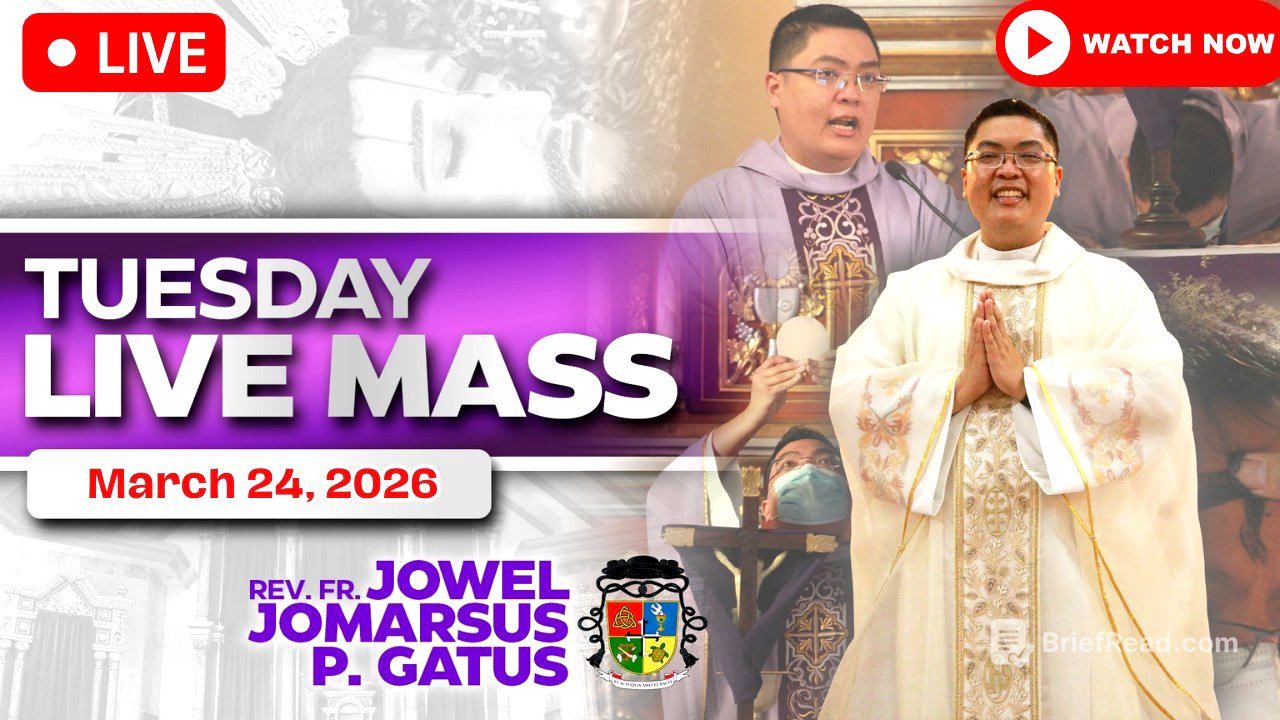
This video is a Catholic Mass led by Fr. Jowel Jomarsus Gatus. The sermon focuses on the significance of gratitude and perseverance through life's challenges, using the metaphor of the desert to illustrate trials that purify, teach dependence on God, and prepare individuals for their mission. The service includes readings, prayers, and songs, emphasizing faith, forgiveness, and community.
- Gratitude is essential to avoid sin.
- Difficult times purify, teach reliance on God, and prepare for a mission.
- Faith and perseverance lead to blessings after trials.
Opening Prayer and Reflection on Ungratefulness [0:06]
The priest begins with a prayer for mercy and reflection on sin. He emphasizes the importance of gratitude, noting that ungratefulness often leads to sin. He references the first reading, where the people of God forgot to thank Him and were punished with snakes. Despite life's difficulties, one should give praise and thanks to God for the graces and blessings still present. Trusting in God's plan and seeking forgiveness for times of ingratitude are important for receiving blessings.
First Reading: The Story of the Snakes [4:43]
The first reading recounts the story of the Israelites who complained to Moses about their journey and food. As a result, God sent venomous snakes among them, and many died. The people then asked Moses to pray for them. God instructed Moses to make a bronze snake and set it on a pole, so that anyone who looked at it after being bitten would live.
Responsorial Psalm [6:56]
The Responsorial Psalm is a prayer for God to hear and answer, to not hide during distress, and to attend to the speaker's plea. It speaks of nations fearing God, the rebuilding of Zion, and God's attention to the poor and the captive.
Gospel Reading: Jesus and the Pharisees [9:29]
The Gospel reading recounts Jesus' discourse with the Pharisees, where He tells them He will depart, and they will seek Him but die in their sins, unable to go where He is going. He distinguishes between those from below and Himself from above, stating that they will die in their sins if they do not believe He is who He says He is. Jesus declares He does nothing on His own but speaks as the Father taught Him, always doing what pleases Him. Many who heard this believed in Him.
Homily: Life's Journey Through the Desert [12:00]
The priest discusses life as a journey, often through a desert, which represents difficult experiences. He identifies common "desert" experiences such as fatigue, loneliness, repeated problems, unfulfilled plans, loss of hope, and feeling like giving up. He explains that these desert experiences are part of God's plan and serve three purposes: to purify, to teach dependence on God, and to prepare for a mission. The desert separates one from slavery to freedom, and it's essential to allow God to change not just the location but also the heart.
Purification and Dependence on God in the Desert [14:10]
The first reason God allows people to go through the desert is to purify them. In the desert, there is no destruction, comfort, excess, or control, revealing the true contents of a person's heart. The desert is not a punishment but a test, a purification, and a correction. Secondly, God teaches people to depend more on Him in the desert, where there is a lack of food, water, and security. The priest uses the analogy of a cellphone needing a charger when its battery is low to illustrate the need to reconnect with God when one's soul is depleted.
Preparation for a Mission Through the Desert [21:26]
The third reason God brings people to the desert is to prepare them for a mission. The priest cites examples from the Bible, such as Moses, David, and Jesus, who all spent time in the desert before fulfilling their respective missions. The desert is not a punishment but a preparation for God's grace. Even in the difficulties and challenges of the desert, there are hidden treasures and blessings.
Prayers of the Faithful [23:56]
The community prays for the spread of the Gospel, an increase in the number of people accepting Jesus, and for those seeking truth to find Jesus. They also offer personal intentions in silence.
Preparation of the Gifts and Prayers [25:31]
The gifts of bread and wine are prepared, symbolizing life and love. Prayers are offered for the offerings to be accepted and for forgiveness of sins.
Eucharistic Prayer [27:45]
The priest leads the Eucharistic Prayer, giving thanks to God and recalling the Last Supper, where Jesus offered His body and blood for the forgiveness of sins. The mystery of faith is proclaimed, and prayers are offered for the Church, the Pope, the Archbishop, and all the faithful, living and deceased.
The Lord's Prayer and Sign of Peace [34:20]
The congregation recites the Lord's Prayer and exchanges the sign of peace.
Communion [37:22]
The Lamb of God is invoked for mercy and peace. The priest presents the Eucharist, and the people proclaim their unworthiness but trust in Jesus' healing power.
Personal Reflection and Songs [39:24]
A personal reflection is shared, expressing repentance and love for God.
Concluding Prayer and Final Thoughts [41:39]
The priest reiterates the three reasons for going through the desert: purification, dependence on God, and preparation for a mission. He encourages the congregation to continue praising and thanking God, even in difficult times, and gives the final blessing.