TLDR;
This video explains the process of sperm capacitation, which is essential for fertilization. It covers the changes that occur in sperm, such as increased motility, removal of surface materials, changes in membrane potential and antigen distribution, and the roles of bicarbonate ions, albumin, progesterone, and various enzymes in activating the sperm for fertilization. The video also discusses the location of capacitation in the female reproductive tract and the function of prostasomes in preventing premature sperm maturation.
- Capacitation is essential for sperm to fertilize an egg.
- Bicarbonate ions, albumin, and progesterone play key roles in capacitation.
- Prostasomes prevent premature sperm maturation.
Introduction to Sperm Capacitation [0:00]
The video introduces sperm capacitation as a process that enables sperm to fertilize an egg. Capacitation involves several changes that allow sperm to increase their motility, bind to the zona pellucida of the egg, undergo the acrosome reaction, and fuse with the egg's cell membrane. These changes are crucial for sperm to navigate through the layers surrounding the egg and successfully fertilize it.
Key Changes During Capacitation [1:06]
During capacitation, several key changes occur in the sperm. The sperm sheds materials covering its cell membrane, which had been added in the epididymis and seminal plasma. These materials, referred to as "decapacitation factors," must be removed to allow the sperm to recognize and bind to receptors on the egg's membrane. Additionally, the resting membrane potential of the sperm becomes more negative due to the expulsion of potassium ions, leading to hyperpolarization.
Antigen Changes and Cholesterol Release [3:57]
Capacitation also involves changes in the antigens on the sperm's cell membrane, both in terms of their composition and location. The structure of integral proteins within the sperm membrane changes as well. These alterations are linked to the release of cholesterol from the sperm membrane, which can reduce cholesterol content by up to 50%. Cholesterol removal increases membrane fluidity, affecting the movement of proteins and antigens and altering membrane permeability to ions.
Role of Bicarbonate Ions [7:11]
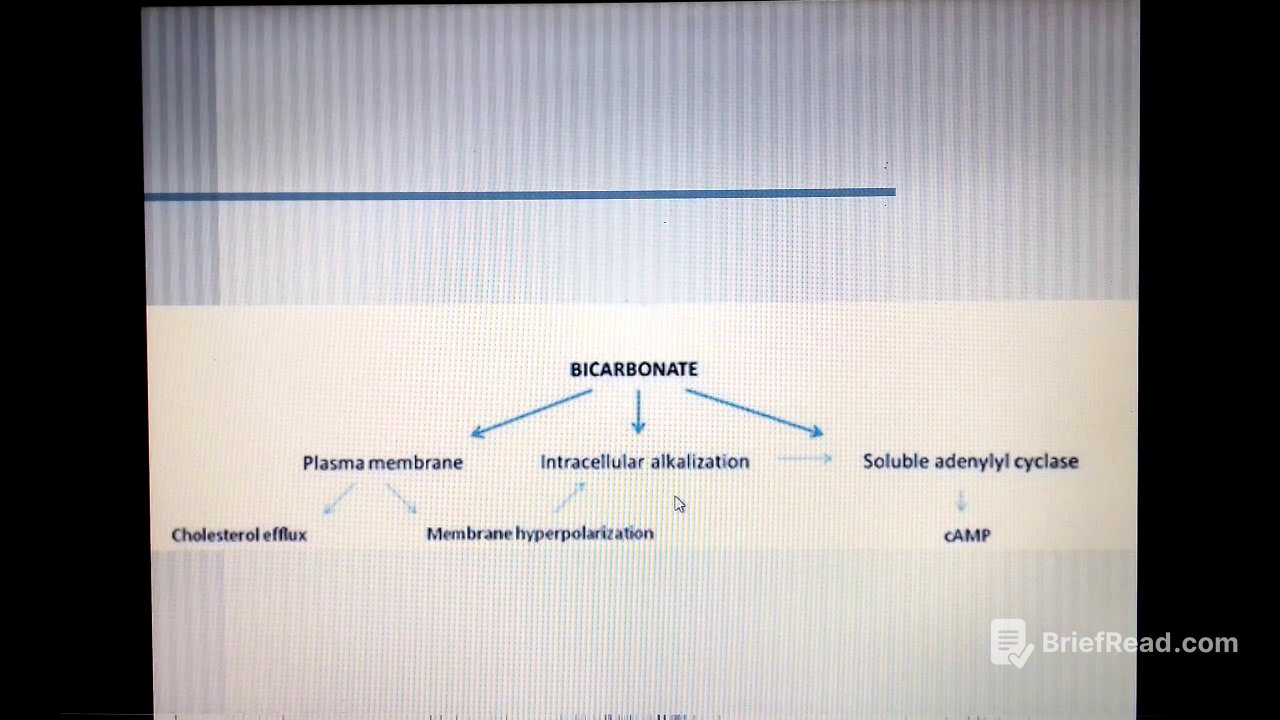
Bicarbonate ions, abundant in the female reproductive tract, play a crucial role in initiating capacitation. When bicarbonate ions enter the sperm cell, they cause changes in the plasma membrane, including cholesterol release and hyperpolarization. This leads to an increase in intracellular pH and activates adenylate cyclase, which increases cyclic adenosine monophosphate (cAMP) levels in the sperm. The increased activity of adenylate cyclase is mediated by reactive oxygen species, triggered by the influx of bicarbonate ions.
Interaction with Albumin and Progesterone [9:47]
As sperm move into the uterus, they interact with albumin secreted by the endometrium. Albumin acts as a cholesterol acceptor, removing cholesterol from the sperm membrane. The presence of progesterone and the binding of the zona pellucida to the sperm membrane activate PTK, which in turn activates phospholipase C. This enzyme converts PIP2 into diacylglycerol and IP3, leading to the activation of protein kinase C.
Enzyme Activation and Acrosome Reaction [11:05]
Protein kinase C works with protein kinase A (activated by increased cAMP levels) to increase calcium ion levels within the sperm. This increase in calcium triggers the acrosome reaction and hyperactivation of sperm motility. Two key enzymes, protein kinase A and protein kinase C, are essential for stimulating the acrosome reaction and increasing sperm motility. The acrosome reaction is necessary for the sperm membrane to interact with receptors on the egg membrane, as enzymes released from the acrosome break down the layers surrounding the egg.
Location of Capacitation in Reproductive Tract [13:18]
Capacitation can begin in the vagina, but in some species like rodents, it primarily occurs in the uterus because sperm quickly bypass the vagina. In species like wild pigs, sperm are directly ejaculated into the uterus. In humans, sperm spend only a short time in the vagina before moving into the cervix.
Function of Prostasomes [15:34]
If sperm remain in the vagina, they may interact with prostasomes, vesicles rich in cholesterol, protein, and enzymes from the prostate gland. The fusion of prostasomes with sperm increases cholesterol levels in the sperm membrane, which inhibits capacitation. This interaction is thought to prevent premature maturation of sperm, ensuring they do not undergo the acrosome reaction too early. Prostasomes also increase calcium levels in sperm, which helps maintain sperm motility.