TLDR;
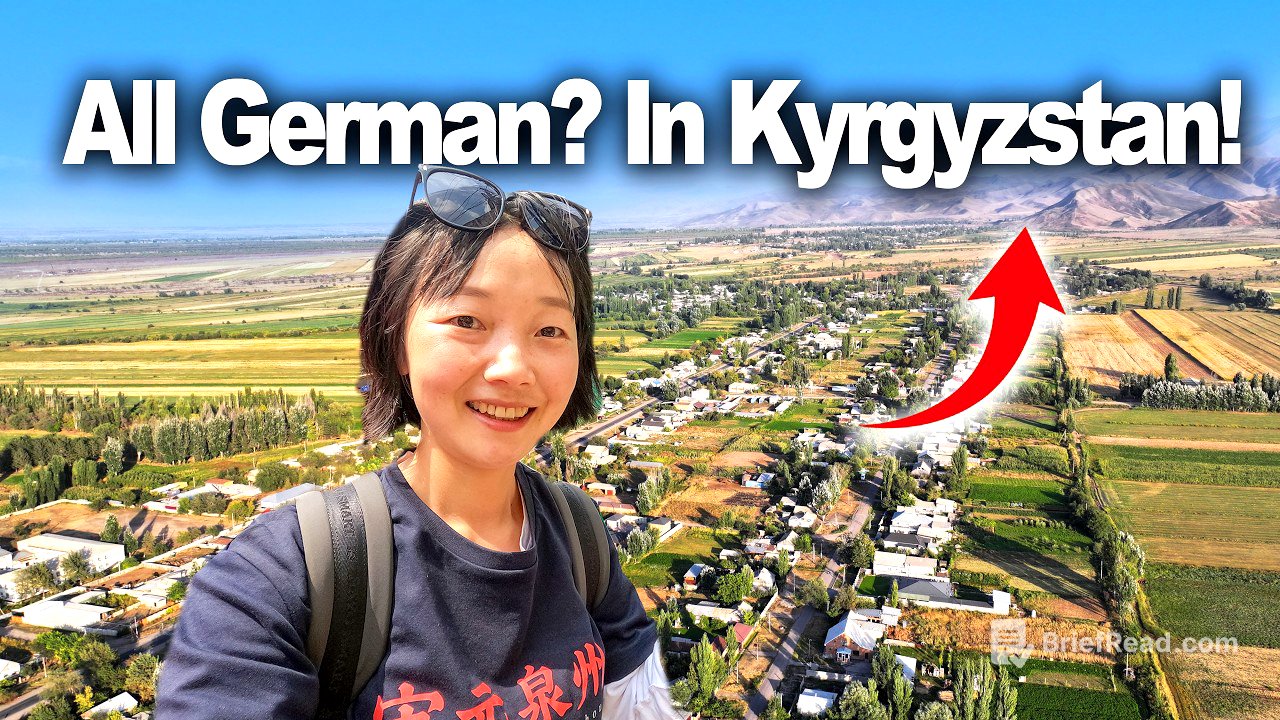
The video documents a journey to Rot Front, a German village in Kyrgyzstan, to explore the history and culture of ethnic Germans in Central Asia. It covers the origins of German settlers in the region, their traditions, and the impact of Soviet times. The video also features a visit to a private museum showcasing the history of German immigrants and a Baptist church, highlighting the enduring presence of German culture and faith in the village.
- The journey starts south of Issyk Kul Lake and heads towards Tokmok and Rot Front.
- Rot Front, formerly Bergtal, is home to ethnic Germans who maintain their traditions.
- The video explores the history of German settlers, their migration, and religious practices.
Intro [0:00]
The video introduces a Silk Road Overland journey starting from the southern shore of Issyk Kul Lake in Kyrgyzstan. The plan is to travel south of Tokmok and then west to a German village called Rot Front, aiming to meet local ethnic Germans and explore their culture. Kyrgyzstan is highlighted as a country with diverse ethnicities, including Germans. The journey will then continue to the capital, Bishkek.
Suyab Abandoned Silk Road City [2:10]
The journey passes through Tokmok, a city with a rich history, near the ruins of Suyab, a significant Silk Road stop. Suyab was a multicultural city from the 5th century, especially during the Tang dynasty, with Buddhism, Zoroastrianism, Nestorian Christianity, and Manicheism. The Burana Tower, built in the 10th century by the Karakhanid Khanate, marks the arrival of Islam in the region. Islam spread into the Fergana Valley, and by the 10th century, the Karakhanids adopted Islam, uniting Fergana and southern Xinjiang.
Rot Front (German Village) [3:31]
The video shifts focus to the Soviet era's impact and the presence of ethnic Germans in Central Asia. The travelers are heading to Rot Front, a village with people who still speak German. Originally named Bergtal, the village was renamed Rot Front during Soviet times, with "Rot" meaning "red" in German. The goal is to find locals who can help locate the German museum and speak German.
A German Friend [5:32]
Driving through Rot Front, the travelers notice European faces, indicating the German heritage of the village. They encounter Tim, a German visiting his father-in-law's house in Rot Front, who was born in Bishkek but now lives in Stuttgart, Germany. Tim explains that the village was founded by Christian Germans seeking religious freedom. He mentions that only five German families remain in the village and that a mosque now stands where a church once did. Tim shares his family history, noting that his ancestors primarily spoke German and lived in colonies where German was the primary language.
German Museum in Rot Front [9:21]
The travelers visit a private museum in Rot Front, dedicated to the history of German immigrants in Central Asia. Eugen Giessbrecht, a fourth-generation German, explains that his ancestors arrived in the region during the time of the Tsars in 1880. He discusses the Anabaptist movement and the origins of the Mennonites, who sought adult baptism based on faith. Catherine the Great invited German Mennonites to Russia, offering free land but not revealing the dangers of Tartar raids. These settlers became known as Volga Germans. The museum visit provides a detailed historical context of German migration to Central Asia and the challenges they faced.
Baptist Church [21:31]
The video concludes with a visit to the Baptist church in Rot Front, a remaining symbol of German culture in the village. The church features old German writings and is a place of worship for the local Christian community. The experience is described as fascinating and heartwarming, with the locals being welcoming and sharing their history. The journey then continues to Bishkek, with plans to explore the capital before heading towards Osh.