TLDR;
This video explains how testosterone contributes to muscle growth, highlighting the molecular mechanisms involved. Key points include:
- Testosterone enhances muscle protein synthesis and inhibits breakdown.
- It works through androgen receptors to regulate gene expression and activate pathways essential for muscle hypertrophy.
Understanding Testosterone's Role in Muscle Growth [0:00]
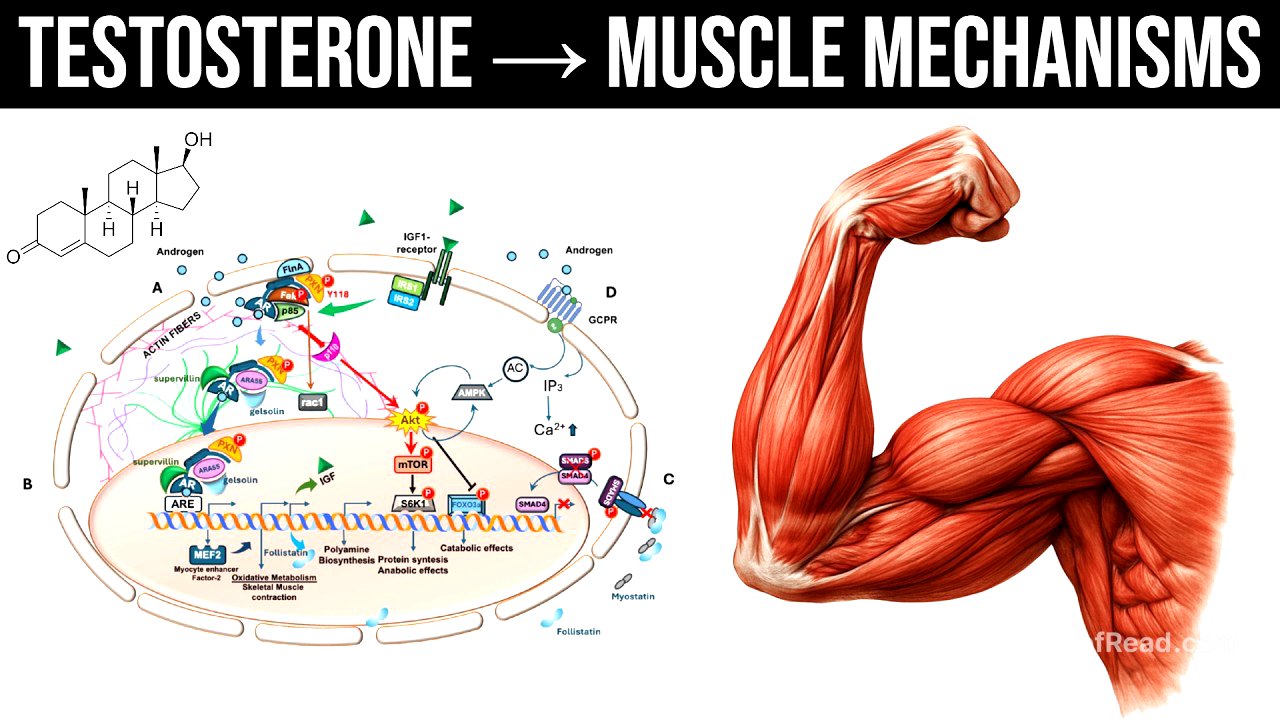
Testosterone significantly influences muscle growth by amplifying natural processes rather than working independently. It binds to androgen receptors, which then enter the muscle cell's nucleus, affecting gene expression crucial for muscle development. The binding activates genes for muscle-building proteins like IGF-1 while suppressing genes that lead to muscle breakdown.
Cellular Entry and Binding Mechanism [2:00]
Testosterone diffuses across the muscle fiber’s membrane and binds to androgen receptors in the cell's cytoplasm. This binding initiates a conformational change, leading to the release of the receptor from complex proteins, which facilitates the receptor's transport into the nucleus. Here, it can influence gene expression related to muscle growth. Higher androgen receptor content is linked with better results from resistance training.
Gene Expression and Upregulation [8:00]
Once in the nucleus, the testosterone-receptor complex binds to specific DNA sequences in target genes. It recruits coactivators to initiate the transcription of genes responsible for muscle growth. Testosterone upregulates IGF-1, which increases the production of local IGF-1, enhancing muscle growth. It also increases polyamine levels that promote cell cycle progression and delay satellite cell differentiation, boosting muscle cell numbers.
Downregulation of Muscle Breakdown Genes [16:00]
Testosterone not only promotes growth but also inhibits muscle breakdown. It upregulates genes for structural proteins while downregulating atrogenes—genes that promote muscle atrophy. The pathways activated by testosterone result in increased production of muscle proteins like actin and myosin, supporting overall muscle growth.
Activation of the mTOR Pathway [24:00]
The IGF-1 pathway, activated by testosterone, leads to mTORC1 activation, which is crucial for protein synthesis. mTORC1 enhances ribosomal activity and production, resulting in more efficient protein production. This effect is essential for increasing muscle mass, as it ensures that the machinery for building muscle is both available and effective.
Role of Satellite Cells in Hypertrophy [32:00]
Testosterone stimulates the proliferation of satellite cells, which are essential for muscle growth as they can fuse with existing fibers and add nuclei. More nuclei mean more DNA available for muscle protein synthesis, enhancing muscle growth potential. The function of satellite cells is notably affected by testosterone levels.
Non-Genomic Actions of Testosterone [42:00]
In addition to genomic effects, testosterone has rapid non-genomic actions that impact muscle cells within moments. These actions can lead to increased myoblast proliferation, improved calcium handling, and greater contractility. Non-genomic effects support and enhance the overall actions of testosterone in promoting muscle growth.
Conclusion: Amplifying Muscle Growth [51:00]
Overall, testosterone positively affects muscle growth by boosting protein synthesis and inhibiting breakdown. It works effectively in conjunction with resistance training by enhancing mechanisms that drive muscle development. The speaker encourages viewers to explore further resources for optimizing testosterone levels to support muscle growth.