TLDR;
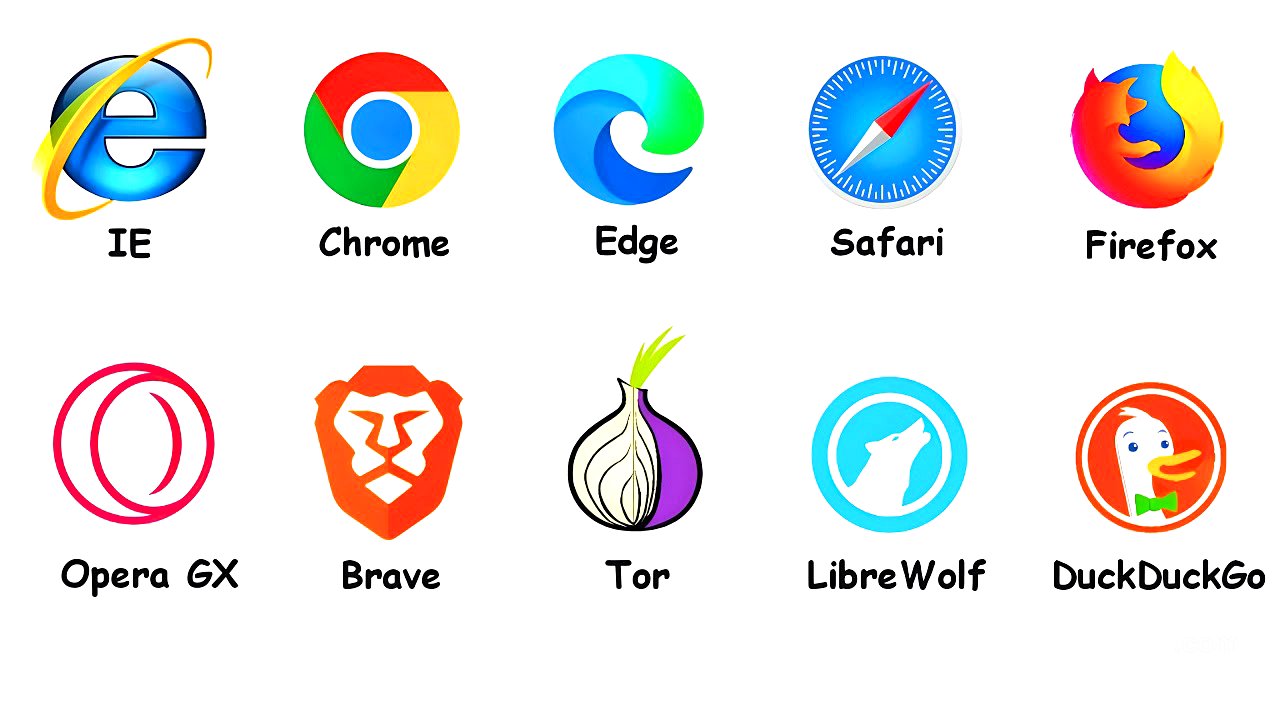
This video provides a comprehensive overview of various web browsers, detailing their history, features, strengths, and weaknesses. It covers the rise and fall of Internet Explorer, the dominance of Google Chrome, and the unique attributes of browsers like Microsoft Edge, Safari, Mozilla Firefox, Opera GX, Brave, Tor, LibreWolf, DuckDuckGo, and a couple of honorable mentions.
- Internet Explorer was once the dominant browser but became outdated and was eventually discontinued.
- Google Chrome rose to prominence with speed, simplicity, and integration with Google services, but has privacy trade-offs.
- Microsoft Edge reinvented itself using Chrome's engine and introduced new features.
- Safari focuses on performance and privacy for Apple users but is limited outside the Apple ecosystem.
- Mozilla Firefox offers freedom and customization but struggles with market share.
- Opera and Opera GX cater to gamers and power users with unique features but are stemmed from a Chinese company.
- Brave provides a privacy-centric experience, while Tor focuses on anonymity.
- LibreWolf emphasizes privacy and control, and DuckDuckGo presents a user-friendly, privacy-first browser approach.
Internet Explorer [0:00]
Internet Explorer dominated the browser market from its launch in 1995, mainly due to being bundled with Windows, which led to over 95% market share at its peak. Despite its dominance, Microsoft lagged on innovation, leading to a decline as Chrome emerged in 2008, offering a faster and cleaner alternative. By the time Microsoft attempted to revitalize Internet Explorer, users and developers had already moved on. Microsoft officially discontinued the browser on June 15, 2022, redirecting users to Microsoft Edge.
Google Chrome [1:59]
Launched in 2008, Google Chrome transformed web browsing with its speed, clean interface, and simplicity. It ensured smooth performance with separate tab processes, allowing for better stability and user experience. Integration with Google accounts made syncing of bookmarks and passwords seamless. Chrome's dominance was further bolstered by its inclusion on Android devices. However, concerns arose about privacy as Chrome enforced Manifest V3 in 2025, limiting ad blockers' functionality and raising questions about user data security.
Microsoft Edge [4:29]
Microsoft Edge was introduced in 2015 as a response to Internet Explorer's failure. Initially, it faced issues with compatibility and lacked user appeal. Microsoft then opted to rebuild Edge using Chromium, enhancing its performance and compatibility with extensions. Edge also introduced features like vertical tabs and built-in PDF tools, while deep integration with Windows encouraged usage. Copilot, an AI assistant, was integrated into Edge, though users' reactions to its presence varied. Despite improvements over Chrome, Edge still collects user data, tying it to Microsoft’s ecosystem.
Safari [6:40]
Launched in 2003, Safari became the default browser for Apple devices, emphasizing integration, performance, and privacy. While Safari loads faster and offers better battery life on Apple hardware, it restricts competing browser engines on iOS, making it the only option for many users. Privacy features like intelligent tracking prevention have attracted users concerned about data security. However, limited extension support and slower updates to web standards can hinder performance on certain sites.
Mozilla Firefox [8:45]
Firefox, launched by Mozilla in 2004, positions itself as an independent alternative to mainstream browsers, emphasizing freedom, customization, and privacy. Its open-source nature allows for extensive modifications, and privacy features like enhanced tracking protection are integrated. Despite experiencing fluctuations in market share, Firefox remains relevant for those concerned with an open web, though controversies within Mozilla and management changes have raised questions about its future.
Opera GX / Opera [10:29]
Opera GX focuses on gamers, offering features like CPU and RAM limiters and a gaming-centric design. It runs on Chromium but goes beyond aesthetics by providing practical functionalities. The regular version of Opera introduced features like built-in VPNs and ad blockers before they became industry standard. However, concerns about data privacy arose after being acquired by a Chinese consortium. While not mainstream, both browsers appeal to niche audiences looking for unique features.
Brave [11:53]
Brave, founded by Brendan Eich, emphasizes privacy by blocking ads and trackers by default while speeding up page loads. It includes an optional rewards system to earn cryptocurrency for viewing privacy-respecting ads. While it maintains solid performance and robust security, some users face challenges with sites that resist ad-blocking. Brave is positioned as a friction-free alternative for those looking to deviate from Chrome without significant setup.
Tor Browser [13:27]
Tor Browser facilitates anonymous browsing by routing users' connections through multiple servers, ensuring privacy for journalists, activists, and others in need of privacy. While it can access .onion sites related to the dark web, Tor is not solely about illegal content but aims to protect user identity. The downside is slower browsing due to its encrypted routing and potential blocks on multimedia content.
LibreWolf [14:50]
LibreWolf is a privacy-focused browser that forked from Firefox, stripping away telemetry and tracking defaults. It prioritizes user privacy by not sending data to Mozilla and disallowing experiments that could compromise user data. LibreWolf is designed for users wanting a privacy-centric experience right out of the box, but it lacks some convenience features available in Firefox, making it more suitable for serious privacy advocates.
DuckDuckGo Browser [16:18]
The DuckDuckGo Browser, based on the principle of privacy, uses WebKit on Mac and iOS, with customized setups for Windows and Android. It incorporates features that block trackers and prevent ad targeting, offering a straightforward user experience. Unlike Brave, it provides less customization but is easier to use, catering to users who want security without having to manage privacy settings closely.
Honorable Mention #1 – Samsung Internet [17:42]
Samsung Internet is the default browser on Galaxy devices, achieving approximately 3-4% of the mobile market. Built on Chromium, it offers added features like ad blocking and anti-tracking for a smoother browsing experience. Despite being used without much thought by many users, it maintains a consistent reliability, positioning it as a dependable option in the crowded mobile browser space.
Honorable Mention #2 – Arc Browser [18:31]
Arc Browser, launched in 2023 by The Browser Company, redefined the traditional browser layout by introducing features like vertical sidebars and spaces for organizing content. It aimed to shift the concept of browsing towards an operating system experience. While it garnered a strong following, it is currently in maintenance mode after its developers shifted focus to creating a simpler browser, noting that Arc was too innovative for general use.