TLDR;
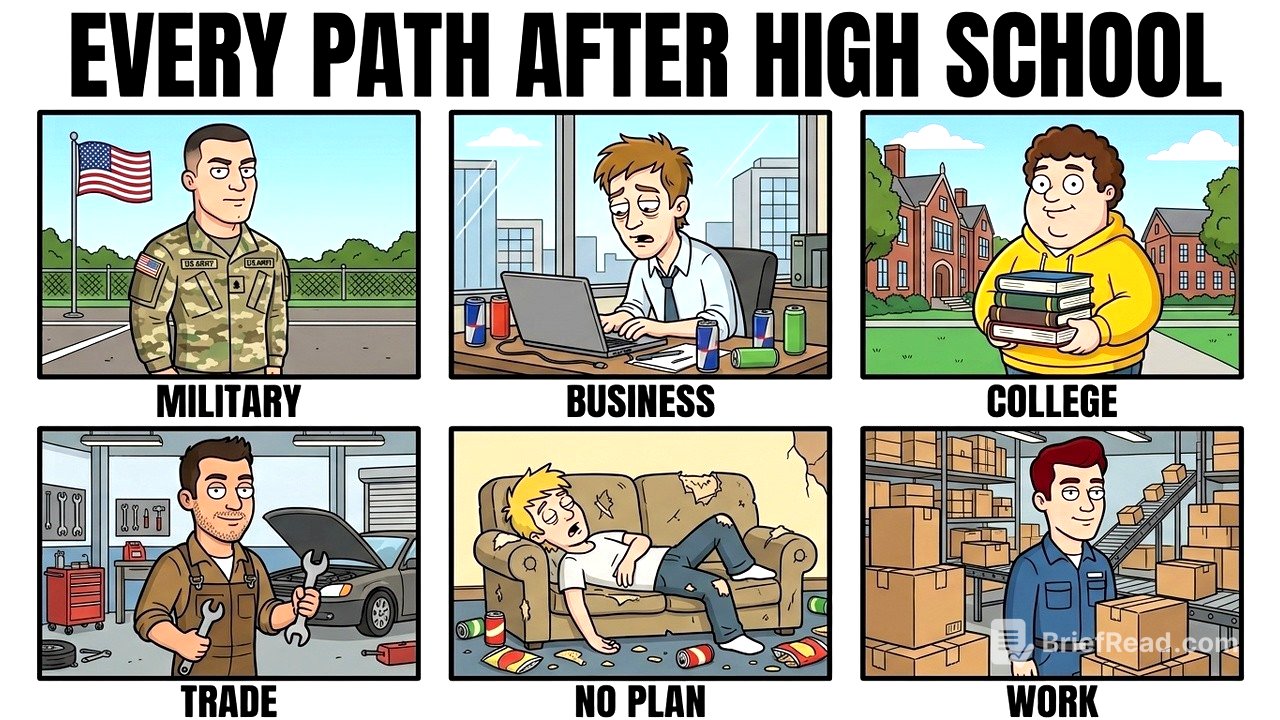
This video examines the six paths that American high school graduates typically take, highlighting the consequences of each choice on finances and future opportunities. It reveals that high school doesn't adequately prepare students for life after graduation and suggests that many traditional beliefs about the best post-high school options are outdated.
- College graduates face significant debt and high competition for jobs that often don't require degrees.
- The military offers financial benefits and stability often underestimated.
- Trade schools provide affordable training with lucrative job opportunities that can out-earn many college degrees.
- Entering the workforce directly can lead to varying outcomes based on individual effort and strategy.
- Entrepreneurship has a high risk of failure but offers potential for great reward, while those without a plan face significant challenges.
Path One: College [0:39]
College is the most recognized path where students expect to graduate, obtain degrees, and secure jobs. However, the reality is that graduates often leave with an average debt of $37,000, and 40% end up in jobs that do not require a degree. This results in a 9.7% unemployment rate among recent college graduates, indicating that a degree is no longer a guaranteed advantage in the job market. Fields like engineering, medicine, and law can provide a high return on investment, but most common degrees do not lead to high-paying jobs.
Path Two: Military [2:55]
The military path is often undervalued. Enlisting comes with immediate pay, benefits covering housing, healthcare, and education, culminating in a pension after 20 years of service. An enlisted soldier can earn around $47,000 annually, and many veterans transition into management roles, entering civilian life without student debt. While acknowledging risks involved, financial outcomes for military personnel at age 40 are promising.
Path Three: Trade School [4:22]
Trade schools have surprisingly low costs compared to colleges, with total expenses ranging from $5,000 to $20,000. For example, electricians often earn around $61,000 a year while a college student graduates later with significant debt. By age 30, electricians can accumulate about $500,000 without debt, while college graduates may have financial burdens. Notably, 47% of skilled trades workers earn more than the average college graduate, particularly in lucrative fields.
Path Four: Straight to Work [5:46]
This path has two distinct groups: individuals who strategically enter the workforce to build skills and advance in their careers, and those who take low-skill jobs without long-term planning. The latter faces a 20.4% unemployment rate in the first two years after high school. The success of individuals in this path heavily relies on intentional career choices and skill development.
Path Five: Entrepreneurship [6:52]
Entrepreneurship is often romanticized, but only 10% of new businesses survive past ten years. Initial failures are common, and success usually requires learning from those experiences. The potential for high rewards exists, but entrepreneurs face a low starting point with no guaranteed income or benefits. This path suits those with proven skills in selling or problem-solving, rather than those merely seeking more fulfillment.
Path Six: No Plan [7:57]
Some high school graduates leave without a plan, leading to poor financial outcomes across the board at age 40. The absence of structure in post-graduation decisions creates significant disparities in income, housing, health, and relationships. Ultimately, the data shows that paths taken have real consequences, while indecision compounds negative outcomes.
High school only provides a diploma, not the critical information needed to navigate these choices effectively.