TLDR;
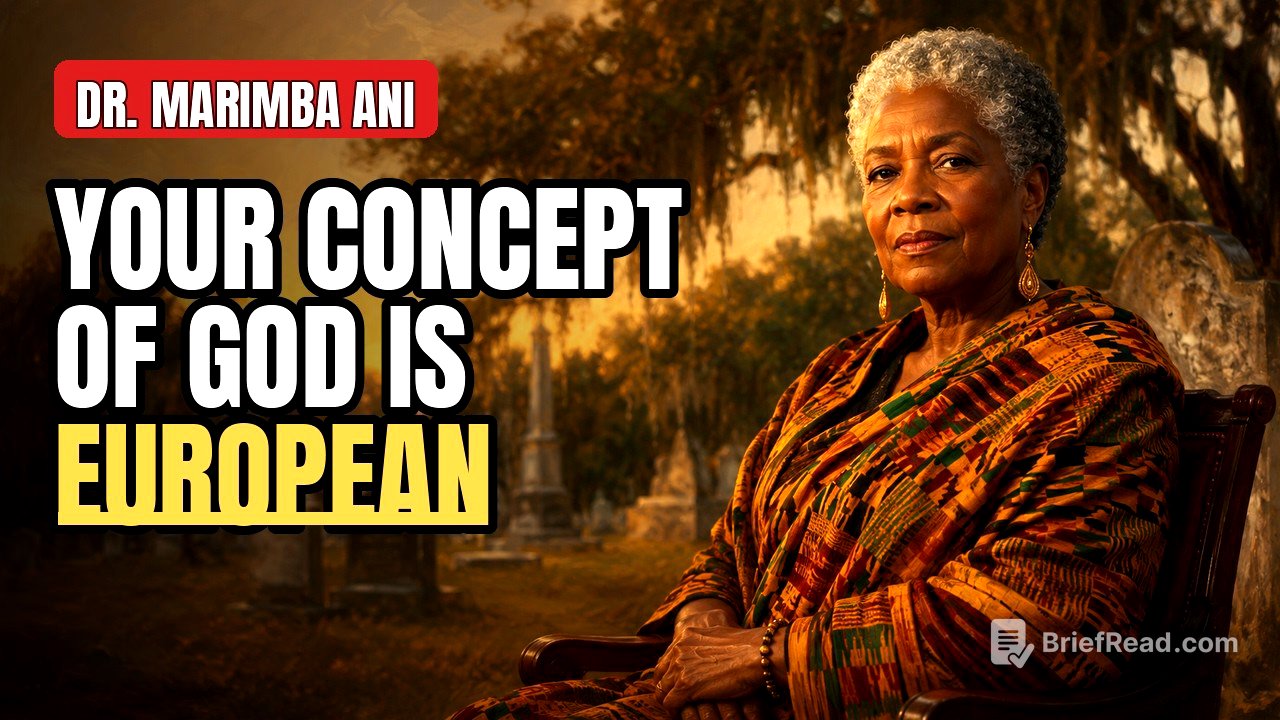
This video explores Dr. Marimba Ani's arguments regarding the contrasting European and African concepts of divinity and community. Dr. Ani emphasizes that the traditional notion of God is rooted in European politics, depicting God as a separate being, while the African perspective views divinity as a universal life force that connects all entities. The discussion reveals deep insights into ancestral communion, the impact of slavery on consciousness, the construction of religions, and the importance of reclaiming African spiritual practices.
- The concept of God is European and politically driven, not universal.
- The African view of divinity is holistic and interconnected, emphasizing ancestry and community.
Your Concept of God Is European [0:00]
Dr. Marimba Ani argues that the traditional concept of God held by many is primarily European, created for political oppression rather than universal spirituality. She explains that while European theology presents God as an individual who reigns from above, African philosophy views divinity as an energy interwoven with the world, forming a universal life force. This fundamental distinction between the personified God and the energy within nature fundamentally alters how societies interact with the divine.
Dr. Marimba Ani: The Deep Explanation [0:05]
In her exploration, Ani highlights that the African view of the divine shapes communal participation rather than a hierarchy centered around a sovereign. This ongoing energy connects all aspects of existence, allowing individuals to understand and work with the universal force. She critiques the label of gods applied to African spiritual figures, instead referring to them as manifestations of one universal energy to contrast with the European interpretation of polytheism.
Book One — AWOMEN: How Religion Was Constructed [24:50]
The video introduces Ani's work, discussing how religion has been constructed over time to serve colonial power structures. It highlights how traditional African rituals and practices that foster connection to ancestors were systematically demonized to sever ties within the community and redefine identities. The process involved creating negative perceptions around ancestral practices, replacing them with the conqueror's beliefs, and reframing identities that separate African descendants from their heritage.
AWOMEN: 20 Truths [25:34]
Ani lists essential truths regarding the effects of colonial religion on African spirituality. These truths underscore the importance of communal connections that include ancestors and future generations. Recognizing these truths allows descendants to reconstruct their spiritual heritages and understanding of power and identity, which are vital for healing and reclaiming their histories.
Book Two — The Only Truth Returns [37:58]
This section introduces the second book, which expands upon the foundational truths Dr. Ani addressed. It emphasizes the significance of recognizing the continuous existence of African spirituality and how elements of this ancient wisdom remain within contemporary practices. The book aims to underline the universal principles of change and balance that are inherent in all cultures.
The Only Truth: 20 Revelations [38:49]
The revelations from the book focus on the timeless truths of change and balance that transcend religious constructs. These dualities are presented as constants in life, emphasizing that they cannot exist without one another. This foundational understanding nurtures a more profound connection to the universe, reinforcing the intrinsic unity between all beings.
Closing: Let the Circle Be Unbroken [52:35]
The closing section encapsulates the core message of Dr. Ani's lecture by urging individuals to reconnect with their ancestral lineage while acknowledging the power these connections hold. Emphasizing that spirituality is not merely inherited but reconstructed, this segment highlights the importance of community involvement, ancestral remembrance, and ritual practices in maintaining cultural identity and vitality. The title "Let the Circle Be Unbroken" conveys the essence of preserving communal bonds across generations as essential to reclaiming power and identity.