TLDR;
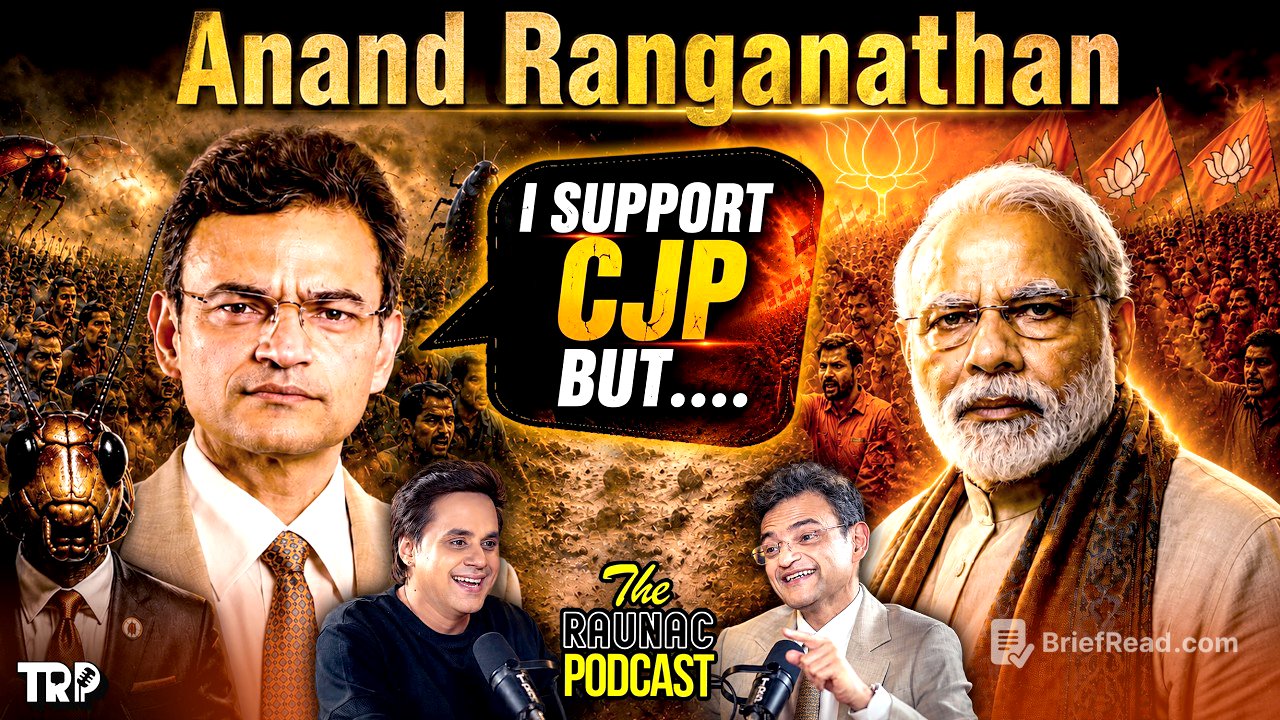
In the podcast, the discussion revolves around the realities of political activism and freedom of speech in India, focusing on the role of various political parties, including the BJP (Bharatiya Janata Party) and Congress. It highlights the hypocrisy in political criticism, the consequences of speaking out against power, and the challenges to individual liberties. The speakers assert that societal change is possible only through active engagement and accountability, criticizing both current and historical parties for their approach to governance and societal issues.
- Political parties often silence dissent.
- The role of RSS (Rashtriya Swayamsevak Sangh) in promoting a particular societal agenda.
- The importance of recognizing independent voices in a democratic society.
Political Activism and Freedom of Speech [0:00]
The conversation begins with a critique of activists who claim to "speak truth to power." The speaker argues that power is wielded by only a few, such as Modi, and that similar suppressive actions occurred under previous leaders like Mamata Banerjee and Arvind Kejriwal. The dialogue indicates a pattern of arrests and silencing dissent across various governments, illustrating the lack of true freedom of speech in India.
Critique of Political Parties [2:40]
Here, the talk shifts to the former actions of different political figures. The speaker highlights that freedom of speech has never been genuinely present in the country, criticizing the actions of Congress and how they suppressed dissent historically. There is a significant focus on the accountability of political parties and their hypocrisy regarding the treatment of journalists and activists.
RSS and National Politics [5:20]
The discussion covers the RSS's influence on Indian politics, suggesting that it can bring the country back on track if it chooses to be more proactive. The speaker expresses faith in the RSS to address key national issues but criticizes its failure to confront the challenges of modern society effectively. The conversation introduces the notion that some believe Rahul Gandhi could potentially become the future prime minister, though the speaker remains skeptical.
Economic Policies and Welfare [8:45]
The topic transitions to the critique of economic policies and welfare programs. The speakers argue that welfare schemes should not be mistaken for handouts, as they can create a dependency that will lead to long-term societal issues. Emphasis is placed on the need for genuine reforms, not just temporary solutions.
Unemployment and Future Leaders [11:37]
The podcast delves into employability issues and the perception of future leaders in the country. The speakers express a need for leaders who can unite the nation and confront current problems rather than perpetuating divisions. They highlight the importance of accountability and leadership that resonates with the common people.
Political Challenges and Public Expectation [15:00]
The tone shifts to discuss public expectations and the role of politicians in a democratic setting. The speakers highlight the historical context of political discontent, particularly regarding illegal immigration and national identity. They advocate for a more proactive stance from the government in addressing pressing issues and ensuring equitable distribution of resources.
Cultural Identity and Social Discourse [18:20]
This chapter discusses the complexities of cultural identity in India and the political implications of how communities perceive themselves. The dialogue centers on the need for recognition and respect for diverse communities, urging listeners to consider a more inclusive narrative that appreciates social contributions across all sectors of society.
Conclusion and Call for Action [20:50]
The podcast wraps up by reiterating the importance of active citizen engagement in politics. The speakers encourage people to participate in societal discourse, recognize their rights, and hold their leaders accountable for their actions. They emphasize that real change is possible only if the public demands it, reinforcing the need for awareness and action from citizens to foster a better future for India.