TLDR;
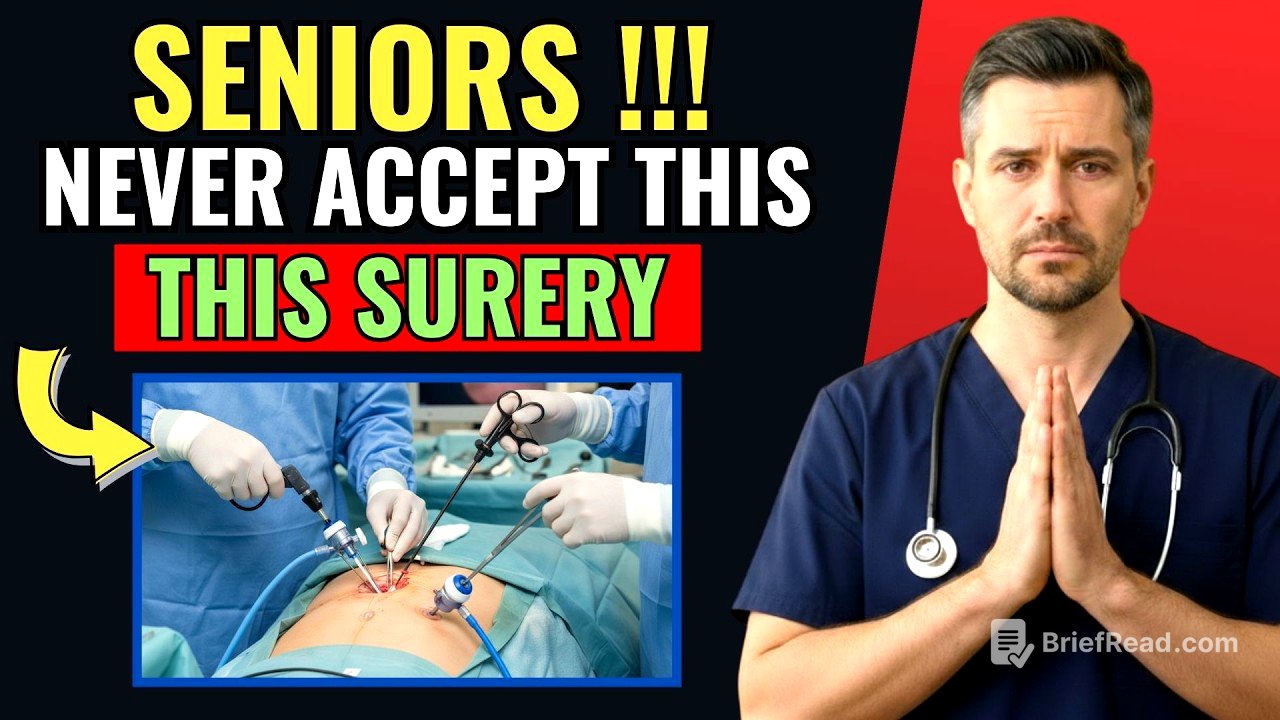
The video discusses five common surgeries that surgeons regularly perform but might not recommend for their own elderly parents due to the increased risks and potential for catastrophic decline in older patients. It highlights the importance of understanding the unique challenges elderly patients face in hospitals, the effects of anesthesia, the impact of immobility, and the cascade effect of complications. The video provides a seven-step protocol for patients and their families to advocate for better, more informed surgical decisions, including calculating frailty index scores, requesting cognitive baseline testing, exploring non-surgical alternatives, and seeking opinions from geriatric specialists.
- Surgeries can have devastating effects on elderly patients due to factors like anesthesia, hospital environment, and immobility.
- The medical system often overlooks the unique needs of older patients, leading to unnecessary surgeries and poor outcomes.
- Patients and families should actively advocate for informed decisions, explore alternatives, and seek specialized geriatric care.
Introduction: A Surgeon's Concerns About Elderly Patients and Surgery [0:10]
The speaker, a surgeon, reveals his concerns about recommending certain common surgeries for his 78-year-old father, despite regularly performing them on patients. He emphasizes the importance of understanding the risks and potential consequences of surgery in older adults, which often differ significantly from those in younger patients. The surgeon aims to share insights into what happens inside hospitals, what research indicates, and what surgeons know but often don't fully discuss with their patients.
Margaret's Story: A Cautionary Tale of Hip Surgery [1:23]
The story of Margaret Chen, a 71-year-old retired teacher, illustrates the potential for unexpected and devastating outcomes following surgery in elderly patients. After a hip fracture, Margaret underwent a successful surgery but experienced post-operative delirium, pneumonia, digestive problems, and significant muscle loss. Her condition led to a prolonged hospital stay and eventual placement in a nursing facility, where she remained six months later, never regaining her previous independence or quality of life. This outcome highlights a pattern the speaker observes frequently, where surgeries, though technically successful, can destroy an elderly person's life.
Why Surgery Can Be Catastrophic for the Elderly [4:15]
The speaker explains that the surgical system is designed primarily for younger patients, and what works for a 45-year-old can be catastrophic for someone over 70. He outlines five key reasons for this: anesthesia affects older brains differently, the hospital environment is toxic to elderly patients, immobility after surgery causes rapid muscle loss, elderly patients experience a cascade effect of complications, and recovery capacity is fundamentally different after age 65. These factors contribute to a higher risk of cognitive decline, delirium, pneumonia, malnutrition, and other complications that can lead to a significant decline in overall health and independence.
Robert, Susan and James: Real-Life Examples of Surgical Outcomes [8:23]
The experiences of Robert, Susan, and James further illustrate the potential negative impacts of surgery on older adults. Robert, a 68-year-old triathlete, experienced severe fatigue and muscle loss after an appendectomy, aging him significantly. Susan, 74, underwent multiple surgeries for diverticulitis and ultimately died from complications. James, a 77-year-old retired surgeon, chose surgery for a perforated ulcer but later regretted the decision, feeling that it took away his quality of life. These stories highlight the difficult choices elderly patients and their families face when considering surgery.
Frank's Alternative Path: Choosing Conservative Management [11:35]
In contrast to the previous examples, Frank's story demonstrates the potential benefits of choosing conservative management over surgery. When Frank, 70, was recommended surgery for a hernia, he sought a second opinion from a geriatric specialist who suggested a support garment, modified activities, and watchful waiting. Five years later, Frank is 75, still managing the hernia conservatively, and maintaining an active, independent lifestyle. This case underscores the importance of exploring non-surgical alternatives and seeking specialized geriatric care.
Five Surgeries to Reconsider for Elderly Patients [12:22]
The speaker identifies five surgeries he would never recommend for his own father after age 75, along with potential alternatives:
- Hip surgery (especially hip replacement): Alternatives include intensive physical therapy, pain management, mobility aids, and home modifications.
- Emergency callectomy (for diverticulitis or bowel obstruction): Alternative is aggressive medical management, antibiotics, bowel rest, and drainage of abscesses.
- Perforated ulcer repair: Alternative is conservative management with antibiotics, drainage procedures, and intensive monitoring in select cases.
- Entrectomy (for bowel obstruction): Alternative is bowel rest, nasogastric decompression, and careful monitoring.
- Apppendecttomy: Alternative is antibiotics alone in select cases of uncomplicated appendicitis.
Seven-Step Action Protocol for Informed Surgical Decisions [16:24]
The speaker provides a seven-step protocol to help patients and families advocate for better surgical decisions:
- Ask your surgeon to calculate your frailty index score to predict surgical risk.
- Request cognitive baseline testing before surgery to monitor for cognitive decline.
- Ask about non-surgical alternatives and why they are being ruled out.
- Get a second opinion from a geriatric medicine specialist.
- Ask about the possum score, a surgical risk calculator for elderly patients.
- Create or update your advanced directive with specific language about quality of life priorities.
- Insist on a family meeting with the surgical team to discuss worst-case scenarios.
Addressing Common Questions and Concerns [19:15]
The speaker addresses several common questions and concerns, including what to do in an emergency, whether surgeons will be offended by questions, the importance of geriatric surgeons, whether these considerations apply to healthy seniors, and the nature of the alternatives to surgery. He emphasizes that true emergencies are rare, good surgeons welcome questions, geriatric surgeons approach cases differently, age-related vulnerability is not about appearance or activity level, and alternatives include physical therapy, pain management, lifestyle adaptations, and palliative care.
Conclusion: Empowering Patients to Make Informed Choices [21:57]
The speaker concludes by sharing his father's experience with spinal stenosis, where they chose physical therapy and lifestyle modifications over fusion surgery. He reiterates the importance of making informed decisions based on complete information, realistic expectations, and personal priorities. The speaker encourages viewers to advocate for themselves or their loved ones, share the video with family members, and ask questions to promote better surgical decision-making for elderly patients.