TLDR;
This video provides a comprehensive guide to a natural hair wash day routine, emphasizing the importance of mindset, gentle detangling, thorough cleansing, deep conditioning, and protective styling for healthy hair growth. Key points include:
- Prioritizing a positive mindset before starting the wash day routine to prevent breakage.
- Using flaxseed gel for effective and gentle detangling.
- Focusing on scalp health through proper cleansing with sulfate-free shampoo.
- Deep conditioning with heat to enhance moisture retention, especially for low porosity hair.
- Employing a layering method for moisturizing and sealing in hydration.
- Regular scalp massages to stimulate blood flow and promote hair growth.
- Opting for low-manipulation hairstyles to minimize stress on the hair.
Intro [0:00]
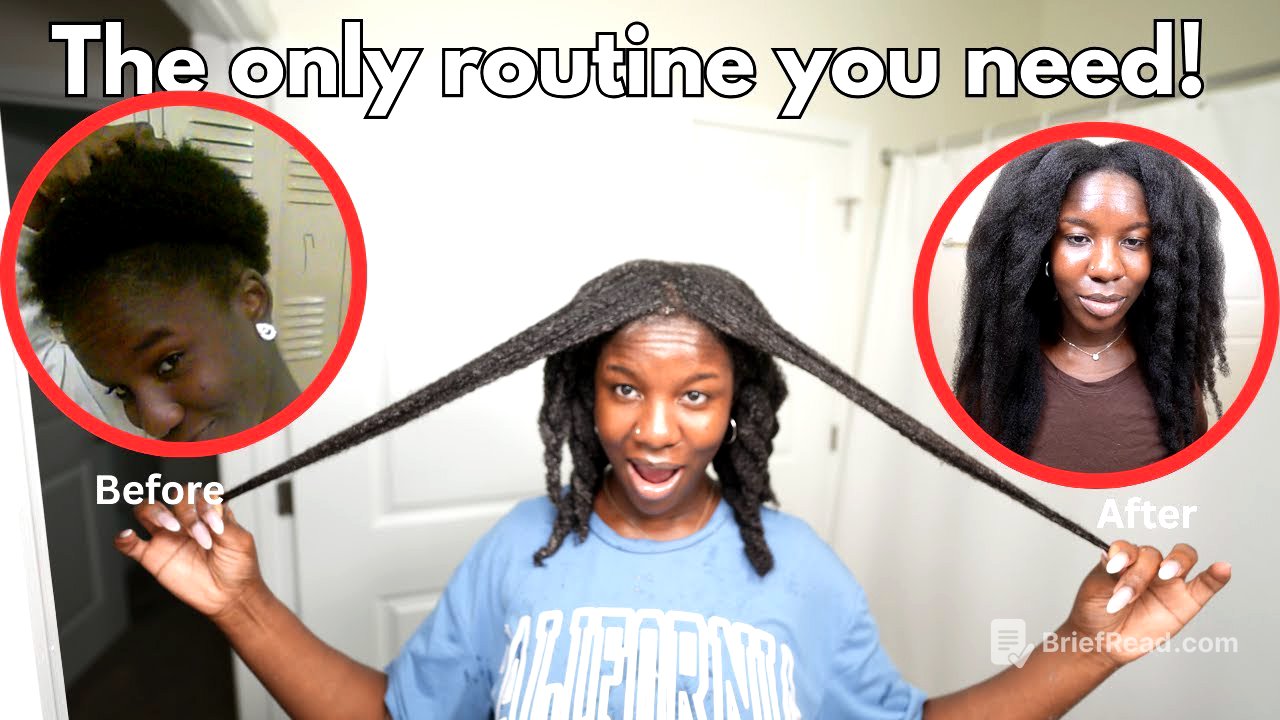
The video introduces a comprehensive guide to growing natural hair, detailing the steps that transformed the author's hair from bald to beyond tailbone length. The routine covers detangling, shampooing, moisturizing, trimming, and styling, providing a foundation for achieving healthy, longer hair. The goal is to equip viewers with the knowledge to grow their natural hair successfully.
Mindset [0:39]
Before starting a wash day routine, it's crucial to assess your mood and mental state. If you're not in the right frame of mind, it's better to skip wash day to prevent breakage due to impatience or lack of gentleness. While maintaining a clean scalp is important, preventing breakage is more critical for long-term hair health. If you're not in a good mood, try to improve it by watching K-dramas, listening to music, or engaging in relaxing activities. Women who experience periods should avoid washing their hair during the luteal phase to conserve energy.
Detangling [2:34]
The video explains the detangling process, emphasizing the use of flaxseed gel as a game-changer for natural hair. The author usually finger detangles first, followed by using a wide-tooth comb or detangling brush, especially after wearing protective styles for extended periods. Flaxseed gel is highlighted for its ability to detangle hair flawlessly without breakage, promoting length retention. The author avoids wash and go styles due to the potential for single-strand knots and damage. Being gentle during detangling is crucial, especially for fine strands, to prevent breakage and ensure a smoother wash day routine with less shedding.
Shampooing [5:17]
After detangling, the author puts on a shower cap for about 15 minutes. Before shampooing, hair is drenched with water to soften the strands and help the shampoo spread evenly, lifting any product buildup. Shampoo is focused on the scalp to address buildup, oil, and sweat, especially for active individuals. The hair should be gently scrubbed while keeping it elongated to avoid tangling. Using sulfate-free shampoo is preferred to cleanse the hair without stripping it. Massaging the scalp with the pads of the fingers or a scalp brush promotes cleanliness and stimulation, setting the stage for healthy hair growth.
Conditioning [7:37]
After shampooing, the focus shifts to restoring moisture to the hair using conditioner. Conditioner is smoothed down the length of the hair, with extra attention to the ends, which require the most care. Applying conditioner section by section ensures that all strands are coated, promoting elasticity and reducing breakage during detangling. Conditioners also flatten the cuticle layer, making the hair shinier and smoother. Hair should be fully saturated with water before applying conditioner to lock in moisture. The author experimented with applying a green tea rinse after conditioning to potentially enhance the benefits.
Deep Conditioning [10:13]
The video shares another way to deep condition hair for moisture retention, especially beneficial for low porosity hair. Heat helps open the hair cuticles, allowing the conditioner to penetrate effectively. A steamer, even a regular face steamer, can be used, or a hot towel wrapped around a plastic cap can provide heat. Alternatively, exercising with a plastic cap can generate heat. The author, having low porosity hair, typically leaves conditioners in for 30 minutes to an hour. The conditioner is then rinsed out with cold water.
Moisturizing [11:56]
The video explains that moisturizing involves a layering method: first, a hydrating product like water or hair tea, followed by a leave-in conditioner to lock in hydration, and finally, an oil-based product like hair growth oil or aloe vera hair butter to seal everything in. This layering technique ensures that the hair remains moisturized and protected.
Dusting & Scalp Massage [12:32]
After moisturizing, the author dusts the ends of the hair as needed to trim off older, weakened ends without sacrificing length, preventing breakage from traveling up the hair shaft. This is followed by a relaxing scalp massage using hair growth oil to stimulate blood flow, encouraging oxygen and nutrients to reach the hair follicles for healthy, nourished hair. Consistent scalp massages are essential for promoting hair growth.
Hairstyles [13:32]
The video concludes by showcasing simple, low-maintenance hairstyles that protect the ends without causing discomfort or stress. The author prefers chunky twists dried in a low bun and avoids high-tension styles like tight braids and sleek ponytails. Extensions are rarely used, with Marley twists being a go-to option for a different look. The goal is to balance aesthetics with hair health, ensuring the hair remains strong and easy to care for.